
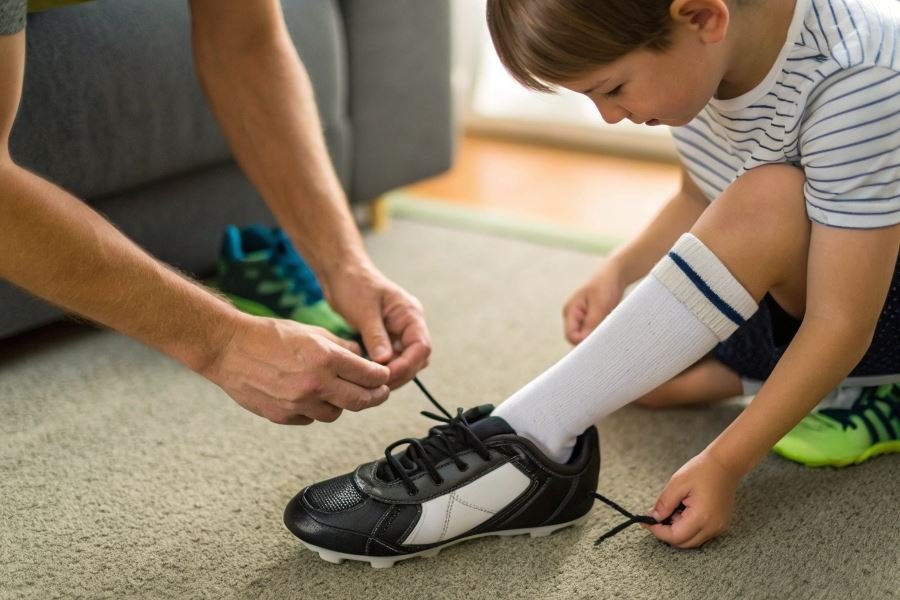
Ever watched a 7-year-old slip and slide across a gym floor like they’re on an ice rink? Or winced as your young athlete struggles to maintain balance on a muddy field? The culprit might be hiding right under their feet.
The battle between fifty-fives (indoor soccer shoes) and traditional cleats isn’t just about style—it’s about your child’s development, safety, and performance on the pitch. These seemingly similar footwear options serve dramatically different purposes, with consequences that extend far beyond comfort.
Fifty-fives feature flat, rubber soles designed specifically for grip on indoor surfaces, while cleats boast protruding studs that dig into natural grass or turf. This fundamental difference isn’t merely technical—it’s transformative for how children experience the beautiful game.
“The right footwear can be the difference between a child falling in love with soccer or walking away frustrated,” notes youth development coach Marcus Thompson. “It affects everything from ball control to confidence.”
When selecting between these options, parents should consider:
Surface matters
- Indoor courts: Fifty-fives provide the necessary grip without marking floors
- Grass fields: Cleats offer crucial traction during cuts and turns
- Artificial turf: Specialized turf shoes might be the best compromise
Developmental considerations
- Proper traction allows children to focus on skill development rather than staying upright
- Inappropriate footwear can create bad habits as kids compensate for lack of stability
- The right shoe promotes proper biomechanics during critical developmental years
Making this choice isn’t just about today’s game—it’s about setting your young athlete up for years of safe, successful play.
Performance Showdown: Fifty-fives vs Cleats for Young Players
When it comes to children’s football footwear, the debate between fifty-fives (indoor soccer shoes) and traditional cleats isn’t just about style—it’s about performance, development, and safety. The right choice can dramatically impact how young players interact with both the ball and playing surface, potentially shaping their technical development for years to come.
Parents and coaches often struggle with the fifty-fives vs cleats question when outfitting young football enthusiasts. Each footwear type offers distinct advantages depending on playing conditions, skill level, and developmental goals. Making an informed decision requires understanding how these options perform across different scenarios.
Surface Masters: Choosing the Right Shoe for the Right Ground
Indoor and Hard Surfaces: Fifty-fives absolutely dominate on indoor courts, artificial turf, and harder ground conditions. Their flat, rubber soles provide the perfect balance of grip without excessive catching that could cause ankle injuries. The rubber compound used in quality fifty-fives, like those from Nike or Adidas, offers controlled friction that allows quick direction changes without the “stick” that might strain young joints.
Natural Grass and Soft Ground: When the pitch is natural grass—especially if it’s wet or soft—cleats become the undisputed champions. The strategic placement of studs provides crucial penetration into softer surfaces, preventing the slipping that can frustrate young players and limit their confidence. Youth models from Puma and New Balance offer specifically designed cleat patterns that account for children’s lower body weight while still providing necessary traction.
Traction and Stability: The Technical Breakdown
Fifty-fives and cleats approach the traction equation from fundamentally different angles:
| Feature | Fifty-fives | Cleats |
|---|---|---|
| Traction mechanism | Surface friction | Ground penetration |
| Weight | Lighter (avg. 6-8 oz) | Heavier (avg. 8-10 oz) |
| Stability type | Lateral support | Vertical anchoring |
| Injury risk on wrong surface | High impact forces | Excessive torque |
The stability differences become particularly important during growth spurts when children’s coordination is naturally challenged by changing body proportions.
For younger players (ages 5-8), the lighter weight of fifty-fives often provides better control during the crucial early skill-building phase. However, as players approach the 9-12 range, the additional stability from properly fitted cleats can support more aggressive play and directional changes.
Skill Development Impact
Ball Control: Fifty-fives typically feature thinner, more sensitive uppers that allow for greater ball feel—crucial for developing touch and close control. The flat sole creates a larger contact surface with the ball during dribbling maneuvers.
Passing Precision: The uniform sole of fifty-fives provides consistent contact for passing, especially for inside-foot passes that form the foundation of possession play. Cleats, however, offer better platform stability for longer passes once technique is established.
Shooting Power: Here’s where cleats gain significant advantage. The anchored position they provide allows young players to generate more power through the ball without losing footing. This becomes increasingly important as players develop the strength for distance shooting.
Turning and Agility: Fifty-fives excel in quick, tight movements on harder surfaces, making them ideal for developing agility in confined spaces. This translates particularly well to small-sided games where close control in traffic is essential.
The footwear choice ultimately should evolve with the player, playing conditions, and developmental focus—making the fifty-fives vs cleats decision not a one-time purchase but an ongoing equipment strategy for young footballers.
Making the Final Decision: Fifty-fives vs Cleats for Young Players
The Age Factor in Footwear Transitions
The journey from fifty-fives to cleats isn’t just about age—it’s about development. For most young players, the sweet spot for transition typically falls between ages 8-10, when coordination and field awareness have sufficiently developed.
Under 8 years: Stick with fifty-fives. These multi-surface shoes provide the perfect balance of grip and forgiveness that developing players need. The flat, rubber soles help youngsters focus on fundamental skills without the distraction of adapting to cleated footwear.
Ages 8-10: This is the transition zone. If your child shows strong balance, coordination, and plays regularly on natural surfaces, introducing junior cleats makes sense. Start with shorter studs (molded plastic rather than metal) to ease the adaptation.
10+ years: Most players at this age are ready for proper cleats. Their developing muscles can handle the different balance points, and they’ll benefit from the enhanced traction on natural surfaces.
The right time to transition isn’t just about birthdays—it’s when your young player shows confidence in their movement and regularly plays on surfaces where cleats provide an advantage.
Playing Through Seasons and Surfaces
Football doesn’t stop when conditions change, and neither should your child’s development. Smart footwear choices can keep them playing year-round:
Spring/Fall: These typically offer ideal conditions for cleats on natural grass. The ground is neither too hard nor too soft, allowing for optimal stud penetration.
Summer: Hard, dry pitches can make cleats uncomfortable and potentially increase injury risk. Fifty-fives or turf shoes become valuable alternatives during these months.
Winter: Frozen ground makes cleat penetration difficult, while muddy conditions demand longer studs. Consider having two options during this season.
For families with budget constraints, the multi-surface solution makes perfect sense: invest in quality fifty-fives as the primary shoe, with affordable molded cleats as a secondary option for natural grass games.
Top Performers in Both Categories
Best Fifty-fives for Young Players
| Model | Standout Feature | Best For | Price Range |
|---|---|---|---|
| Nike Tiempo Academy IC | Premium leather upper with cushioned insole | Comfort-focused players | $55-65 |
| Adidas Predator Sala | Rubber grip zones for ball control | Technical players | $60-70 |
| Puma Future Z Indoor | Lightweight design with excellent durability | All-around performance | $50-60 |
Top Cleats for Developing Players
| Model | Standout Feature | Best For | Price Range |
|---|---|---|---|
| Nike Jr. Mercurial Vapor | Synthetic upper with perfect-height molded studs | Speed-focused players | $65-75 |
| Adidas Copa Sense.3 | Touch-focused design with comfort collar | Technical players | $60-70 |
| New Balance Furon | Wide fit option with excellent durability | Growing feet | $55-65 |
The durability winner across both categories is the New Balance offering, with reinforced toe areas that withstand the constant scuffing typical of youth play. For pure comfort, Nike’s Tiempo line consistently receives the highest parent ratings for children transitioning between footwear types.
Value-conscious shoppers should watch for previous-generation models, which often deliver 90% of the performance at 60% of the price—especially important when young feet grow quickly.
Remember that the best shoe is ultimately the one that fits properly and makes your child feel confident on the pitch, regardless of price point or brand prestige.