
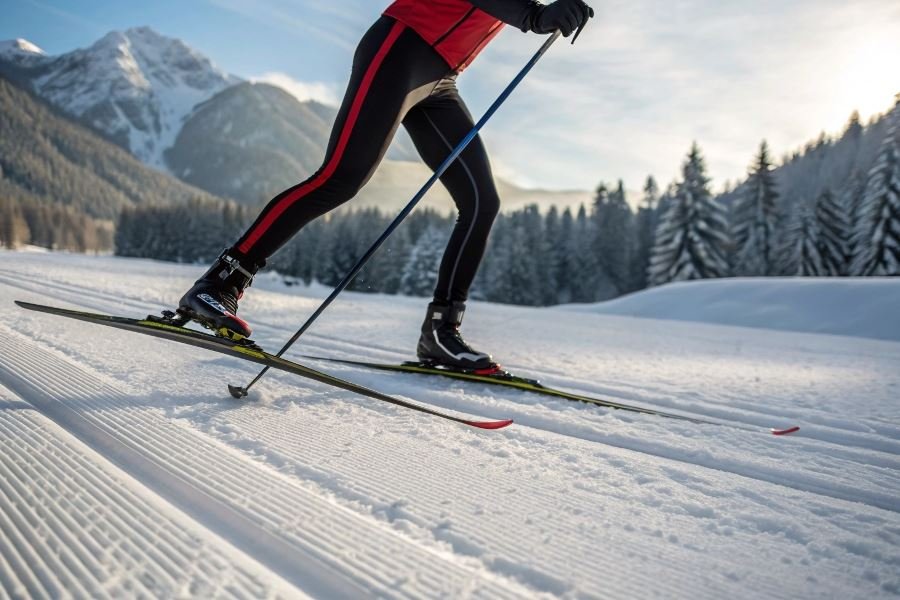
The sound of skis cutting through fresh powder. The rhythmic pole plants. The exhilaration of gliding through winter landscapes. This isn’t just a sport—it’s freedom on snow.
Cross-country skiing has exploded across North America, with trail usage up 72% since 2020. What was once considered a niche Nordic activity has transformed into a mainstream winter pursuit embraced by everyone from fitness enthusiasts to families seeking outdoor winter adventures.
The explosion of Nordic skiing
The surge in popularity isn’t surprising. Cross-country skiing offers an accessible, full-body workout that can be as gentle or as demanding as you choose. Unlike its downhill cousin, it doesn’t require expensive lift tickets or intimidating terrain—just snow and the right pair of skis.
Why your ski selection matters more than you think
Here’s the thing: the difference between the right and wrong skis isn’t just about performance—it’s about enjoyment. Beginners on racing skis will struggle with control, while experienced skiers on recreational models will feel like they’re trudging through molasses.
What separates great skis from the rest
Manufacturers like Fischer, Rossignol, Salomon, and Madshus each bring distinct philosophies to their designs:
- Base construction technology: The difference between a smooth glide and feeling like you’re dragging anchors
- Flex patterns: How the ski responds to your weight and movement
- Core materials: From lightweight carbon to traditional wood cores
- Camber profiles: The subtle curves that determine how your ski interacts with snow
The right ski doesn’t just match your ability—it complements your skiing style, preferred terrain, and even your body type. When these elements align, that’s when the magic happens.
The Ultimate Cross-Country Ski Showdown: Who Reigns Supreme?
When the snow falls and trails beckon, your choice of cross-country skis can make or break your winter experience. The market is packed with options, but not all skis are created equal. Let’s dive into the nitty-gritty of what separates the champions from the pretenders.
A thorough comparison of cross-country skis from different manufacturers reveals fascinating patterns in design philosophy, material selection, and performance characteristics. The differences might seem subtle to beginners, but veterans know these nuances translate to significant advantages on the trail.
Classic Kings: The Top 3 Manufacturers
Fischer dominates the classic skiing scene with their Air Core technology. Their Fischer Twin Skin Pro models offer exceptional grip without sacrificing glide—a holy grail combination. What sets them apart? Their proprietary base pattern technology provides consistent performance across varying snow conditions.
Rossignol’s approach emphasizes accessibility without compromising performance. The Rossignol Delta Comp series features their Control Edge technology, delivering stability that beginners appreciate and experts demand. Their waxless options have revolutionized the entry-level market.
Salomon rounds out the top three with engineering that prioritizes control. Their S/Race classic skis feature a stiffer flex pattern in the tail, providing exceptional tracking in groomed conditions. Their premium models incorporate carbon fiber reinforcement that serious racers swear by.
Skate Skiing Specialists
Madshus has quietly built a reputation as the skate skiing specialist. Their Madshus Redline 3.0 incorporates their revolutionary IntelliGrip base technology, which adapts to temperature fluctuations better than competitors. Norwegian engineering at its finest!
Atomic brings their alpine expertise to the Nordic world with the Atomic Redster S9 series. Their distinctive feature? A progressive sidecut that enhances cornering at high speeds—crucial for technical courses. Their World Cup Service grinding patterns are legendary among competitive skiers.
Fischer makes another appearance with their Fischer Speedmax Skate line, featuring Cold Base Bonding technology that eliminates the need for adhesives between layers, resulting in more responsive flex characteristics.
Material Matters: Construction Deep Dive
| Manufacturer | Core Material | Base Technology | Flex Pattern |
|---|---|---|---|
| Fischer | Air Core (Paulownia wood) | DTG World Cup | Progressive |
| Rossignol | Nomex Honeycomb | NIS Plate Compatible | Medium |
| Salomon | Densolite 3D | G5 Zeolit | Stiff tail |
| Madshus | PR 100X Carbon | IntelliGrip | Uniform |
| Atomic | FeatherCore | World Cup Service | Aggressive |
The evolution of materials has transformed performance across all price points. Carbon fiber layups have replaced fiberglass in premium models, reducing weight while maintaining torsional rigidity—essential for power transfer during the push phase.
Base technologies show the most innovation, with manufacturers developing proprietary grinding patterns optimized for specific snow conditions. Fischer’s DTG (Digital Turning Grinding) process creates microscopic structures that outperform traditional stone grinding in cold, dry conditions.
Value Proposition: Price-to-Performance Analysis
Entry-level packages start around $299, but the sweet spot for recreational enthusiasts sits between $400-600. At this price point, Rossignol offers the most balanced performance-to-price ratio, particularly in their Delta Sport line.
For competitive skiers, the investment jumps significantly. Premium race models from Fischer and Madshus command $700-900, but deliver measurable performance advantages. Is the extra $300 worth it? For serious competitors, absolutely—the carbon layup and precision base preparation translate to seconds saved per kilometer.
Atomic deserves special mention for their mid-range offerings, which incorporate many high-end technologies at more accessible price points. Their Atomic Pro C3 delivers 80% of their flagship performance at 60% of the cost.
The verdict? For classic skiing, Fischer leads on technical merit, while Rossignol offers the best value. In the skate category, Madshus edges out the competition for pure performance, but Fischer’s versatility makes them the safest all-around choice for most skiers.
Finding Your Perfect Cross-Country Ski Match
Aligning Skis with Your Personal Style
Selecting the right cross-country skis isn’t just about brand names—it’s about finding equipment that feels like an extension of your body. The perfect match depends on your unique skiing style and the terrain you frequent. Fischer skis typically offer exceptional glide for those who prioritize speed on groomed trails, while Madshus models provide superior stability for varied terrain adventurers.
For those who tackle diverse landscapes, consider how different manufacturers optimize their designs. Rossignol excels with versatile skis that transition smoothly between packed and loose snow, whereas Salomon often emphasizes maneuverability for technical terrain.
Your skiing technique also dictates your ideal match. Classic striders benefit from the traditional camber found in Atomic models, while skate skiers might prefer the responsive flex patterns of Madshus Redline series.
Match point: The right ski doesn’t just perform well—it enhances your natural movement and makes every outing more enjoyable.
Investment Value Beyond the Price Tag
When comparing manufacturers, look past the initial sticker shock to evaluate long-term value. Premium brands like Fischer and Salomon command higher prices ($300-500), but their construction often translates to extended lifespan and consistent performance.
Mid-tier manufacturers such as Alpina offer compelling value propositions, balancing quality materials with more accessible price points ($200-300). Their skis frequently deliver 80% of high-end performance at 60% of the cost.
Consider these value factors across manufacturers:
| Manufacturer | Initial Cost | Typical Lifespan | Resale Value | Performance Retention |
|---|---|---|---|---|
| Fischer | $$$ | 7-10 years | Excellent | Minimal degradation |
| Rossignol | $$$ | 6-8 years | Very Good | Gradual softening |
| Salomon | $$$ | 7-9 years | Good | Consistent |
| Madshus | $$$ | 8-10 years | Very Good | Excellent retention |
| Atomic | $$ | 5-7 years | Good | Moderate degradation |
| Alpina | $$ | 4-6 years | Fair | Noticeable after 3 yrs |
The true cost of ownership extends beyond purchase day—factor in years of reliable performance when making your decision.
Durability and Maintenance Realities
Maintenance requirements vary significantly between manufacturers, affecting both your time investment and long-term enjoyment. Fischer and Madshus skis typically feature more durable base materials that retain wax better, requiring less frequent maintenance.
Rossignol models often incorporate innovative base technologies that resist damage but may demand specific waxing protocols. Meanwhile, Atomic skis generally offer excellent durability but benefit from more regular edge maintenance to maintain optimal performance.
Maintenance comparison highlights:
- Fischer: Superior base durability, requires seasonal deep waxing but minimal between-use attention
- Salomon: Excellent topsheet durability, moderate base maintenance needs
- Madshus: Outstanding edge retention, benefits from regular but simple maintenance
- Rossignol: Good all-around durability, responds exceptionally well to proper care routines
The most expensive ski isn’t always the best choice—the ideal ski is one that matches your performance needs, maintenance willingness, and terrain preferences while delivering consistent joy on snow.
Remember that proper storage between seasons dramatically extends ski life regardless of manufacturer. Even budget-friendly options can deliver years of reliable performance when properly maintained and stored in cool, dry conditions with moderate tension.