
Ever watched someone drop a dumbbell mid-rep and wondered if there was a better way? You’re not alone. A shocking 65% of weight training injuries stem from improper grip technique, turning what should be muscle-building sessions into potential ER visits.
The humble dumbbell grip—that critical connection between your body and the weight—remains the most overlooked aspect of strength training for newcomers. Think of it as the foundation of your fitness house: build it wrong, and everything above becomes unstable. The right grip doesn’t just prevent calluses and blisters; it transforms your entire workout efficiency by activating the precise muscle groups you’re targeting.
Proper grip technique creates a ripple effect throughout your entire body. When you hold a dumbbell correctly, your wrist alignment improves, your forearm engages appropriately, and the targeted muscles receive optimal tension. This chain reaction leads to faster gains and dramatically reduced injury risk.
For beginners especially, selecting the right grip accessories can be game-changing. Consider these three critical factors:
- Material composition – Neoprene offers comfort while knurled metal provides stability
- Grip diameter – Thicker grips engage more forearm muscle but may limit maximum weight
- Moisture management – Some grips absorb sweat while others repel it
The difference between proper and improper grip technique isn’t just about comfort—it’s about unlocking your body’s true strength potential while building a sustainable fitness practice that grows with you for years to come.
Top 3 Dumbbell Grips That Transform Beginner Workouts
When you’re just starting your strength training journey, the right equipment makes all the difference. Finding the best dumbbell grips for beginners can dramatically improve comfort, prevent injuries, and help establish proper form from day one. The grip is where your body connects with the weight—it’s literally the foundation of every lift you’ll perform.
Let’s dive into the three grip types that consistently outperform the competition for newcomers to weight training. The best dumbbell grips for beginners share common qualities: they’re comfortable enough for extended use, provide sufficient traction to prevent slipping, and help position your hands correctly to engage the right muscle groups while protecting your joints.
Neoprene-Coated Grips: The Comfort Champions
Neoprene-coated dumbbell grips have become a staple in home gyms and fitness centers alike—and for good reason. These grips feature a soft, cushioned exterior that prevents the metal bar from digging into your palms during exercises.
Key benefits for beginners:
- Reduces hand fatigue during longer sets
- Prevents callus formation while your hands toughen up
- Temperature-neutral feel (no cold metal shock in winter)
- Available in color-coded weight systems for easy identification
The CAP Barbell Neoprene Dumbbells offer exceptional quality in this category, with a textured surface that adds grip security without sacrificing comfort. Most beginners find they can extend their workout duration by 15-20% when switching from bare metal to neoprene grips.
Silicone Ergonomic Grips: Perfect Hand Positioning
Silicone ergonomic grips represent the next evolution in dumbbell technology, with contoured designs that naturally guide your hands into optimal positions.
Why ergonomic grips matter for newcomers:
- Promotes proper wrist alignment during exercises
- Reduces strain on finger joints
- Contoured shape prevents rotation during movement
- Silicone material provides excellent sweat resistance
The Bowflex SelectTech dumbbells feature some of the most advanced ergonomic grips on the market, with subtle finger indentations that help beginners maintain consistent hand placement throughout their entire range of motion.
| Feature | Benefit for Beginners |
|---|---|
| Contoured shape | Guides hands into correct position |
| Finger indentations | Prevents grip shifting during exercises |
| Silicone material | Remains tacky even with sweaty hands |
| Wider center portion | Distributes pressure across entire palm |
Anti-Slip Textured Grips: Safety First
For beginners concerned about dropping weights (a legitimate worry!), anti-slip textured grips provide unmatched security during workouts.
Safety advantages:
- Deep crosshatch patterns create maximum friction
- Some models include moisture-wicking properties
- Raised dots or ridges increase surface area contact
- Provides confidence during dynamic movements
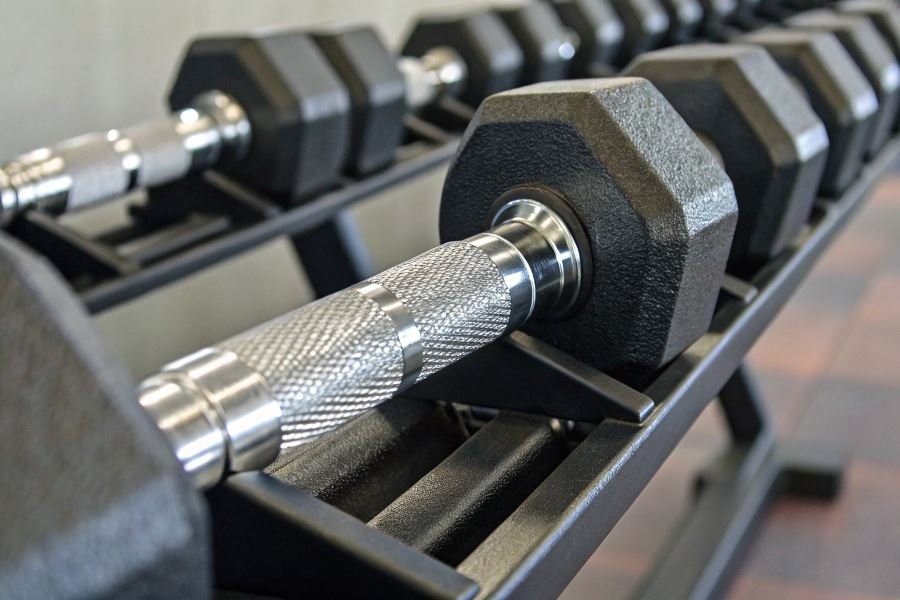
The Rogue Fitness Rubber Hex Dumbbells feature a knurled chrome handle beneath their textured grip coating—essentially providing a backup grip system if your hands start to fatigue or sweat.
Beginners should look for grips with a minimum of 2mm texture depth for optimal safety. This seemingly small detail can make the difference between a secure hold and a dropped weight during those challenging final repetitions.
Remember that grip security isn’t just about safety—it’s about confidence. When you’re not constantly worried about dropping the weight, you can focus entirely on form and muscle engagement, which accelerates your progress dramatically.
Maximizing Your Results with Dumbbell Grips
Master the fundamentals first
Proper technique forms the foundation of any effective dumbbell grip training program. When gripping dumbbells, ensure your wrist remains neutral—not bent forward or backward—to prevent strain and maximize power transfer. Your grip should be firm but not white-knuckled; think of it as holding a bird firmly enough that it can’t escape, but gently enough not to harm it.
For standard grips, position your hand centrally on the handle with fingers wrapped completely around and thumb providing counter-pressure. With specialized grips like Fat Gripz, the technique shifts slightly—your fingers won’t completely encircle the handle, forcing smaller stabilizing muscles to engage more intensely.
Form check: Stand in front of a mirror during your first few sessions. Your shoulders should remain pulled back and down, creating a stable platform for movement. Common beginner mistakes include hunching shoulders, flaring elbows unnecessarily, or allowing wrists to collapse under load.
The quality of your movement matters more than the weight you’re lifting. Perfect your form with lighter weights before progressing.
Keep your grips performing at their best
Dumbbell grips, whether built-in or attachable, require proper maintenance to deliver consistent performance and longevity. After each use, wipe down rubber or silicone grips with a damp cloth to remove sweat and oils that can degrade materials over time. For metal handles, check regularly for rust spots, especially if you train in humid environments.
Storage tip: Keep attachable grips like Grip Power Pads in a cool, dry place away from direct sunlight, which can cause premature aging of materials.
For deep cleaning, which should be done monthly:
| Grip Material | Cleaning Method | Drying Method | Avoid |
|---|---|---|---|
| Rubber/Neoprene | Mild soap solution | Air dry | Alcohol-based cleaners |
| Silicone | Dishwasher (top rack) | Air dry completely | Abrasive scrubbers |
| Metal | Vinegar solution for rust | Thorough towel dry | Soaking overnight |
| Foam | Gentle hand wash | Press with towel, then air dry | Machine washing |
Build strength systematically
Beginners should approach dumbbell grip training with a progressive strategy that builds both confidence and capability. Start with a weight that allows 12-15 repetitions with perfect form, focusing on controlled movements rather than explosive power.
Week 1-2: Familiarization phase
- Train 2-3 times weekly
- Focus on basic movements: curls, presses, rows
- Use standard grip width to establish baseline strength
Weeks 3-4: Introduction of grip variations
- Add thicker grips to one exercise per session
- Reduce weight by 20-30% when first using specialized grips
- Pay attention to how different grip widths affect muscle recruitment
Weeks 5-8: Progressive overload
- Implement a structured progression by either:
- Adding 2.5-5 pounds when you can complete all sets with good form
- Increasing repetitions from 12 to 15 before adding weight
- Decreasing rest periods between sets from 90 to 60 seconds
Recovery matters: Grip strength develops through consistent training and adequate recovery. Schedule at least 48 hours between grip-intensive sessions to allow forearm muscles to rebuild stronger.
For beginners experiencing grip fatigue before larger muscle groups reach failure, try alternating between grip-intensive exercises and movements that challenge other muscle groups, allowing partial recovery between sets.