
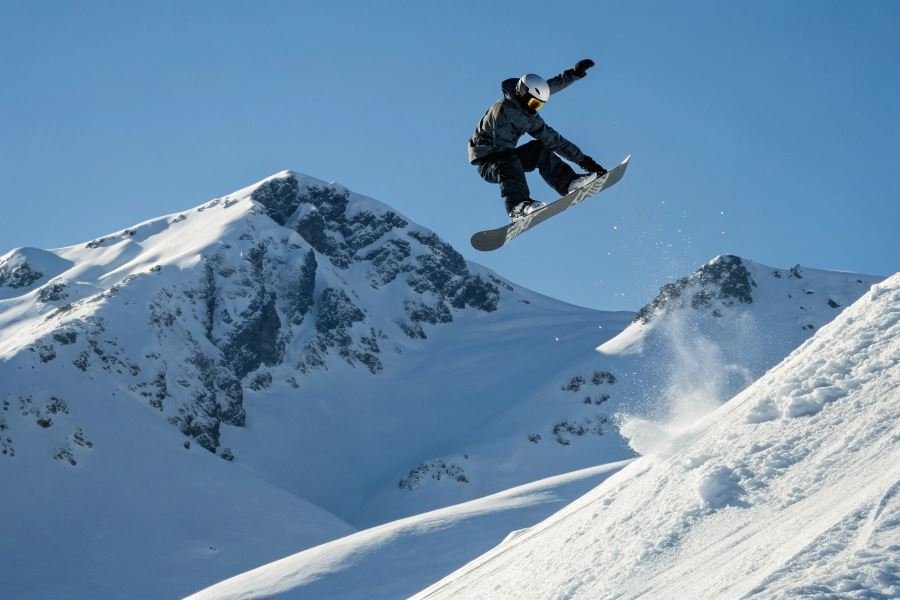
Ever watched a snowboarder effortlessly float through the air, spinning and grabbing their board like gravity was optional? That magic doesn’t just happen—it starts with the right equipment under their feet.
Freestyle snowboarding represents the artistic soul of the sport. Unlike its alpine and all-mountain cousins, freestyle focuses on creativity, technical skill, and self-expression through tricks, jumps, and park features. Your board choice becomes your most crucial performance partner in this aerial dance.
The freestyle difference
Freestyle boards differ dramatically from their mountain-carving counterparts. They’re typically shorter, more flexible, and feature twin or directional-twin shapes that allow for balanced performance whether riding regular or switch. This symmetry becomes essential when landing tricks or riding backward out of features.
“The right freestyle board doesn’t just perform tricks—it amplifies your style and covers for your mistakes.”
Performance factors that matter
When selecting your freestyle companion, three critical elements determine your success:
- Flex pattern – Softer boards forgive mistakes and press easier on rails, while stiffer options provide stability on larger jumps
- Width and shape – Your boot size and preferred trick style dictate optimal dimensions
- Camber profile – Traditional camber offers pop, while rocker variations enhance forgiveness
The difference between struggling with basic 180s and smoothly landing switch backside 540s often comes down to having equipment that complements your riding style rather than fighting against it. Your board selection forms the foundation upon which all your freestyle progression will build.
Freestyle Snowboard Specs That Actually Matter
When you’re hunting for that perfect freestyle snowboard, the technical details aren’t just marketing jargon—they’re the difference between stomping that 540 and catching an edge. Let’s dive into the specs that will transform your park sessions from frustrating to fantastic.
Selecting the right snowboard for freestyle riding and tricks requires understanding how different specifications affect performance. The board’s flex pattern, shape, profile, and size all work together to create a responsive platform that matches your riding style and progression goals. Each element plays a crucial role in how the board handles jumps, rails, and other freestyle features.
Flex Patterns: The Soul of Your Freestyle Board
The flex of your board dictates its personality on snow. Think of it as a spectrum:
Soft Flex (1-3/10): The butter king. These noodle-like boards excel at:
- Press tricks and butters
- Jibbing and rail features
- Forgiving landings for beginners
Medium Flex (4-6/10): The all-arounder that most freestyle riders gravitate toward:
- Balanced pop for jumps
- Enough stability for medium kickers
- Still pressable for stylish butters
Stiff Flex (7-10/10): The big-air specialist:
- Maximum pop and response
- Stable landings from serious height
- Better edge hold at speed approaching features
“The right flex isn’t about what the pros ride—it’s about matching your board’s personality to your riding style and the terrain you frequent most.”
Board Shapes and Profiles That Amplify Tricks
Modern freestyle boards come in various shapes and camber profiles that dramatically affect trick performance:
| Profile Type | Best For | Characteristics |
|---|---|---|
| Traditional Camber | Pipe riders, precision jumpers | Maximum pop, stable landings, requires technique |
| Flat | All-around park | Predictable feel, decent pop, forgiving |
| Rocker | Jibbers, rail specialists | Catch-free riding, easy presses, less pop |
| Hybrid Camber | Versatile freestylers | Combines pop with forgiveness, best of both worlds |
Shape-wise, true twins reign supreme for freestyle. Their symmetrical design means identical performance riding regular or switch—essential for landing and riding out of spins. Directional twins offer slightly more stability for bigger jumps while maintaining switch-riding capability.
Size Matters: Finding Your Freestyle Sweet Spot
Conventional wisdom about snowboard sizing goes out the window for freestyle. Here’s the insider approach:
Go Shorter: Most freestyle riders size down 3-5cm from their all-mountain board. This creates:
- Quicker edge-to-edge transitions
- Easier spin initiation
- Lighter weight for aerial maneuvers
Width Considerations: Wider boards (mid-wides and wides) provide:
- Stable landing platforms
- Better balance on rails
- Reduced toe/heel drag during technical tricks
Your weight, boot size, and riding style should dictate your final choice. A 150-pound rider might choose a 151-154cm board for all-around freestyle, but drop to 147-150cm for a jib-focused setup.
Remember that these specifications work as a system—the perfect flex means nothing if your board is too long or has the wrong profile for your preferred tricks. Test different combinations whenever possible, and you’ll discover the setup that makes your freestyle progression feel effortless.
Sealing the Deal on Your Freestyle Snowboard
Choosing the perfect freestyle snowboard isn’t just about specs and price tags—it’s about finding that magical extension of yourself that will launch you into the stratosphere of trick progression. After narrowing down your options, here’s how to make that final, confident decision.
Match Your Board to Your Journey
The perfect freestyle board grows with you. Beginners should prioritize forgiveness over performance—look for softer flex patterns (3-4 on the 1-10 scale) that provide easier turn initiation and more room for error when landing tricks.
Intermediate riders benefit from mid-flex boards (4-6) that balance playfulness with stability. These boards offer enough pop for ollieing onto rails while maintaining enough forgiveness when you don’t quite stick the landing.
For advanced freestyle enthusiasts, consider how your riding is evolving:
- Park-focused progression demands true-twin shapes with medium-stiff flex (6-7) for maximum switch riding capability
- Transition specialists might prefer directional twins with slightly stiffer flex for carving into halfpipe walls
- Urban rail destroyers often choose softer, shorter boards for maximum pressability
The board that limits you today will frustrate you tomorrow. Always buy with your six-month progression goals in mind.
Budget Reality Check
Freestyle snowboards typically range from $300 to $700, with most quality options hovering around $450. While premium boards from Burton or Lib Tech command higher prices, many mid-tier manufacturers like Capita and Gnu offer exceptional performance at more accessible price points.
Consider this value assessment framework:
| Price Range | What You Get | Best For |
|---|---|---|
| $300-400 | Basic tech, decent durability | Beginners, occasional riders |
| $400-550 | Enhanced pop, better edge hold | Intermediate, dedicated riders |
| $550+ | Premium materials, advanced tech | Advanced, competitive riders |
Remember that last season’s models often see discounts of 30-40% while offering nearly identical technology to current-year boards. The smart money often waits for end-of-season sales when retailers like Evo slash prices to make room for next year’s inventory.
Test Before You Invest
No amount of research substitutes for actual on-snow experience. Most mountain resorts offer demo programs where you can test multiple boards in a single day for $50-75—an investment that pays dividends when you’re spending hundreds on your perfect match.
When testing:
- Ride your regular terrain – Hit the park features you normally session
- Try multiple sizes of the same model to dial in your perfect length
- Test in varying conditions if possible (groomed runs, park features, powder stashes)
Can’t demo? Leverage these alternatives:
- Join local snowboard groups on social platforms to arrange board swaps
- Visit The House or similar retailers with liberal return policies
- Rent specific models from specialty shops that apply rental fees toward purchase
The ultimate test: Does the board make you want to ride more? The best freestyle board isn’t necessarily the most expensive or technically advanced—it’s the one that makes you eager to strap in and push your limits every chance you get.