
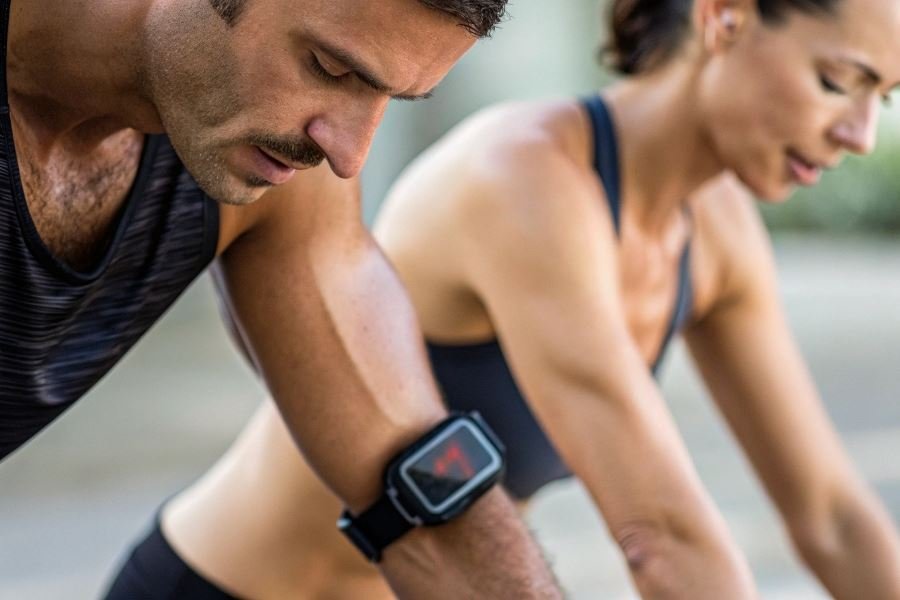
Your heart speaks volumes about your fitness journey—are you truly listening to what it’s saying?
Every beat of your heart tells a story about your workout intensity, recovery status, and overall health. Heart rate monitoring has transformed from a tool used exclusively by elite athletes to an essential fitness companion for anyone serious about their training. Whether you’re pushing through a high-intensity interval session or monitoring your recovery during sleep, tracking your heart’s response provides invaluable data that can dramatically improve your results.
The technology behind heart rate monitoring has evolved significantly since the first wireless heart rate monitor was introduced by Polar in 1977. What began as bulky chest straps with separate watch displays has now diversified into sleek wristbands, smartwatches, and even smart clothing with embedded sensors. This evolution has created a fundamental choice for fitness enthusiasts: chest strap or wrist-based monitoring?
“The right heart rate monitor doesn’t just track data—it transforms how you understand your body’s response to exercise.”
This choice isn’t merely about comfort or convenience—it’s about accuracy, functionality, and how the data integrates with your fitness goals. Chest straps, positioned directly against the skin near the heart, capture electrical signals (ECG) similar to medical equipment. Wrist monitors, meanwhile, use optical sensors that detect blood flow changes through your skin (PPG technology).
The debate between chest and wrist monitors centers on a critical question: do you prioritize pinpoint accuracy or everyday wearability? The answer depends on your specific needs, the activities you perform, and how you plan to use the data to optimize your training.
The Ultimate Showdown: Chest vs Wrist Heart Rate Monitors
Accuracy when it matters most
When tracking your heart rate during workouts, accuracy isn’t just nice to have—it’s essential. Chest strap monitors like the Polar H10 consistently outperform wrist-based options during high-intensity activities, with error margins typically under 1%. This is because chest straps measure electrical signals directly from your heart (ECG method), while wrist monitors use optical technology that can struggle during movement.
The debate around chest vs wrist heart rate monitors: which is better to choose often comes down to your specific needs and activities. During rest and moderate exercise, quality wrist monitors from brands like Garmin and Fitbit perform admirably with accuracy rates of 95-98%. However, once you hit those sprint intervals or HIIT workouts, wrist monitors can lag by 5-15 beats per minute—a significant difference when you’re working in specific heart rate zones.
Comfort and wearability factors
| Monitor Type | All-day Comfort | Exercise Comfort | Visibility During Activity |
|---|---|---|---|
| Chest Strap | ★★☆☆☆ | ★★★★☆ | Requires paired device |
| Wrist Monitor | ★★★★★ | ★★★☆☆ | Direct visual feedback |
Wrist-based monitors win handily in the convenience department. They’re effortlessly integrated into your daily routine—just strap it on in the morning and forget about it. Many users report forgetting they’re even wearing devices like the Apple Watch after a few hours.
Chest straps require deliberate use—you’re unlikely to wear one all day. However, modern options like the Wahoo TICKR X have dramatically improved comfort with softer materials and adjustable straps that prevent the dreaded mid-workout chafing that plagued earlier models.
Power and connectivity considerations
Battery life presents a stark contrast between these technologies:
- Chest straps: Typically offer 400+ hours of active use with replaceable coin cell batteries
- Wrist monitors: Require charging every 2-7 days depending on GPS and feature usage
Connectivity features have evolved significantly in both categories. Premium chest straps now offer simultaneous Bluetooth and ANT+ connections, allowing you to broadcast to multiple devices at once—perfect for Zwift sessions or gym equipment pairing. Most wrist monitors offer Bluetooth connectivity, though some advanced models like the Coros Pace 2 include ANT+ for broader compatibility.
Value assessment and price considerations
Entry-level chest straps start around $50, while quality wrist-based heart rate monitors begin at $150 and quickly climb past $400 for premium multisport watches. The value equation isn’t straightforward:
- A $80 chest strap paired with your smartphone provides laboratory-grade accuracy for serious training
- A $250 wrist monitor delivers continuous health insights beyond just workouts
For dedicated athletes focused on precise training zones, the chest strap’s superior accuracy justifies its specialized nature. For those balancing fitness with overall health tracking, the additional features of wrist monitors—sleep analysis, activity tracking, and smartphone notifications—create compelling value despite the higher price point.
The ideal solution for many serious fitness enthusiasts? A hybrid approach: wrist monitor for daily tracking and a chest strap for those crucial high-intensity sessions where accuracy can make or break your training goals.
Making Your Decision: The Perfect Heart Rate Monitor for Your Fitness Journey
Let’s cut through the confusion and match you with the heart rate monitor that will truly elevate your training. Whether you’re training for your first marathon or tracking daily activity, the right monitor can make all the difference in reaching your fitness goals.
When chest monitors shine brightest
Chest strap heart rate monitors dominate in scenarios where precision matters most:
High-intensity interval training (HIIT) demands split-second accuracy that chest straps deliver consistently. When you’re pushing through those 30-second all-out efforts on the Peloton or at Orangetheory Fitness, the electrocardiogram (ECG) technology in chest straps captures every heartbeat without lag.
During rapid heart rate changes, chest monitors maintain accuracy while wrist monitors often struggle to keep up.
For serious endurance athletes, chest straps like the Polar H10 remain the gold standard. Marathon runners, triathletes, and cyclists training with power meters benefit from the consistent readings and deeper metrics like heart rate variability (HRV) that many chest straps provide.
Cold weather training presents another scenario where chest straps excel. When temperatures drop below freezing, optical sensors on wrists struggle with reduced blood flow to extremities, while chest straps maintain performance.
The difference between chest and wrist accuracy becomes most pronounced during activities with irregular arm movements like weightlifting, boxing, or rowing.
When wrist monitors take the lead
Wrist-based monitors have carved out their own territory where they truly excel:
All-day activity tracking is where wrist monitors like the Fitbit Sense or Apple Watch shine. They seamlessly track your resting heart rate, sleep patterns, and daily activity without requiring you to wear an additional device.
Water sports enthusiasts often prefer wrist monitors for swimming and surfing. While specialized chest straps exist for swimming, many athletes find wrist monitors more comfortable and practical for water activities.
Yoga and pilates practitioners benefit from wrist monitors that don’t restrict movement or become uncomfortable during floor exercises. The continuous monitoring without the chest strap’s pressure makes for a more pleasant experience during mindful movement practices.
For those new to fitness tracking, wrist monitors offer the gentlest introduction with their user-friendly interfaces and all-in-one approach.
Finding your perfect match
Your ideal heart rate monitor depends on your specific profile and needs:
| User Profile | Recommended Monitor Type | Key Benefit |
|---|---|---|
| Competitive athlete | Chest strap | Superior accuracy during high-intensity efforts |
| Casual fitness enthusiast | Wrist-based | Convenience and all-day tracking |
| Data-driven trainer | Chest strap | Advanced metrics like HRV and R-R intervals |
| Multisport athlete | Hybrid approach | Chest for training, wrist for daily wear |
| Beginner | Wrist-based | Ease of use and motivation features |
Recovery-focused athletes should consider chest straps for morning HRV readings, which provide insights into recovery status and readiness to train. The Whoop strap offers a wrist alternative specifically designed for recovery metrics.
Budget-conscious fitness enthusiasts can start with affordable wrist options like the Amazfit Bip that deliver solid performance without breaking the bank.
Remember that the best heart rate monitor is ultimately the one you’ll wear consistently. Many serious athletes eventually adopt a hybrid approach—chest strap for targeted workouts and wrist monitor for daily life—getting the best of both worlds.