
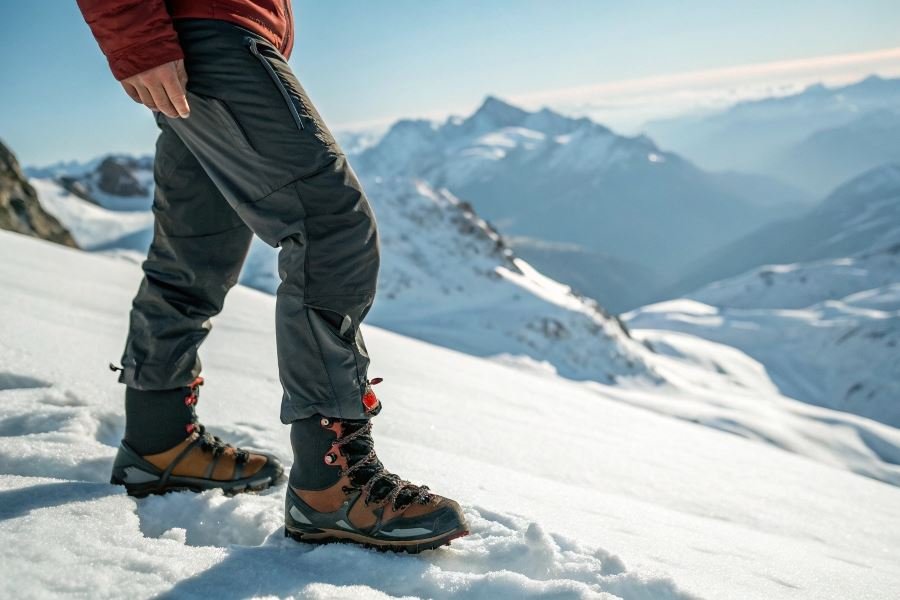
At 29,032 feet above sea level, your toes face temperatures of -40°F while supporting your entire body weight on ice-covered rock no wider than a dinner plate. Would your boots keep you alive?
High-altitude mountaineering represents the ultimate test of human endurance, where every piece of equipment becomes a lifeline. Among these critical tools, nothing determines success—or survival—more definitively than your boots. The perfect high-altitude boot doesn’t just protect feet; it becomes an extension of the climber’s body, enabling impossible feats in the death zone above 8,000 meters where oxygen levels can’t sustain human life.
The non-negotiable requirements
When climbing in extreme elevations, boot failure isn’t just inconvenient—it’s potentially fatal. Modern high-altitude boots must deliver on multiple fronts simultaneously:
- Insulation against extreme cold: Multi-layer systems that maintain warmth even at -60°F
- Rigid soles: Providing crucial support for crampons and stability on technical terrain
- Waterproofing: Keeping feet dry despite snow, ice, and changing conditions
- Weight efficiency: Every ounce matters when oxygen is scarce
- Durability: Withstanding abrasion against rock and ice
From leather to space-age materials
The transformation of mountaineering footwear represents one of the most dramatic gear evolutions in outdoor sports. Early Everest expeditions in the 1920s relied on leather boots with rudimentary insulation—a far cry from today’s technical marvels. The introduction of plastic shells in the 1970s revolutionized cold-weather climbing, while recent advances in synthetic materials, carbon fiber, and aerogel insulation have created boots that weigh half as much while providing twice the protection.
Summit-Ready Footwear: Elite Boots for Extreme Altitudes
When you’re standing at 20,000 feet with nothing but ice beneath you and thin air above, your choice of footwear isn’t just about comfort—it’s about survival. The specialized world of high-altitude mountaineering demands boots that can withstand brutal temperatures while providing the technical performance needed for the world’s most challenging climbs.
The most popular models of boots for high-altitude mountaineering have evolved dramatically over the past decade, with manufacturers pushing materials science to new heights. These aren’t your weekend hiking boots—they’re technical marvels designed for the death zone, where every design element serves a critical purpose.
La Sportiva Olympus Mons Evo: The Gold Standard
The La Sportiva Olympus Mons Evo stands as the reference point against which all other 8000-meter boots are measured. This double-boot system features:
- Integrated gaiter system with water-resistant zipper closure
- Innovative fast-lacing system that can be operated with gloves
- Carbon fiber insole providing exceptional insulation with minimal weight
What truly sets the Olympus Mons apart is its remarkable warmth-to-weight ratio. At just 4.2 pounds per pair (size 42), these boots deliver protection in temperatures reaching -40°F without the cumbersome bulk of older designs.
“The Olympus Mons doesn’t just keep you warm—it gives you the technical precision to navigate mixed terrain when oxygen deprivation affects your every move.”
Scarpa Phantom 8000: Technical Precision Redefined
The Scarpa Phantom 8000 represents Italian craftsmanship at its finest, with a focus on technical climbing performance even in extreme conditions.
Key specifications:
- Primaloft insulation rated to -40°F
- Vibram Zero Gravity Lite outsole with integrated crampon attachment
- 3D flex ankle system allowing precise foot placement on technical terrain
| Feature | Benefit |
|---|---|
| Outdry membrane | 100% waterproof protection without compromising breathability |
| Ergo-fit last | Reduces pressure points during multi-day expeditions |
| Integrated gaiter | Prevents snow entry while reducing overall weight |
The Phantom 8000’s most impressive achievement is maintaining climbing sensitivity despite its substantial insulation. When navigating mixed rock and ice sections above 25,000 feet, this tactile feedback can make the difference between confident movement and dangerous hesitation.
Millet Everest Summit GTX: French Engineering Excellence
The Millet Everest Summit GTX might be the newest contender among the elite three, but it’s quickly established itself as a favorite for expeditions to the world’s highest peaks.
Construction highlights:
- Triple-layer insulation system with reflective aluminum for maximum heat retention
- Kevlar-reinforced outer shell providing exceptional durability against rock abrasion
- Customizable fit system with heat-moldable inner boots
What distinguishes the Everest Summit is its temperature management. Rated to an astonishing -60°F, these boots incorporate aerogel technology—the same insulation used in NASA space suits—to create an unprecedented thermal barrier while maintaining flexibility.
The boot’s innovative lacing system allows for micro-adjustments throughout an expedition as feet swell at altitude, preventing the circulation issues that can lead to frostbite in less adaptable footwear.
Each of these summit-worthy contenders represents thousands of hours of research, testing on the world’s highest peaks, and continuous refinement. For those venturing above 8000 meters, these aren’t just boots—they’re life support systems for your feet.
Conquering Heights: Your Ultimate Boot Selection Guide
The Decision Factors That Make or Break Your Climb
When you’re standing at 20,000 feet with nothing between you and the abyss but a pair of boots, every design detail suddenly becomes life-critical. The difference between summit success and frostbitten retreat often comes down to what’s on your feet.
Insulation rating tops the comparison checklist. Modern high-altitude boots like the La Sportiva Olympus Mons Evo offer multi-layer systems with temperature ratings down to -40°F. Meanwhile, the Scarpa Phantom 8000 uses Primaloft insulation that maintains warmth even when wet—a game-changer when unexpected weather strikes.
Weight considerations create the eternal climber’s dilemma. The Millet Everest Summit GTX weighs in at a remarkable 5.5 pounds per pair, while offering comparable warmth to heavier competitors. Remember:
Every 100 grams on your feet equals roughly 1 kilogram on your back in terms of energy expenditure over distance.
Crampon compatibility isn’t negotiable—it’s essential. Boots with integrated gaiter systems like the Lowa Expedition 8000 Evo RD feature reinforced welts specifically designed for automatic crampons, creating that bombproof connection you’ll need on technical ice.
Mountain-Specific Boot Selection
The Himalayas demand different footwear solutions than Denali or Aconcagua. Here’s why:
| Mountain Range | Primary Challenges | Recommended Boot Features |
|---|---|---|
| Himalayas | Extreme cold, high altitude | Double-boot systems, -40°F rating, maximum insulation |
| Alaska Range | Wet cold, heavy loads | Waterproof outer shells, rigid midsoles for load support |
| Andes | Variable conditions, rocky terrain | Versatile insulation, enhanced rock protection |
On Denali, the Mammut Nordwand Pro excels with its balance of insulation and waterproofing—critical when facing Alaska’s notorious wet cold. For Aconcagua, many climbers prefer the Salewa Vultur Vertical GTX for its adaptability across the mountain’s diverse microclimates.
Altitude-specific design matters tremendously. Above 6000 meters, prioritize boots with integrated gaiters to prevent snow entry and preserve precious warmth. Below that threshold, separable systems offer more versatility for approach hikes.
The Long Game: Investment and Maintenance
High-altitude boots represent a significant investment—typically $700-1000—but proper care extends their lifespan dramatically.
Resoling options vary significantly between models. The Koflach Arctis Expe features replaceable outsoles, potentially doubling boot lifespan. Contrast this with fully integrated designs where a worn sole means replacing the entire boot.
Maintenance requirements differ based on construction materials. Synthetic boots like the Five Ten Grandstone need minimal care but offer shorter lifespans. Traditional leather options from Zamberlan demand regular conditioning but reward you with decades of service when properly maintained.
Storage protocol is non-negotiable for preserving boot integrity. Always clean thoroughly after expeditions, dry completely away from direct heat, and store with boot trees to maintain shape. This simple routine can add years to your investment.
Remember that boot technology evolves—what was cutting-edge five years ago may now be outperformed by newer materials and construction techniques. The best mountaineers reassess their footwear every few seasons, weighing the benefits of innovation against proven reliability.