
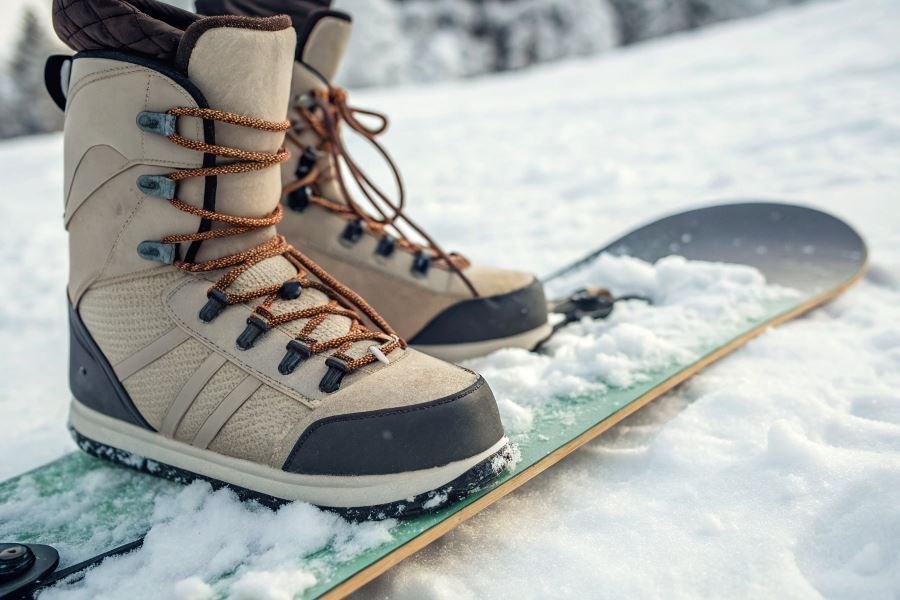
Your first turns on a snowboard will be defined not by the board beneath your feet, but by what’s wrapped around them.
Finding the perfect snowboarding boots isn’t just about comfort—it’s about creating the crucial connection between your body and your board. Think of boots as the interpreter that translates your intentions into action on the snow. When beginners struggle with snowboarding, ill-fitting boots are often the hidden culprit.
The comfort-performance paradox
The right boots strike that delicate balance between comfort and responsiveness. Too stiff, and you’ll fight your equipment instead of learning technique. Too soft, and you’ll lack the precision needed to progress beyond basic turns.
“The difference between proper and improper boot fit can accelerate your learning curve by weeks, not days.” – Professional snowboard instructor
Three factors that make or break your boot experience
- Flex rating – Beginners typically benefit from a softer flex (3-4 on a 1-10 scale)
- Proper sizing – Snowboard boots should feel snug everywhere without pressure points
- Lacing system – Traditional laces offer customization, while BOA systems provide convenience
Your progression from pizza stops to confident carving depends significantly on how your boots transfer energy to your board. When your feet are properly supported, you can focus on technique rather than fighting discomfort or compensating for sloppy response.
Remember that boot fit evolves as you ride—what feels perfect in the shop might reveal pressure points after a full day on the mountain. Always test new boots by wearing them for at least 20 minutes before making your final decision.
The Perfect Fit: Mastering Boot Selection for Snowboarding Beginners
Finding the right snowboarding boots can make or break your experience on the slopes. Unlike regular winter footwear, snowboarding boots are technical equipment designed to transfer your movements precisely to your board while keeping you comfortable through long days in varying conditions.
When learning how to choose snowboarding boots for a beginner, the most critical factor is proper fit. Ill-fitting boots can lead to pain, reduced control, and a frustrating experience that might cut your snowboarding journey short before it really begins. Let’s dive into the essential considerations that will set you up for success.
Measuring Your Feet Like a Pro
Forget everything you think you know about your shoe size. Snowboard boot sizing requires specific measurement techniques:
- Measure late in the day when your feet are naturally at their largest
- Wear snowboarding socks during measurement for accuracy
- Use a ruler against a wall to measure from heel to longest toe (often not your big toe!)
Most manufacturers provide size charts that convert your measurements to their specific sizing. Remember that European, US, and Mondo (cm) sizing all differ, so always check the conversion chart for your specific brand.
Pro tip: Your snowboard boots should feel snug everywhere with no pressure points. A properly fitted boot will hold your heel firmly but allow your toes to wiggle slightly.
Decoding Flex Ratings: Finding Your Sweet Spot
Snowboard boot stiffness is typically rated on a scale of 1-10, with higher numbers indicating stiffer boots:
| Flex Rating | Best For | Riding Style |
|---|---|---|
| 1-3 (Soft) | Beginners, park riders | Forgiving, easier to learn |
| 4-6 (Medium) | Intermediate, all-mountain | Versatile performance |
| 7-10 (Stiff) | Advanced, freeride, backcountry | Responsive, precise control |
As a beginner, you’ll generally want to start with a softer flex (2-4) that forgives mistakes and allows easier movement while you’re learning. Softer boots are more comfortable initially and less fatiguing as you develop your technique.
However, if you’re athletic or progress quickly in other sports, you might consider a medium flex (4-5) that will accommodate your advancement without needing replacement as soon.
Nailing the Heel Hold and Toe Room Balance
The internal fit of your boot determines your control and comfort:
Heel hold is absolutely critical – your heel should remain firmly in place when you:
- Stand on your toes
- Flex forward into riding position
- Make heel-side turns
Many boots from Burton and ThirtyTwo feature special heel hold technologies like J-bars or internal harnesses that prevent lift without creating pressure points.
Toe room requires a delicate balance:
- Too much space leads to movement and reduced control
- Too little space causes painful pressure, especially when riding downhill
- Ideal fit allows toes to touch the end when standing straight, but pull back slightly when in riding stance
Remember that boots will “pack out” (compress and expand) after 5-7 days of riding, typically creating about a quarter to half size of additional space. Factor this into your initial fit decision.
When trying on boots, spend at least 15-20 minutes wearing them in the shop. Walk around, flex forward, and simulate riding positions. The right boots should feel snug but not painful, with your heel locked firmly in place throughout all movements.
Sealing the Deal: Your First Snowboard Boots
Finding the perfect snowboard boots as a beginner is like discovering your soulmate on the slopes – when it clicks, you’ll know. Let’s cut through the confusion and nail down exactly how to make that final decision.
Top beginner boot models that deliver
The market is packed with options, but three models consistently stand out for newcomers to the sport:
Burton Moto BOA – The gold standard for beginners. With a flex rating of 3/10 (perfectly soft for learning), the BOA lacing system lets you adjust tightness with a simple dial turn. The DynoLITE outsole reduces weight while maintaining durability, and at $229, it delivers exceptional value.
ThirtyTwo Shifty BOA – These boots feature an intuitive fit right out of the box with heat-moldable liners that conform to your feet after just 2-3 riding sessions. The articulated cuff reduces break-in time, and the Evolution foam outsole provides excellent cushioning for those inevitable beginner falls. Priced around $199.
Vans Aura OG – With traditional lacing for riders who prefer precise zone-specific tightness, these boots offer a medium-soft flex (4/10) that grows with your skills. The V2 UltraCush liner balances comfort and response, while the heat-retention layer keeps toes warm during long lift rides. Typically available for $239.
Each of these models strikes the perfect balance between forgiveness for learning and enough response to progress through your first few seasons.
Budget reality check and value hunting
| Boot Tier | Price Range | Expected Lifespan | Best For |
|---|---|---|---|
| Budget | $150-200 | 1-2 seasons | Weekend warriors |
| Mid-range | $200-280 | 2-3 seasons | Regular riders (10+ days/year) |
| Premium | $280+ | 3+ seasons | Committed beginners |
When assessing value, consider cost-per-day rather than just sticker price. A $250 boot used for 15 days costs about $16 per day in the first season – less than most rental fees. If you’ll ride more than 5-7 days this season, buying makes financial sense.
The cheapest boots are rarely the best value. Mid-range options typically offer the sweet spot of durability, comfort, and performance that will support your progression.
Look for last season’s models for savings of 20-40% without sacrificing quality. Many shops clear inventory in March and April, making spring an excellent time to find deals on quality boots.
Where to try and buy your first boots
Physical retailers remain the gold standard for boot fitting. Shops like REI, Evo, and local board shops employ staff who can assess your foot shape and riding goals. They’ll often heat-mold liners on the spot and can recommend insoles for improved fit.
When visiting shops:
- Try boots late in the day when feet are naturally swollen
- Wear the exact socks you’ll use for riding
- Plan to spend at least 45 minutes trying multiple models
- Walk around, flex forward, and simulate riding positions
Online retailers like Backcountry and The House offer wider selection and often better prices, but come with fitting challenges. If going this route:
- Order multiple sizes with free returns
- Check sizing charts carefully and measure your feet at home
- Read user reviews focusing on fit comments from similar-sized riders
The ideal approach combines both: try locally, then purchase wherever offers the best value – though supporting local shops builds community and ensures fitting help when you need it.
Remember, the perfect boot isn’t necessarily the most expensive or flashiest – it’s the one that fits your unique feet and supports your snowboarding journey from day one.