
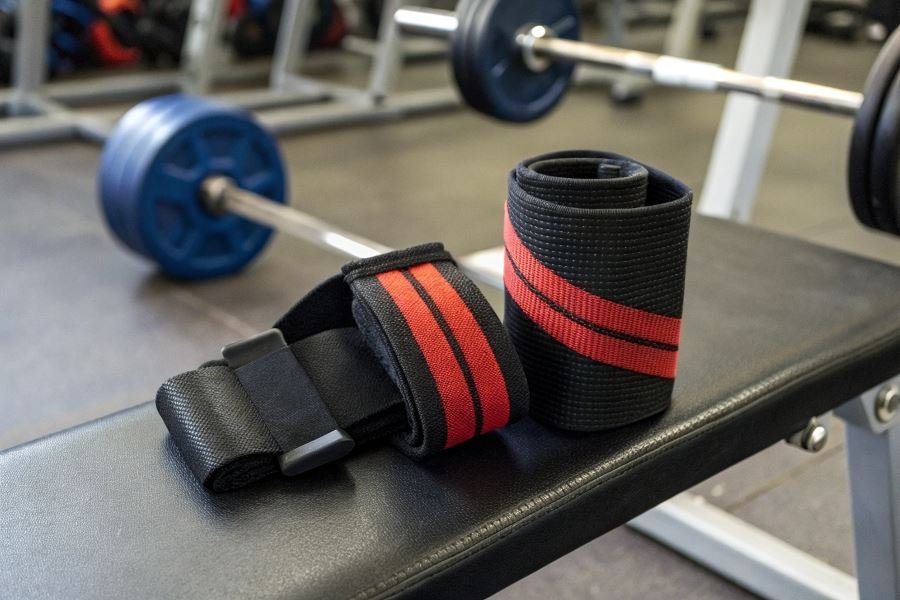
Ever wondered why elite athletes wrap their joints before competition? That simple strip of fabric might be the difference between a gold medal and a career-ending injury. Sports bandages—those tactical wraps you see on ankles, wrists, and knees—are engineering marvels disguised as simple accessories.
Sports bandages serve dual masters: performance enhancement and injury prevention. They stabilize joints, compress muscles to improve blood flow, and provide crucial feedback to athletes about body positioning. The right bandage can increase proprioception—your body’s awareness of itself in space—by up to 40%, giving athletes that critical edge when milliseconds matter.
What began as simple cloth strips in ancient Greece has evolved into a sophisticated science. The 1980s introduced elastic bandages with improved stretch and recovery. By the early 2000s, kinesiology tape revolutionized the field with its ability to support muscles while allowing full range of motion. Today’s advanced composites incorporate carbon fiber, copper-infused fabrics, and even smart materials that change tension based on body temperature.
Bandages generally fall into three support categories:
- Rigid: Maximum support, minimal movement (think ankle stabilizers)
- Semi-rigid: Moderate support with some flexibility (common for knees)
- Elastic: Light support with maximum movement (often used for compression)
Application methods vary too—from simple wrap techniques to complex patterns that target specific muscle groups. The science behind these patterns is as intricate as the anatomy they support.
Sport-Specific Bandages: The Ultimate Support System
When athletes hit the field, track, or gym, the right support can make all the difference between peak performance and potential injury. The specialized world of sports bandages has evolved dramatically, with each athletic discipline demanding its own unique support solutions. Sports bandages for different types of sports: features and differences reflect the specific stresses, movements, and injury risks associated with various athletic activities. Let’s dive into how these essential pieces of equipment are tailored to different sporting categories.
Contact Sport Protection Warriors
Football, hockey, and basketball athletes face a battlefield of collisions, impacts, and sudden directional changes. The bandages designed for these high-impact sports prioritize stability and protection above all else.
Football players typically rely on rigid, high-compression bandages with reinforced sides to protect against the lateral forces that threaten knee and ankle stability. These bandages often feature:
- Extra-thick neoprene construction (5-7mm)
- Lateral stabilizers or metal stays
- Impact-absorbing padding
- Anti-slip silicone grips
Hockey bandages incorporate similar stability features but add enhanced cold-resistance properties and often include cut-resistant materials like Kevlar-infused fabrics to protect against skate blades.
Basketball players need the perfect balance of stability and mobility, with bandages that offer:
“The ideal basketball bandage provides enough support to prevent ankle rolls during jumps and cuts, while maintaining the flexibility needed for explosive movements.” – Sports Medicine Journal
| Sport | Primary Protection | Material Thickness | Key Features |
|---|---|---|---|
| Football | Lateral stability | 5-7mm | Metal stays, impact padding |
| Hockey | Impact & cut protection | 4-6mm | Cut-resistant fibers, cold-resistant |
| Basketball | Ankle/knee stability | 3-5mm | Graduated compression, flexibility zones |
Endurance Sport Comfort Champions
The repetitive motion athletes face different challenges. Runners, cyclists, and swimmers need bandages that prevent overuse injuries while maintaining comfort over extended periods.
Running bandages focus on lightweight compression and moisture management. They’re typically thinner (2-3mm) and feature breathable materials that prevent chafing during those long-distance efforts. Many incorporate targeted compression zones that support muscles without restricting blood flow.
Cyclists benefit from bandages with:
- Articulated joint designs that accommodate the pedaling motion
- Silicone grippers to prevent migration during rides
- UV protection for exposed areas
- Minimal bulk to fit under cycling gear
Swimming bandages represent perhaps the most specialized category, with waterproof, chlorine-resistant materials that maintain compression even when wet. These sleek, hydrodynamic supports often incorporate quick-drying properties and antimicrobial treatments to prevent bacterial growth.
Strength Sport Power Partners
When it comes to weightlifting, CrossFit, and gymnastics, bandages serve a dual purpose: joint protection and performance enhancement.
Weightlifting bandages feature:
- Extremely rigid wrist and knee supports (7-10mm thickness)
- Reinforced stitching to withstand extreme loads
- Adjustable compression levels for different lift types
- Heat-retention properties to keep joints warm
CrossFit athletes require the most versatile bandages, with modular designs that can adapt to the sport’s varied movements. Many feature removable stays or adjustable compression straps that can be modified between different workout elements.
Gymnasts rely on ultra-flexible bandages that provide support without limiting range of motion. These specialized supports often incorporate:
- Thin, elastic materials (1-2mm)
- Anatomical contouring for precise joint alignment
- Minimal profile to fit under grips and equipment
- Enhanced grip surfaces for apparatus work
The right sport-specific bandage isn’t just an accessory—it’s essential equipment that can extend careers and maximize performance across every athletic discipline.
Mastering the Art of Sports Bandage Selection
Choosing the right support for your sport
Selecting the perfect sports bandage isn’t just about grabbing whatever’s on sale at your local sporting goods store. It’s about understanding the unique demands of your sport, the specific nature of your injury, and how your body responds to different support systems. The difference between a properly selected bandage and an improper one can mean the difference between a quick recovery and a season-ending setback.
When choosing sports bandages, three critical factors should guide your decision:
-
Injury specificity – Different injuries require different levels of compression, stability, and flexibility. A sprained ankle needs more rigid support than general muscle soreness.
-
Sport-specific demands – Basketball players need different ankle support than runners, while weightlifters require wrist support that differs from tennis players.
-
Personal comfort preferences – The most technically perfect bandage is useless if you can’t tolerate wearing it during activity.
The best sports bandage is the one that provides optimal support while allowing you to perform at your highest level without distraction.
Application techniques that maximize protection
Even the highest-quality sports bandage will fail if applied incorrectly. Proper application techniques ensure you get maximum benefit while minimizing the risk of circulation problems or skin irritation.
For elastic bandages, the “figure-eight” technique remains the gold standard for ankle support, while the spiral technique works best for cylindrical body parts like forearms. Kinesiology tape applications vary dramatically based on whether you’re seeking support, pain relief, or improved circulation.
Key application principles:
- Start with clean, dry skin
- Apply with consistent tension (typically 50-75% stretch for elastic bandages)
- Avoid wrinkles or bunching that can cause pressure points
- Secure ends properly without restricting circulation
- Check for proper finger/toe color and sensation after application
Bandage care and replacement schedules
Sports bandages aren’t forever companions. Their effectiveness diminishes over time, and using worn-out bandages can actually increase injury risk rather than reduce it.
| Bandage Type | Typical Lifespan | Replacement Indicators |
|---|---|---|
| Elastic wrap | 3-6 months of regular use | Stretched out, frayed edges, diminished elasticity |
| Kinesiology tape | Single use (3-5 days per application) | Edges lifting, adhesive failure, skin irritation |
| Rigid athletic tape | Single use only | N/A – remove after activity |
| Neoprene sleeves | 6-12 months | Thinning material, tears, permanent odor |
Proper maintenance extends bandage life considerably. For reusable bandages, hand washing with mild soap and air drying away from direct heat preserves elasticity. Never machine dry elastic bandages, as heat accelerates material breakdown.
Store bandages rolled rather than folded to maintain even tension throughout. For adhesive bandages like KT Tape or RockTape, keep them in their original packaging until use to preserve adhesive quality.
Remember that even perfectly maintained bandages have a finite lifespan. Budget for regular replacements as part of your overall sports equipment plan, especially if you’re training at high intensity or recovering from injury. The modest investment in fresh bandages pays dividends in injury prevention and performance enhancement.