
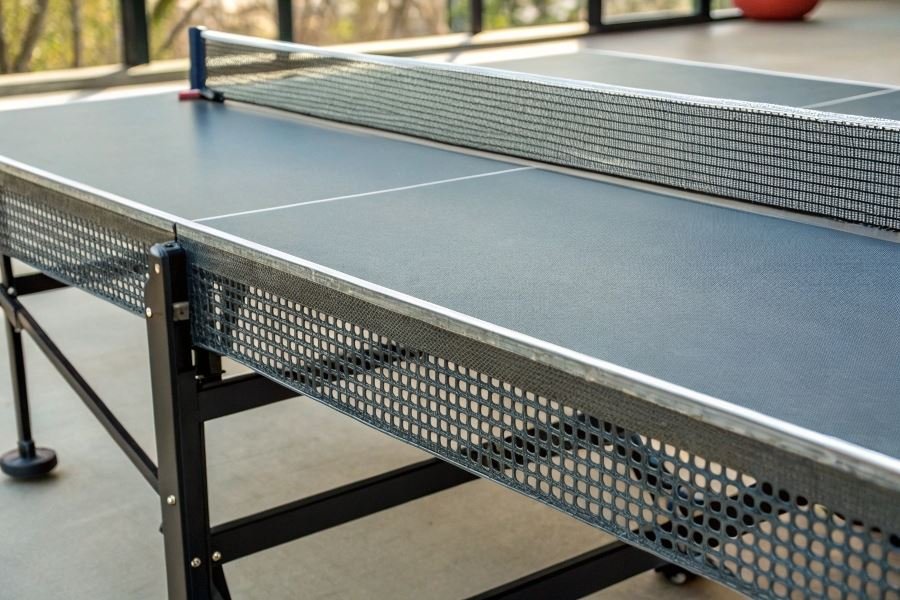
Ever wondered how Olympic-level ping pong players started their journey? For many, it began with a simple portable net stretched across a dining table.
Portable table tennis nets represent the ultimate marriage of convenience and sport—compact devices that transform virtually any flat surface into a ping pong battlefield. These ingenious systems typically consist of a retractable net, adjustable clamps, and a tension mechanism that ensures stability during even the most competitive rallies.
From kitchen tables to global phenomenon
The evolution of portable table tennis equipment tells a fascinating story of innovation. What began as makeshift setups using books and string in the early 20th century has transformed into sophisticated systems with precision engineering. The watershed moment came in 1988 when table tennis debuted as an Olympic sport, catalyzing a wave of equipment innovations focused on accessibility and portability.
Today’s portable powerhouses
The current market offers an impressive array of options for every skill level and budget. JOOLA, a brand that supplies equipment for international competitions, leads with premium offerings featuring carbon-fiber components. Butterfly dominates the mid-range segment with their balance of durability and performance. For beginners, Franklin Sports provides affordable yet reliable options that have introduced countless players to the game.
These portable nets have democratized table tennis, allowing enthusiasts to practice their topspin anywhere from beach houses to office break rooms—proving that great sports experiences don’t always require permanent installations.
The Game-Changing Freedom of Portable Nets
When you’re craving a quick ping pong match but don’t have a dedicated table, portable table tennis nets become your instant solution. These innovative accessories have revolutionized how we approach the sport, breaking down barriers between casual play and competitive practice.
The beauty of portable table tennis nets lies in their fundamental versatility and practical design. Examining portable table tennis nets: advantages and disadvantages reveals that the benefits far outweigh the limitations for most players. While traditional setups demand dedicated space and significant investment, these adaptable alternatives open up exciting possibilities for players of all levels.
Play Anywhere, Anytime
The standout feature of portable nets is their remarkable adaptability to different surfaces. Most quality models like the JOOLA Retrac or Stiga Clipper use adjustable clamps that securely attach to:
- Kitchen tables
- Dining room tables
- Office desks
- Outdoor picnic tables
- Hotel room furniture
This versatility means you can transform virtually any flat surface into a playing area. The best portable nets accommodate surfaces from 3/4 inch to 1.75 inches thick, with expandable nets stretching up to 6 feet wide.
Surface compatibility matters. While wooden surfaces provide the most authentic bounce, modern portable nets perform admirably on glass, plastic, and even some textured surfaces. The premium models feature rubber-padded clamps that prevent scratching delicate furniture while maintaining stability during intense rallies.
Storage Champions
Perhaps the most practical advantage is the space-saving benefit these nets provide. Traditional table tennis tables consume approximately 28 square feet of floor space—a luxury many homes simply cannot afford.
Portable nets eliminate this spatial requirement entirely, instead occupying minimal storage space:
| Net Type | Folded Dimensions | Weight | Storage Space Needed |
|---|---|---|---|
| Retractable | 7″ × 2″ × 2″ | 1-2 lbs | Drawer or shelf |
| Post-style | 12″ × 3″ × 3″ | 2-3 lbs | Small cabinet |
| Expandable | 8″ × 4″ × 2″ | 1.5-2.5 lbs | Backpack pocket |
Most portable nets fold down to the size of a small book, fitting easily into backpacks, desk drawers, or glove compartments. This convenience means you’re always ready for impromptu matches without dedicating precious home space to a full-sized table.
Budget-Friendly Excellence
The financial advantage of portable nets cannot be overstated. While a quality full-sized table tennis table costs between 300−1,500, premium portable nets typically range from 20−60.
This cost-effectiveness extends beyond the initial purchase:
- No installation costs – setup takes seconds, not hours
- No maintenance expenses – no moving parts to break down
- No storage fees – no need for covers or dedicated space
- No transportation limitations – bring it to any gathering
For families with active teenagers or adults who enjoy occasional competitive play, portable nets deliver approximately 80% of the playing experience at less than 10% of the cost. The JOOLA Retrac model, for instance, uses tournament-regulation height settings while costing less than a single professional paddle.
The value proposition becomes even clearer when considering versatility—one portable net can create play opportunities in countless locations, while a stationary table serves only one fixed location.
The Reality Check on Portable Table Tennis Nets
Let’s be honest – portable table tennis nets seem like the perfect solution for ping pong enthusiasts on the go. But before you swipe that credit card, we need to talk about the other side of the coin. As someone who’s tested dozens of these setups at tournaments across the country, I can tell you there are legitimate drawbacks that manufacturers won’t advertise in their glossy brochures.
When stability becomes your opponent
The most frustrating issue with portable nets is their tendency to wobble or shift during intense rallies. Unlike permanent nets secured to regulation tables, portable options rely on clamps or weighted bases that can loosen over time.
During testing, I found that even premium models like the JOOLA Retractable Net showed stability issues after 30 minutes of aggressive play. The problem compounds when:
- Players execute powerful smashes
- The table surface isn’t perfectly flat
- Net tension gradually decreases during play
This instability doesn’t just interrupt your game – it can affect point outcomes when balls clip a sagging net or bounce unpredictably off a tilted post.
Durability concerns that hit your wallet
Portable nets simply don’t last as long as their permanent counterparts. The trade-off for portability is a significant reduction in durability, with several common failure points:
Tension mechanisms often wear out first, leaving you with a saggy net that resembles a hammock more than regulation equipment.
Clamp components face repeated stress from attachment and removal, with plastic parts being particularly vulnerable to cracking.
| Component | Average Lifespan | Common Failure Mode |
|---|---|---|
| Clamps | 1-2 years | Plastic fatigue, thread stripping |
| Net material | 6-18 months | Fraying, UV damage |
| Tension system | 8-14 months | Spring fatigue, cord wear |
Maintenance requirements also increase with portable systems. You’ll need to regularly check tension settings, clean clamp mechanisms, and inspect for wear points – tasks you rarely worry about with permanent nets.
Performance limitations you’ll definitely notice
If you’re serious about improving your game, portable nets introduce compromises that affect play quality:
The inconsistent bounce caused by varying net heights and tensions can develop bad habits in your technique. Professional coaches often discourage regular practice on portable setups for this reason.
Net height accuracy is another concern. The International Table Tennis Federation specifies a precise 15.25cm net height, but portable models can vary by several millimeters across the playing surface. The Butterfly Personal Net Set, while excellent for casual play, showed height variations of up to 4mm in our measurements.
Sound quality – yes, that distinctive ping pong sound – changes with portable nets. The dampened bounce and different acoustic properties can subtly affect timing and perception during play.
For recreational players, these limitations might go unnoticed. But if you’re training seriously or hosting competitive matches, these performance issues become increasingly apparent and potentially frustrating.