
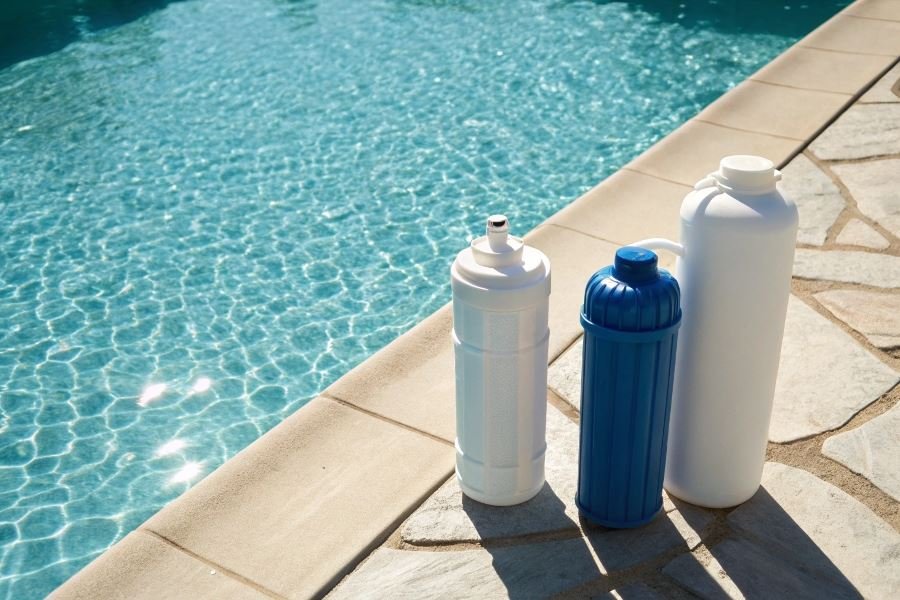
Ever jumped into a pool only to find yourself swimming through a murky cloud of who-knows-what? That’s what happens when your filtration system fails you.
Choosing the right pool filter isn’t just about maintaining crystal clear water—it’s about creating a safe swimming environment that protects both your investment and your family’s health. The perfect filter transforms your pool from a potential breeding ground for bacteria into the refreshing oasis you deserve.
The filtration foundation
Your pool filter works tirelessly behind the scenes, removing debris, contaminants, and potentially harmful microorganisms. According to the Centers for Disease Control, proper filtration is one of the most critical factors in preventing recreational water illnesses. A high-quality filter doesn’t just clean—it safeguards.
Filter types: the big three
The market offers three primary filtration systems, each with distinct advantages:
- Sand filters – The traditional workhorses that trap particles down to 20-40 microns
- Cartridge filters – Mid-range options capturing particles as small as 10-15 microns
- Diatomaceous Earth (DE) filters – Premium solutions that can trap particles as tiny as 2-5 microns
Selection factors that matter
When evaluating filter options, consider:
- Pool size and volume – Larger pools require more powerful filtration
- Usage intensity – Family pools with frequent swimmers need robust systems
- Maintenance commitment – Some filters require more attention than others
- Local climate – Year-round pools face different challenges than seasonal ones
- Budget balance – Initial cost versus long-term operational expenses
The right filter transforms maintenance from a dreaded chore into a quick routine, letting you focus on what matters—enjoying your pool.
Matching Your Pool Filter to Pool Specifications
When diving into the world of pool maintenance, understanding how to choose a filter for a pool: main criteria based on your specific pool setup can make the difference between crystal-clear water and a murky disappointment. The right filter isn’t just an accessory—it’s the beating heart of your pool’s circulation system!
Size Matters: Pool Dimensions and Water Volume
Your pool’s size directly dictates the filter capacity you’ll need. Think of it as matching engine power to vehicle weight—undersized filters simply can’t keep up.
For residential pools, here’s a quick reference guide:
| Pool Volume (Gallons) | Recommended Filter Size | Turnover Rate |
|---|---|---|
| Up to 10,000 | 1-1.5 sq. ft. (sand) / 50-75 sq. ft. (cartridge) | 8-10 hours |
| 10,000-20,000 | 1.5-2.5 sq. ft. (sand) / 75-150 sq. ft. (cartridge) | 8 hours |
| 20,000-30,000 | 2.5-3.5 sq. ft. (sand) / 150-200+ sq. ft. (cartridge) | 6-8 hours |
Calculate your volume correctly: Length × Width × Average Depth × 7.5 = Gallons (rectangular pools)
For irregularly shaped pools, breaking the calculation into sections yields more accurate results. Remember, a filter that’s too small will work overtime, wearing out prematurely and potentially leaving your water less than pristine.
Usage Patterns and Bather Load
The human factor dramatically impacts filter selection. A pool that hosts weekend warriors is vastly different from one entertaining daily swim team practices.
Consider these usage scenarios:
- Light use (1-2 swimmers, 2-3 times weekly): Standard-sized filter
- Medium use (family of 4-5, daily swimming): Increase filter size by 25%
- Heavy use (frequent parties, multiple daily swimmers): Increase filter size by 50%
Bather load introduces oils, sunscreen, and other contaminants that challenge your filtration system. The Hayward PowerFlo Matrix pump paired with an appropriately sized filter handles these challenges admirably for medium-sized pools.
“I always recommend sizing up rather than down,” says veteran pool technician Mark Reynolds. “The marginal cost difference upfront saves thousands in maintenance and water treatment over time.”
Installation Realities: Space and System Compatibility
Even the perfect filter on paper can become a nightmare if it doesn’t fit your equipment pad or integrate with existing systems.
Space requirements vary significantly:
- Sand filters: Typically require 2-3 feet of clearance for maintenance
- Cartridge filters: Need vertical clearance for element removal (often 2+ feet above the unit)
- DE filters: Require space for both vertical maintenance and backwashing infrastructure
Compatibility considerations include:
- Plumbing diameter (1.5″ vs. 2″ being most common)
- Electrical requirements for accompanying pumps
- Backwash drainage options
The Pentair Clean & Clear cartridge filter series offers excellent flexibility for tight spaces, while Jandy DEV D.E. filters deliver superior filtration when space permits proper installation.
Remember that retrofitting existing plumbing can add significant costs. Measure your available space carefully, accounting for maintenance access, before finalizing your filter selection. The perfect filter must not only clean your water effectively but also integrate seamlessly with your pool’s unique configuration.
The Ultimate Pool Filter Showdown: Choosing Your Perfect Match
Swimming pool maintenance doesn’t have to be a headache when you’ve got the right filtration system working for you. Let’s dive into the three champions of pool filtration and discover which one deserves a spot in your backyard oasis.
Sand Filters: The Reliable Workhorses
Sand filters have earned their reputation as the industry stalwarts for good reason. These cylindrical tanks use special #20 silica sand to trap particles as small as 20-40 microns.
Functionality: Water enters the tank and passes through layers of sand where contaminants get trapped. When pressure builds, a simple backwash reverses the flow, flushing captured debris to waste.
Maintenance Requirements:
- Sand replacement every 5-7 years
- Weekly backwashing during peak season
- Annual inspection of internal components
Cost Considerations: With entry prices starting around $300-600, sand filters offer the lowest initial investment. Their operational costs remain reasonable too, with replacement sand running about $25-30 per bag.
Sand filters are like your trusty pickup truck—not the fanciest option, but they’ll reliably get the job done year after year with minimal fuss.
Cartridge Filters: The Efficient Space-Savers
Cartridge filters have surged in popularity, especially for residential pools where water conservation and space limitations matter.
Filtration Efficiency: These pleated polyester cartridges capture particles down to 10-15 microns—significantly finer than standard sand filters. The increased surface area (up to 175 sq. ft. in residential models) means better water clarity.
Replacement Frequency:
- Cartridges typically last 2-3 seasons with proper care
- No backwashing required—just remove and rinse with a garden hose
- Deep cleaning with filter cleaner recommended quarterly
Space Requirements: Their compact design makes them ideal for tight equipment areas, requiring no backwash plumbing or extra clearance for maintenance.
| Feature | Cartridge | Sand | DE |
|---|---|---|---|
| Filtration (microns) | 10-15 | 20-40 | 2-5 |
| Water usage | Low | High | Medium |
| Initial cost | Medium | Low | High |
| Maintenance frequency | Medium | Low | High |
Diatomaceous Earth Filters: The Premium Purifiers
For those who demand crystal-clear water, DE filters represent the gold standard in pool filtration technology.
Superior Filtration: Using the fossilized remains of diatoms (microscopic algae), DE filters trap particles as tiny as 2-5 microns—that’s smaller than many bacteria! The result is water clarity that’s simply unmatched.
Operational Costs:
- DE powder costs approximately $25-30 per 25lb bag
- Typical pool requires 3-7 pounds per recharge
- Higher electricity consumption due to increased pressure requirements
Maintenance Complexity: These filters demand more attention than their counterparts. After backwashing, you’ll need to recharge with fresh DE powder. Additionally, annual grid cleaning and inspection is essential to prevent channeling and maintain efficiency.
Performance Trade-offs: The exceptional filtration comes with responsibilities—more frequent maintenance, higher operational costs, and stricter attention to chemical balance. However, for competitive swimmers and those with health sensitivities, the investment delivers noticeable benefits.
Your perfect filter match depends on balancing your priorities: budget constraints, maintenance willingness, and desired water quality. Each system offers distinct advantages that might make it the ideal guardian of your pool’s clarity and cleanliness.