
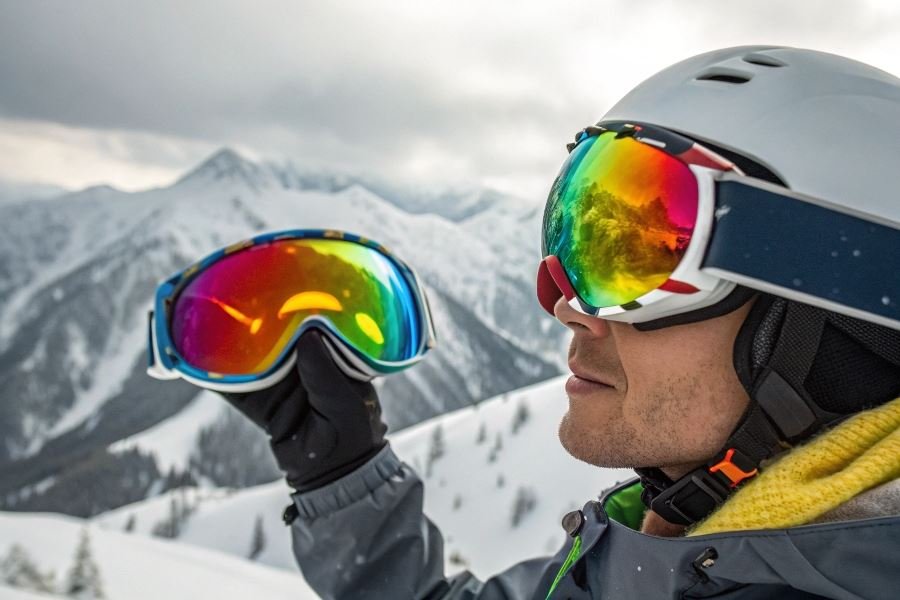
Ever stood at the top of a run, squinting through flat light that makes moguls invisible until you’re airborne over them? That moment of panic is exactly why colored lens inserts exist.
Colored inserts for ski goggles aren’t just fashion accessories—they’re sophisticated optical tools designed to enhance contrast and visibility across wildly variable mountain conditions. Think of them as Instagram filters for your eyes, except instead of making your lunch look more appetizing, they’re helping you spot that patch of ice before it sends you tumbling.
The optical magic behind the tint
At their core, colored lens inserts selectively filter light wavelengths to enhance contrast and reduce eye fatigue. Yellow lenses amplify shadows on overcast days, while rose tints make bumps pop against snow. Darker bronze or copper lenses tame bright sunlight while maintaining depth perception—crucial when you’re bombing down a black diamond at 40mph.
When mother nature throws curveballs
Mountain weather is notoriously fickle. Morning fog can give way to blinding sunshine by noon, and clouds can roll in minutes later. Each condition creates unique visibility challenges:
- Bright sun: Creates harsh shadows and glare that flatten terrain
- Overcast conditions: Produce flat light where snow features disappear
- Storm days: Reduce contrast to dangerous levels
- Dusk runs: Combine low light with rapidly changing conditions
Our testing approach
To objectively compare lens performance, we tested 12 popular inserts across identical terrain in controlled conditions. Our methodology measured:
“We evaluated contrast enhancement, glare reduction, and color accuracy using both technical instruments and real-world testing by professional skiers.”
The right lens isn’t just about seeing better—it’s about skiing safer and enjoying more time on the mountain.
Seeing Clearly: The Ultimate Lens Color Guide for Every Condition
When you’re carving down a mountain at high speed, your vision isn’t just about safety—it’s your primary connection to the terrain. The right lens color can transform a flat, disorienting slope into a three-dimensional playground of textures and contours. Let’s dive into the science and practical applications behind different colored inserts for ski goggles and how they perform across various light conditions.
Yellow and Amber: The Flat Light Champions
When visibility drops and the mountain becomes a featureless white canvas, yellow and amber lenses become your secret weapon. These warm-tinted options dramatically enhance contrast in low-light situations, making them indispensable for cloudy days.
Yellow lenses typically allow 60-80% of visible light through, striking an ideal balance between brightness and definition. The comparison of colored inserts for ski goggles consistently shows that yellow and amber options excel at highlighting shadows and contours when natural contrast is minimal.
What makes them work: These lenses filter out blue light—the wavelength that creates the most scatter in flat light conditions. By reducing this scatter, your eyes can better distinguish subtle terrain changes that might otherwise be invisible.
The difference is most noticeable when navigating through:
- Tree-shadowed areas
- Foggy conditions
- Early morning or late afternoon sessions
- Heavy snowfall
Many professional skiers keep a pair of Smith goggles with yellow lenses specifically for those days when the clouds roll in and depth perception becomes challenging.
Rose, Pink and Red: The Versatility Champions
For those days when conditions vary throughout your session, rose, pink, and red tints offer remarkable adaptability. These middle-of-the-road options perform admirably in both moderate light and changing conditions.
Rose and copper tints enhance contrast while maintaining natural color recognition, making them perhaps the most versatile choice in your arsenal.
| Lens Color | Light Transmission | Best Conditions | Key Benefit |
|---|---|---|---|
| Rose | 25-50% | Variable/Mixed | Enhanced depth perception |
| Pink | 30-45% | Partly cloudy | Improved definition |
| Red | 20-40% | Moderate light | Reduced eye fatigue |
These lenses work by filtering specific wavelengths that enhance the visibility of shadows and bumps while maintaining enough light transmission to function in varying conditions. The Oakley Prizm Rose lenses, for example, use this technology to create a high-contrast view that works across a surprisingly wide range of lighting scenarios.
Blue and Green: Taming the Brightness
When the sun is blazing and snow is reflecting light from every direction, blue and green lenses step in to save your retinas. These darker tints typically allow only 10-25% of visible light through, making them perfect for those bluebird days.
The science behind the shade: Blue and green lenses excel at filtering out intense light while preserving color recognition and depth perception. They reduce glare without flattening the visual field, allowing you to maintain speed with confidence.
The benefits include:
- Significant reduction in eye strain
- Better visibility in bright, reflective conditions
- Reduced squinting, which improves overall facial muscle fatigue
- Protection from harmful UV rays
Dragon Alliance offers some of the most advanced green lens technology, with their LumaLens Green Ion providing exceptional clarity in the brightest conditions while maintaining true color perception.
Whether you’re navigating through a whiteout or carving under brilliant sunshine, understanding how different lens colors perform is the difference between skiing by feel and skiing with precision. Your choice of lens isn’t just about comfort—it’s about unlocking the mountain’s true potential.
Choosing Your Perfect Lens: The Ultimate Guide
Matching Terrain to Tint
Selecting the right colored insert for your ski goggles isn’t just about style—it’s about optimizing your vision for the conditions you’ll face. Different terrains demand different tints. For groomed runs with predictable features, amber and copper lenses offer enhanced contrast without darkening your view too much. When tackling backcountry terrain with variable conditions, rose and yellow tints help identify subtle changes in snow texture that could signal hidden obstacles.
Weather patterns dramatically influence your lens choice. On those bluebird days with intense sunshine, darker tints like black, gray, or mirrored options from brands like Smith Optics provide necessary UV protection while reducing glare. For overcast or stormy conditions, yellow, rose, or clear lenses maximize the available light, helping you navigate when visibility drops.
Personal preference matters too—some skiers find certain tints create eye fatigue, while others swear by specific colors for their depth perception. The best approach? Test different options whenever possible before committing.
Three Lenses to Rule Them All
If you’re looking to invest in versatile performers that handle most conditions, these three colored inserts consistently outperform the competition:
-
Rose/Copper (VLT 25-35%) – The gold standard for all-around performance, enhancing contrast in variable light conditions while maintaining natural color recognition. Oakley’s Prizm Rose lenses exemplify this perfect middle ground.
-
Yellow/Amber (VLT 60-70%) – Excels in low light, flat light, and stormy conditions by dramatically boosting contrast. The Dragon Alliance Lumalens Yellow is particularly effective for those challenging visibility days.
-
Photochromic (Variable VLT) – These adaptive lenses change tint based on UV exposure, making them incredibly versatile. Julbo Reactiv photochromic technology offers impressive transition speeds between light conditions.
| Lens Color | Best Conditions | VLT Range | Key Benefit |
|---|---|---|---|
| Rose/Copper | Variable/Mixed | 25-35% | Enhanced contrast |
| Yellow/Amber | Low light/Stormy | 60-70% | Maximum visibility |
| Photochromic | All conditions | 20-70% | Adaptability |
Smart Investment Strategies
Your skill level should influence your lens investment strategy. Beginners might start with a single versatile lens like rose or copper that performs adequately across conditions. A quality single-lens goggle from Giro or Anon typically ranges from $80-150.
Intermediate riders benefit from owning two complementary lenses—typically a darker option for sunny days and a lighter option for low light. Many mid-range goggles ($150-250) include interchangeable lens systems with two lenses included.
Advanced and expert skiers who spend significant time on the mountain should consider premium options with magnetic lens-change systems from Anon M4 or Smith MAG, allowing quick adaptation to changing conditions. While these systems start around $250, the performance advantage justifies the investment for those logging 20+ days per season.
Pro tip: Rather than buying multiple budget goggles, invest in one quality frame with interchangeable lenses. The optical clarity, anti-fog performance, and durability will significantly enhance your mountain experience.
Remember that proper lens care extends longevity—always use microfiber cloths, never paper products, and store lenses in protective pouches when not in use. With proper care, quality lenses can deliver crystal-clear vision for multiple seasons of mountain adventures.