
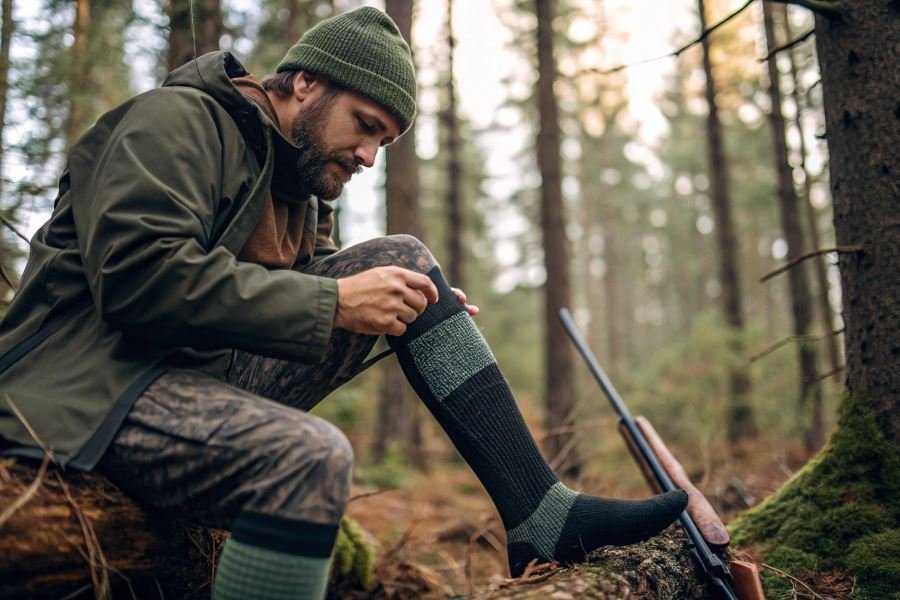
Ever stood in a freezing stream for hours, feeling that slow, miserable seep of water into your boots? Nothing kills a perfect day on the water faster than cold, soggy feet. For serious anglers, proper foot protection isn’t just about comfort—it’s about extending your time on the water and maximizing every fishing opportunity.
Waterproof socks represent that critical barrier between you and the elements, but choosing the right pair can be surprisingly complex. The difference between returning home with stories of the one that didn’t get away versus cutting your trip short due to foot discomfort often comes down to this seemingly simple piece of gear.
The wet truth about dry feet
Let’s be clear: keeping your feet dry while fishing isn’t just a luxury—it’s practically a necessity. Wet feet in cold conditions can lead to numbness, reduced circulation, and even frostbite in extreme situations. Even in warmer weather, prolonged moisture exposure causes maceration (that wrinkly, weakened skin) which creates the perfect environment for blisters, fungal infections, and bacterial growth.
Water-resistant vs. waterproof: Know the difference
This distinction is crucial and frequently misunderstood:
Water-resistant socks will repel light moisture and brief exposure but eventually surrender to sustained water contact. They’re like a rain jacket in a drizzle—effective until the downpour starts.
Fully waterproof socks incorporate impermeable membranes (often made from materials like Gore-Tex or similar technologies) that create a complete barrier against water while still allowing sweat vapor to escape.
The angler’s advantage
Quality waterproof socks deliver benefits that transform your fishing experience:
- Extended fishing sessions – Stay comfortable for hours longer than conventional socks allow
- Temperature regulation – Many waterproof options include thermal properties, keeping feet warm in cold water
- Blister prevention – By eliminating the wet-dry cycle that causes friction
- All-season versatility – Protection from both icy winter waters and summer wading hazards
The right waterproof socks aren’t just an accessory—they’re essential equipment for the dedicated angler who understands that success often comes to those who can outlast the competition on the water.
Essential Features for Waterproof Fishing Socks
Material Composition That Keeps Water Out
When it comes to waterproof socks for fishing, material composition is everything. The best options typically feature a three-layer construction: a durable outer layer, a waterproof membrane in the middle, and a comfortable inner lining. GORE-TEX remains the gold standard for waterproof membranes, offering unmatched protection while maintaining breathability. However, alternatives like SealSkinz and Randy Sun have developed proprietary technologies that perform admirably at more accessible price points.
The outer layer should be abrasion-resistant nylon or polyester that can withstand the rigors of wading through rocky streams. When selecting waterproof socks for fishing, how to choose becomes clearer once you understand that the middle membrane is what truly determines performance. This critical layer uses microscopic pores that block water molecules while allowing smaller vapor molecules to escape—pure scientific genius applied to keeping your feet dry.
The inner layer deserves equal attention—merino wool blends offer natural antimicrobial properties and temperature regulation, while synthetic options dry faster.
Breathability: The Overlooked Essential
| Breathability Rating | Performance Level | Best For |
|---|---|---|
| 5,000-10,000g/m² | Basic | Short trips, mild conditions |
| 10,000-15,000g/m² | Intermediate | Day-long excursions |
| 15,000g/m²+ | Premium | Extended trips, extreme conditions |
Breathability matters as much as waterproofing. Without it, your feet become sweat-soaked swamps—defeating the purpose of waterproof protection. The breathability rating (measured in grams per square meter per 24 hours) indicates how much moisture vapor can escape through the material.
The difference between 10,000g/m² and 15,000g/m² breathability might seem minor on paper, but after eight hours on the water, your feet will definitely know the difference.
Moisture management technologies like Dexshell’s Porelle membranes actively wick sweat away from your skin, preventing the clammy feeling that plagues lesser waterproof socks. Look for socks with ventilation channels strategically placed at the instep and ankle—these design features significantly enhance comfort during all-day wear.
Fit and Durability That Goes the Distance
The perfect waterproof sock should fit like a second skin—snug enough to prevent bunching but not so tight that it restricts circulation. Reinforced heel and toe areas are non-negotiable for fishing applications, as these high-stress zones determine the lifespan of your investment.
Seam construction reveals the true quality of waterproof socks. Premium options use ultrasonic welding or taped seams rather than traditional stitching, eliminating potential entry points for water. The ankle cuff deserves special attention—it should be elastic enough to create a water-tight seal without cutting off circulation.
Durability considerations extend beyond the materials themselves to how they’re assembled. Socks with anatomical left/right designs conform better to your feet, reducing stress on the fabric and extending their useful life. Many anglers overlook this feature, but it makes a substantial difference in both comfort and longevity.
The best waterproof socks balance these three critical elements—material composition, breathability, and fit—to create footwear that performs reliably in the challenging conditions anglers regularly face.
Waterproof Socks That Will Transform Your Fishing Game
Cold-weather warriors for ice fishing
When the temperature drops and the fish are still biting, your feet need serious protection. SealSkinz Waterproof Cold Weather Mid-Length Socks stand as the undisputed champions for frigid conditions. With three-layer construction featuring Merino wool inner lining, these socks maintain warmth even when the mercury plummets below freezing.
What sets these apart is their impressive 4mm neoprene insulation combined with a hydrophilic membrane that achieves the seemingly impossible: 100% waterproof protection while allowing sweat vapor to escape. During extended ice fishing sessions, these socks maintain a microclimate around your feet at approximately 60°F warmer than the external temperature.
The Randy Sun Waterproof Breathable Socks deserve honorable mention with their reinforced heel and toe sections that withstand the punishment of winter boots. Their extended cuff design prevents snow infiltration, a common failure point in lesser products.
The difference between misery and comfort during winter fishing often comes down to what’s between your boot and your skin.
Summer solutions that breathe
Warm-weather fishing demands a different approach. Showers Pass Crosspoint Waterproof Crew Socks excel here with their remarkably lightweight construction (just 2.8oz per pair) that feels more like traditional athletic socks than waterproof gear.
Their three-layer design incorporates a wear-resistant knit exterior, a waterproof breathable membrane, and a moisture-wicking anti-bacterial lining that prevents the dreaded “swamp foot” during those long summer expeditions. The 7% Lycra content provides crucial compression that reduces fatigue during extended wading sessions.
For tropical fishing environments, NRS Hydroskin Socks offer unmatched breathability with their titanium-infused neoprene that reflects heat while maintaining a waterproof seal. At just 1.5mm thick, they provide protection without bulk – perfect for slip-on boat shoes or sandals.
All-season performers for unpredictable conditions
The fishing calendar doesn’t always align with perfect weather. Dexshell Hytherm Pro Waterproof Socks have earned their reputation as the Swiss Army knife of fishing footwear. Their Porelle® membrane technology achieves an impressive 10,000mm waterproof rating while maintaining 4,000g/m²/24hr breathability – technical specs that translate to dry feet in practically any condition.
What truly distinguishes these all-season performers is their remarkable temperature regulation. The Merino wool blend inner layer works in concert with the membrane to adapt to conditions between 20°F and 85°F without requiring different sock weights.
| Sock Model | Best For | Thickness | Key Feature |
|---|---|---|---|
| SealSkinz Cold Weather | Ice fishing/Winter | 4mm | Superior insulation |
| Showers Pass Crosspoint | Summer/Warm weather | 2.8mm | Lightweight breathability |
| Dexshell Hytherm Pro | Variable conditions | 3.5mm | Temperature adaptability |
The Bridgedale StormSock deserves recognition for versatility with its bamboo-derived viscose lining that naturally regulates temperature across seasons. Their anatomical left/right specific design prevents bunching during the transition from boat to shore fishing – a small detail that makes a significant difference during all-day excursions.
Remember that even the best waterproof socks require proper care to maintain their performance. Most manufacturers recommend gentle machine washing with technical wash products and air drying away from direct heat sources to preserve membrane integrity across multiple fishing seasons.