
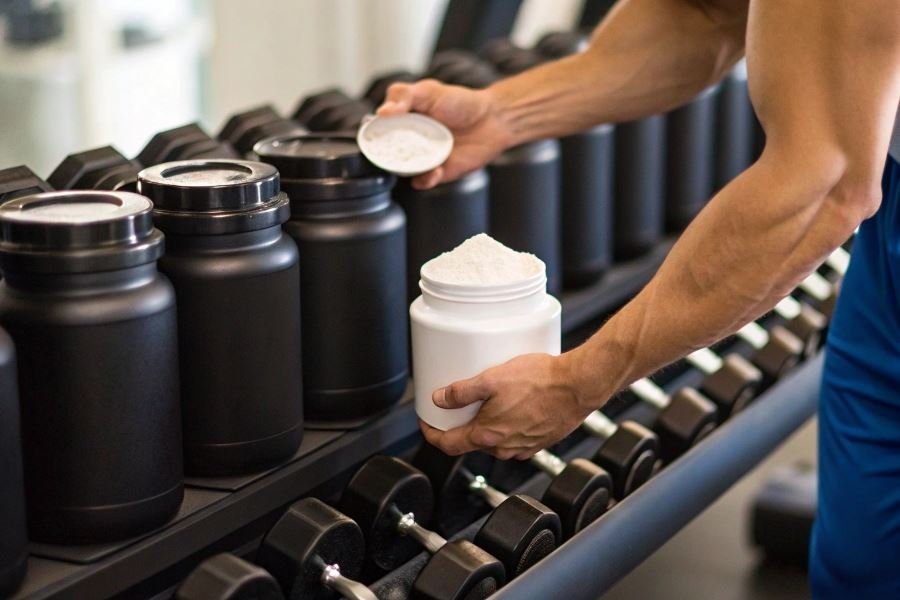
Ever wondered why some athletes seem to push through that last rep with superhuman strength? The secret might be sitting in a simple powder that’s revolutionized sports nutrition since researchers first documented its performance benefits in the early 1990s.
Creatine isn’t just another supplement—it’s the most scientifically validated performance enhancer outside of caffeine. At its core, creatine is a naturally occurring compound that your body already produces, primarily stored in muscle tissue where it serves as an immediate energy source during high-intensity, short-duration activities. When you supplement with creatine, you’re essentially supercharging your muscles’ energy reserves, allowing for more explosive power, increased strength, and improved recovery between intense efforts.
The beginner’s advantage
For newcomers to athletic training, selecting the right creatine can feel overwhelming. The difference between optimal results and wasted money often comes down to understanding a few key principles. Unlike experienced athletes who might experiment with various formulations, beginners need a straightforward approach that delivers consistent results without unnecessary complications.
Navigating the supplement landscape
The creatine market has exploded with options—monohydrate, HCL, ethyl ester, buffered formulas—each claiming superiority. Yet research consistently shows that creatine monohydrate, the original and most studied form, offers the best combination of effectiveness, safety, and value.
Perhaps the most persistent myth is that creatine is somehow dangerous or causes kidney damage. The reality? Decades of research have established its safety profile for healthy individuals. Another misconception is the necessity of “loading phases” or cycling—practices that complicate what should be a simple addition to your training regimen.
Creatine Decoded: Your Guide to Picking the Perfect Powder
Let’s cut through the noise in the supplement aisle! When you’re ready to add creatine to your fitness arsenal, knowing which type to grab can make all the difference between modest gains and game-changing results. The science behind choosing creatine for beginner athletes isn’t complicated once you understand a few key principles that separate the good stuff from the marketing hype.
The Creatine Family Tree
Not all creatine is created equal. The supplement world offers several variations, each with distinct properties:
Creatine Monohydrate: The undisputed champion of the creatine world. With over 300 peer-reviewed studies backing its effectiveness, monohydrate delivers approximately 88% pure creatine per serving. Brands like Optimum Nutrition have perfected this formula over decades.
Creatine HCL (Hydrochloride): The new kid on the block claims superior solubility and absorption. The acid group attachment reduces water retention, potentially minimizing bloating—a common concern for beginners. However, research hasn’t conclusively proven it outperforms monohydrate.
Creatine Ethyl Ester: Marketed as having enhanced bioavailability, this form adds an ester group to improve absorption. The reality? Studies from the University of Oklahoma found it actually converts to creatinine (a waste product) more rapidly than monohydrate.
The verdict: For beginners, monohydrate remains the gold standard—affordable, effective, and extensively researched.
Quality Matters: Certifications to Look For
The supplement industry operates with varying degrees of oversight, making third-party testing crucial:
| Certification | What It Means | Why It Matters |
|---|---|---|
| NSF Certified for Sport | Tested for 270+ banned substances | Ensures competitive athletes stay compliant |
| Informed-Choice | Batch-tested for contaminants | Reduces risk of impurities |
| USP Verified | Meets U.S. Pharmacopeia standards | Guarantees potency and purity |
When examining labels, look for “Creapure®”—a German-made creatine known for exceptional purity (99.99%). This patented form undergoes rigorous testing to eliminate contaminants like dicyandiamide and dihydrotriazine.
Dosing for Beginners: Finding Your Sweet Spot
Creatine supplementation follows two primary protocols:
Loading Phase Approach:
- Take 20g daily (divided into 4 doses of 5g) for 5-7 days
- Follow with a maintenance dose of 3-5g daily
Gradual Approach:
- Skip loading and take 3-5g daily
- Full saturation takes longer (3-4 weeks) but may reduce digestive discomfort
For beginners, serving size considerations are particularly important. A single serving should deliver 3-5g of creatine—check the nutrition facts panel, not just the marketing claims on the front label.
Pro tip: Timing matters less than consistency. Whether you take creatine pre-workout, post-workout, or with breakfast, the key is daily supplementation to maintain muscle saturation.
When measuring powder, use the scoop provided or invest in a digital scale accurate to 0.1g. Mixing with 8-12oz of warm water improves dissolution, especially with monohydrate.
Remember that individual responses vary. Some athletes experience rapid strength increases within days, while others notice gradual improvements over weeks. Patience and consistent training remain your most powerful tools—creatine simply amplifies the results of your hard work.
Creatine Champions: Top 3 Products to Fuel Your Fitness Journey
Let’s cut to the chase—you’ve decided to try creatine, and now you’re facing a wall of options at your local supplement store. The good news? I’ve spent years testing these products and can guide you through the noise to find your perfect match.
Wallet-friendly winners that deliver results
Not all budget-friendly creatine supplements are created equal. These options deliver maximum bang for your buck without compromising on quality:
-
Optimum Nutrition Micronized Creatine Powder – At around $20 for 114 servings, this unflavored classic delivers 5g of pure creatine monohydrate per scoop. The micronization process improves mixability, meaning no gritty texture in your shaker.
-
MuscleTech Platinum 100% Creatine – Priced at approximately $15 for 80 servings, this pharmaceutical-grade option dissolves quickly and contains zero fillers or additives.
-
Bulk Supplements Creatine Monohydrate – The ultimate budget option at roughly $20 for 200 servings. Lab-tested for purity and comes in a simple, no-frills package.
The difference between cheap creatine and budget-friendly quality creatine? The first wastes your money, the second maximizes your investment.
Goal-specific formulations that mean business
Different athletic pursuits benefit from specific creatine formulations:
| Athletic Goal | Recommended Product | Key Benefits |
|---|---|---|
| Strength & Power | Kaged Muscle C-HCl | Enhanced solubility, reduced bloating, concentrated formula |
| Endurance | Cellucor COR-Performance Creatine | Fast absorption, minimal water retention, ideal for runners |
| Recovery & Growth | Transparent Labs Creatine HMB | Combined with HMB for enhanced muscle preservation and growth |
For beginners focused on overall fitness, Creapure Creatine Monohydrate stands as the gold standard. This German-made, patented form of creatine monohydrate undergoes rigorous testing and consistently delivers superior results across all athletic domains.
Integrating creatine into your beginner routine
Now that you’ve selected your creatine, here’s how to incorporate it effectively:
-
Start with a loading phase (optional but effective): Take 20g daily (divided into 4 doses of 5g) for 5-7 days to saturate your muscles quickly.
-
Transition to maintenance: After loading (or from the beginning if you prefer), take 3-5g daily. Consistency matters more than timing.
-
Mix with the right liquids: Dissolve your creatine in warm water or juice (about 8oz). The sugar in juice may help with absorption due to insulin response.
-
Pair with complementary supplements: Consider taking creatine alongside fast-digesting carbs and protein post-workout to maximize uptake.
-
Track your progress: Keep a log of your strength gains, body composition changes, and energy levels during the first 4-6 weeks.
Remember that creatine works gradually—most users report noticeable benefits after 2-4 weeks of consistent use. Stay hydrated throughout the day, as creatine draws water into your muscles.
For beginners, simplicity wins: start with a pure creatine monohydrate, establish a consistent supplementation routine, and give your body time to respond. The most expensive creatine in the world won’t outperform the budget option if you’re not taking it regularly.