
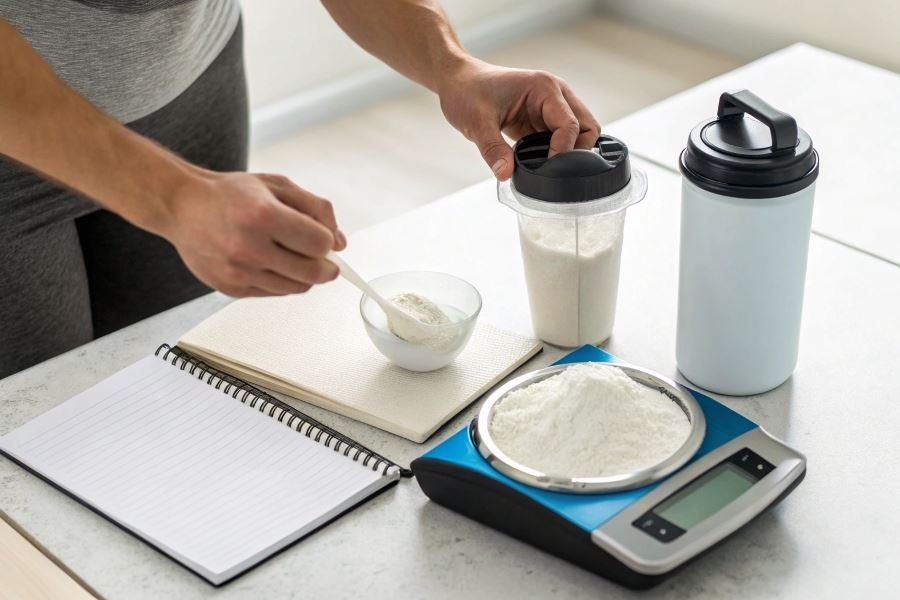
Ever wondered why some athletes seem to recover faster and push harder? The secret might be in a white powder that’s revolutionized sports nutrition since researchers first documented its performance benefits in the early 1990s. Creatine isn’t just another supplement—it’s the most scientifically validated performance enhancer outside of caffeine.
At its core, creatine works like a cellular battery charger. Your muscles store energy in the form of phosphocreatine, which rapidly regenerates ATP—the primary energy currency your muscles spend during high-intensity efforts. When you supplement with creatine, you’re essentially increasing your muscles’ energy reserves, allowing you to maintain power output longer during those crucial game-winning moments or personal record attempts.
The science behind the strength
Your body naturally produces about 1-2 grams of creatine daily, primarily in your liver and kidneys. Additional amounts come from dietary sources like steak and fish, but supplementation can dramatically increase muscle creatine stores by 20-40%. This translates to measurable improvements in strength, power output, and recovery between intense efforts.
Finding your perfect dose
The research is clear: proper dosing makes all the difference between mediocre results and maximum benefits. Too little creatine won’t saturate your muscles effectively; too much simply wastes money as excess creatine is excreted through urine. The scientific consensus from over 500 peer-reviewed studies points to an optimal approach that balances effectiveness with safety.
Getting your dosage right isn’t just about maximizing gains—it’s about respecting a powerful tool that deserves precision.
Creatine Dosage Protocols That Actually Work
Let’s cut straight to the chase—if you’re taking creatine but not seeing results, you’re probably not dosing it correctly. The science behind creatine supplementation isn’t just about taking some powder daily; it’s about strategic implementation that maximizes muscle saturation and performance benefits.
When discussing the correct dosage of creatine for maximum results, two distinct phases emerge as critical: the loading phase and the maintenance phase. Each serves a specific purpose in your supplementation journey, and understanding both can dramatically accelerate your strength and recovery gains.
The Loading Phase: Saturate Your Muscles Fast
The loading phase is your creatine jumpstart—think of it as priming the engine before a race. Research consistently shows that consuming 20-25 grams of creatine monohydrate daily for 5-7 days rapidly saturates your muscle cells with phosphocreatine, the stored form of creatine that powers explosive movements.
How to implement the loading phase correctly:
- Split your daily 20-25g into 4-5 equal servings (approximately 5g each)
- Space doses throughout the day to maintain elevated blood creatine levels
- Always consume with plenty of water (minimum 8-16oz per serving)
- Consider taking with carbohydrates to enhance uptake via insulin response
Many athletes report noticeable performance improvements by day 3-4 of loading, with measurable strength increases of 5-15% and weight gains of 2-4 pounds (primarily from increased water retention in muscle tissue).
Maintenance Phase: Sustain Your Creatine Stores
After loading comes the critical maintenance phase—the period where consistency trumps quantity. Your muscles now have optimal creatine saturation, and your goal shifts to maintaining these elevated levels.
Research from the International Society of Sports Nutrition confirms that 3-5 grams daily is sufficient to maintain muscle creatine stores after the loading phase.
| Body Weight | Recommended Maintenance Dose |
|---|---|
| Under 150 lbs | 3g daily |
| 150-200 lbs | 4g daily |
| Over 200 lbs | 5g daily |
The beauty of the maintenance phase is its simplicity—one daily dose keeps your creatine levels optimized without the need for multiple servings throughout the day. This phase can be sustained indefinitely, with many athletes maintaining this protocol for years with continued benefits.
Timing Your Creatine: When Matters Almost As Much As How Much
Timing considerations can significantly impact creatine’s effectiveness. While creatine works through accumulation rather than acute effects, strategic timing can enhance uptake and utilization:
Pre-workout timing:
- Take 3-5g approximately 30-60 minutes before training
- May enhance availability during high-intensity exercise
- Particularly beneficial for power athletes and weightlifters
Post-workout timing:
- Consume 3-5g immediately after training
- Potentially superior absorption due to increased blood flow to muscles
- Can be combined with post-workout protein and carbohydrates
Some research suggests that post-workout consumption might have a slight edge due to enhanced nutrient transport mechanisms activated by exercise, but the differences are minimal compared to the importance of daily consistency.
Remember that creatine’s effects are cumulative—the magic happens when you maintain saturated levels day after day, week after week. Whether you choose to load or go straight to maintenance, your commitment to consistent dosing will ultimately determine your results.
Personalizing Your Creatine Protocol for Maximum Gains
Let’s cut straight to what matters—getting the most from your creatine supplementation. Cookie-cutter approaches rarely deliver optimal results. Your body, your training, your results—all unique. Let’s dial in your personal creatine strategy.
The weight factor in dosage calculation
Your body weight significantly influences how much creatine you need. The science is clear on this: larger individuals typically require more creatine to saturate their muscles effectively.
The standard recommendation follows this formula:
| Body Weight | Loading Phase (5-7 days) | Maintenance Phase |
|---|---|---|
| Under 150 lbs | 15-20g daily (divided doses) | 3-5g daily |
| 150-200 lbs | 20-25g daily (divided doses) | 5g daily |
| Over 200 lbs | 25-30g daily (divided doses) | 5-10g daily |
But here’s what many miss: muscle mass matters more than total weight. Two 180-pound individuals—one with 12% body fat, another with 25%—have dramatically different muscle tissue volumes to saturate. The leaner athlete might benefit from the higher end of the dosage range.
Pro tip: Calculate your lean body mass (total weight minus fat weight) for a more precise dosage. For every 50 pounds of lean mass, consider 3-5g of daily creatine during maintenance.
Training intensity and creatine needs
Your training style isn’t just a preference—it’s a critical factor in determining optimal creatine dosage. The phosphocreatine system (which creatine supplements support) primarily fuels high-intensity, short-duration activities.
Consider adjusting your dosage based on:
- Power athletes (sprinters, powerlifters, football players): Higher dosages often yield better results, typically 5-10g daily during maintenance.
- Endurance athletes: While still beneficial, slightly lower dosages (3-5g) may be sufficient.
- High-volume training: Multiple daily sessions or extreme volume may warrant splitting your daily dose (morning/pre-workout).
Research shows that muscles under greater training stress demonstrate enhanced creatine uptake. This suggests that your hardest-working muscle groups may benefit most from adequate creatine saturation.
Performance tracking for dosage optimization
The ultimate measure of correct dosage isn’t what the scoop says—it’s what your performance tells you.
Implement this three-step approach to dial in your perfect dosage:
-
Establish baselines: Before starting supplementation, record key performance metrics (max lifts, sprint times, work capacity).
-
Track systematic changes: Document performance improvements after 2-4 weeks on your initial dosage.
-
Experiment methodically: If results plateau, consider a 7-day loading phase (higher dosage) followed by an adjusted maintenance dose.
The most effective creatine protocol is one that’s constantly evolving with your performance data.
Many athletes report finding their “sweet spot” through this process—often discovering they need less creatine than expected for maintenance once muscles are fully saturated.
Warning signs of excessive dosage include digestive discomfort, water retention beyond the first week, or no additional performance benefits despite increasing intake. If you experience these, scale back to the minimum effective dose that maintains your performance gains.
Remember that individual response to creatine varies based on factors like muscle fiber composition, dietary habits, and even genetics. The athlete who listens to their body while tracking performance metrics will always outperform the one blindly following generic recommendations.