
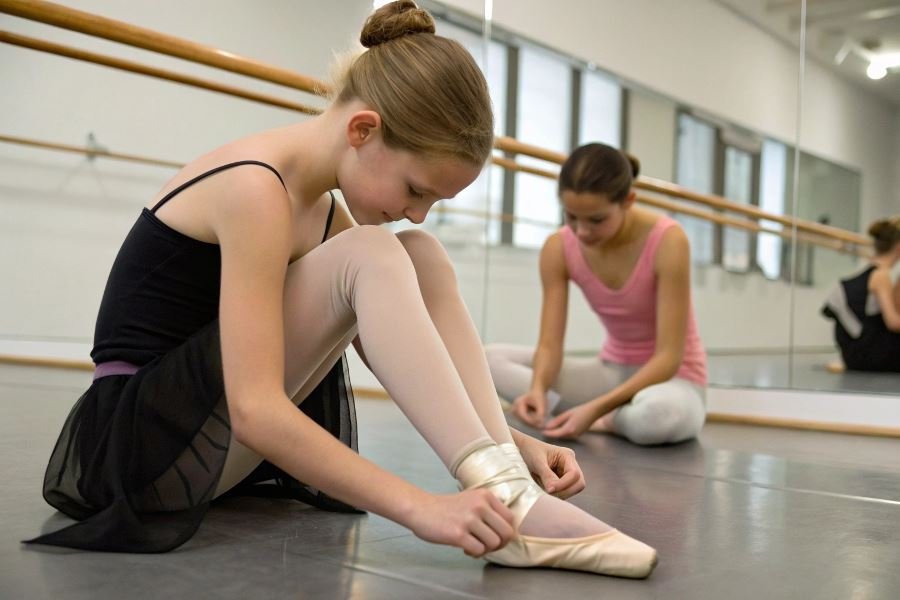
Ever watched a young dancer struggle with ill-fitting shoes during a performance? That grimace isn’t artistic expression—it’s discomfort that could lead to lasting problems.
When your child takes those first excited steps into the dance studio, their footwear becomes as crucial as their enthusiasm. Proper dance shoes aren’t just adorable accessories—they’re specialized tools designed to protect developing feet while allowing young dancers to master technique safely.
The right shoes can make or break a dance experience. Children’s feet are still forming, with softer bones and developing arches that require specific support. Ballet slippers that properly hug the arch, tap shoes with secure closures, or jazz shoes with appropriate traction can dramatically improve a child’s dance experience while preventing potential injuries.
“The difference between proper and improper dance footwear is like comparing professional sports equipment to playground gear—both let you play, but only one is designed for proper development.”
Protection meets performance
Dance shoes serve dual masters: technique and safety. The right footwear enables proper weight distribution, balance, and movement execution while minimizing friction and impact. For younger dancers (ages 3-5), flexibility and simplicity reign supreme. As children progress through elementary years, shoes begin incorporating more technical features to support advancing skills.
Selection fundamentals across age groups
When choosing dance shoes, consider these critical factors:
- Growth rate – Young feet grow quickly, requiring frequent size checks
- Dance style – Each discipline demands specific features
- Floor surface – Different studio floors require varying levels of grip
- Skill level – Advanced techniques may require more specialized footwear
The journey from those first preschool ballet slippers to pre-professional pointe shoes represents not just growing feet, but evolving technical needs that smart parents anticipate.
Dancing Through the Ages: Essential Footwear for Young Dancers
When it comes to nurturing a child’s dance journey, proper footwear isn’t just an accessory—it’s a fundamental tool for development, safety, and progression. Understanding what dance shoes does a child need at different ages helps parents make informed investments while supporting their young dancer’s growing passion. Let’s break down the essential dance footwear requirements as children progress from their first twirls to advanced techniques.
Toddlers and Preschoolers (Ages 2-5)
The tiniest dancers need footwear that prioritizes comfort, flexibility, and simplicity. At this stage, it’s all about fostering joy in movement rather than technical precision.
Ballet Basics: Soft leather or canvas ballet slippers with a full sole are ideal for beginners. Look for:
- Elastic strap across the top for secure fit
- Leather soles that provide just enough grip without restricting movement
- Room for growth (about 1/2 inch of space at the toe)
Tap Introductions: For early tap classes, choose:
- Tap shoes with single-sound (not double-sound) taps
- Velcro closures instead of laces for easy on/off
- Slightly flexible soles that allow natural foot movement
Pro tip: Avoid hand-me-downs for first dance shoes. Each child needs to develop their own foot patterns and proper support.
Elementary School Children (Ages 6-10)
As technique develops and classes become more structured, footwear needs evolve significantly.
Ballet Progression:
- Split-sole canvas slippers that highlight the arch
- Properly fitted shoes with minimal growing room (1/4 inch)
- Pre-sewn elastics for consistent placement
Tap Advancement:
- Shoes with adjustable sound quality taps
- Lace-up styles for better ankle support
- More structured leather uppers for durability
Jazz Essentials:
- Slip-on jazz shoes with rubber split soles
- Snug fit that moves with the foot
- Breathable materials for increasingly active classes
| Dance Style | Key Features | Average Replacement Timeline |
|---|---|---|
| Ballet | Split-sole, canvas | 6-8 months |
| Tap | Secure closure, quality taps | 8-12 months |
| Jazz | Rubber sole, snug fit | 6-10 months |
Pre-teens and Teenagers (Ages 11-18)
Advanced dancers require specialized footwear that supports technical proficiency and helps prevent injury during more demanding training.
Ballet Specialization:
- Canvas split-soles for regular training
- Satin pointe shoes (typically introduced around age 11-12) with proper fitting by professionals
- Character shoes for performance pieces
Contemporary & Modern:
- Foot thongs or “paws” that protect while maintaining barefoot sensation
- Half-sole shoes that showcase foot articulation
- Convertible tights for transitioning between styles
Advanced Tap & Jazz:
- Professional-grade tap shoes with customizable taps
- Specialized jazz shoes with enhanced arch support
- Performance-specific styles (character, heeled jazz shoes)
Specialty Considerations:
- Hip-hop dancers need supportive sneakers with non-marking soles
- Irish dancers require both soft and hard shoes as they advance
- Ballroom dancers transition to proper heeled shoes around age 13-14
Remember that proper fit becomes increasingly critical as technique advances. Professional fittings are worth the investment, especially for pointe shoes and specialized footwear that can prevent injuries and support proper technical development.
By understanding these age-appropriate footwear progressions, parents can make strategic investments that support their child’s dance journey from first steps to advanced performances.
Growing Feet, Growing Skills: Smart Dance Shoe Investments
Young dancers evolve rapidly, both in skill and shoe size. Making strategic investments in proper footwear not only supports technical development but also protects growing feet from injury. Let’s explore how to navigate the dance shoe journey as your child progresses through different stages.
Timing the Perfect Upgrade
The dance shoe upgrade timeline follows both physical growth and technical advancement. For preschoolers (ages 3-5), expect to replace ballet slippers every 4-6 months as feet grow rapidly. These early years focus on basic movement patterns rather than technical precision, so comfort trumps specialized features.
Elementary-aged dancers (6-10) typically need new shoes every 6-8 months. This is when differentiation begins—jazz shoes for those exploring contemporary styles, tap shoes developing more complex sounds, and ballet students potentially transitioning to pre-pointe shoes around age 10-11 (with teacher approval).
The teenage growth spurt creates another acceleration point. Dancers aged 11-14 might need replacements every 3-4 months during peak growth periods. This coincides with significant technical advancement, making proper fit increasingly critical.
Key upgrade indicators beyond size:
- Visible wear on soles affecting traction
- Breakdown of support structures
- Technical advancement requiring specialized features
- Teacher recommendation for progression (especially for pointe work)
Quality vs. Cost: The Smart Spending Strategy
Dance shoes represent a balancing act between investment and practicality. The “buy cheap, buy twice” philosophy doesn’t always apply when dealing with rapidly growing feet.
For beginners and young children, mid-range options from reputable brands like Capezio or Bloch offer sufficient quality without breaking the bank. As technical demands increase, the quality-to-price ratio shifts toward higher-end models.
| Age Group | Recommended Investment Level | Replacement Frequency | Priority Features |
|---|---|---|---|
| 3-5 years | $15-25 (ballet slippers) | Every 4-6 months | Comfort, simple design |
| 6-10 years | $25-45 (style-specific) | Every 6-8 months | Proper arch support, durability |
| 11-14 years | $35-65 (specialized) | Every 3-6 months | Technical features, injury prevention |
| 15+ years | $50-120+ (performance) | When worn out (3-12 months) | Professional quality, perfect fit |
The sweet spot is finding shoes that will last until outgrown, not beyond. For serious dancers approaching competition levels, investing in higher-quality footwear becomes increasingly justifiable as technical demands intensify.
Extending Shoe Lifespan: Care Essentials
Proper maintenance can significantly extend the functional life of dance shoes:
Daily care routine:
- Air dry shoes after each use (never use direct heat)
- Rotate between two pairs when possible
- Use cedar shoe trees for leather shoes to maintain shape
- Disinfect regularly with dance-specific spray
For ballet slippers, hand washing with mild soap and reshaping while damp prevents premature deterioration. Leather shoes benefit from occasional conditioning with appropriate leather products.
Tap shoes require special attention to the metal plates—check screws regularly and address any looseness immediately. Jazz shoes last longer when the rubber soles are kept clean of debris that can affect traction.
Storage wisdom: Dedicated dance bags with ventilated compartments prevent moisture buildup and contamination from street shoes. Never store dance shoes in plastic bags or airtight containers, which trap moisture and promote bacterial growth.
By combining strategic purchasing with diligent care, you’ll maximize both your investment and your child’s dancing experience—supporting their artistic journey one perfectly fitted shoe at a time.