
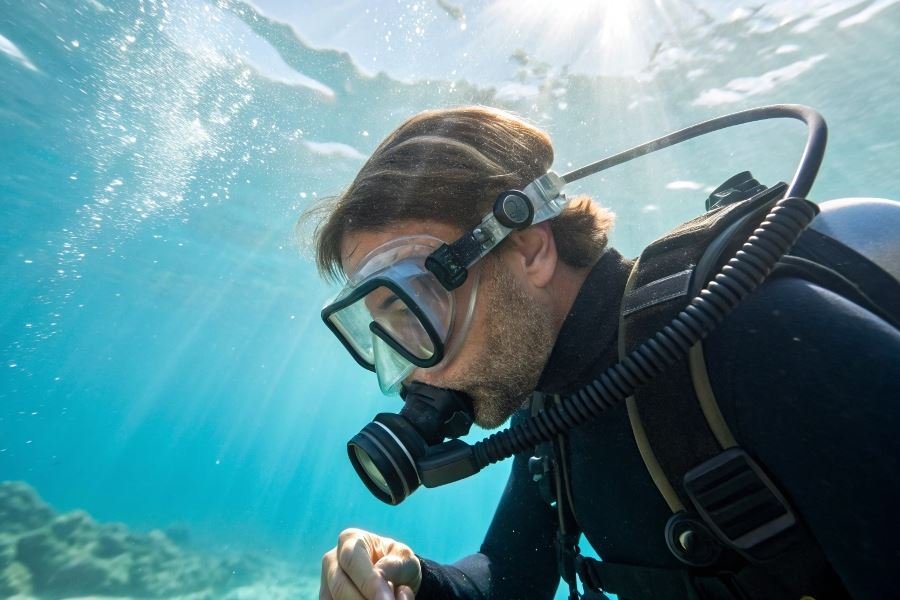
Ever watched a dolphin slice through water with effortless grace? That’s the difference properly fitted fins can make for you too. The right fins don’t just propel you forward—they transform your entire underwater experience from exhausting to exhilarating.
When selecting fins, size isn’t just about comfort—it’s about performance, efficiency, and safety. Imagine trying to run a marathon in shoes two sizes too small. That’s what swimming with ill-fitting fins feels like, except you’re fighting water resistance with every kick.
The fin family: Different types, different fits
Not all fins follow the same sizing rules. Full-foot fins typically align with your regular shoe size but vary by manufacturer. Open-heel fins, paired with neoprene booties, require a different approach—usually 1-2 sizes larger than your shoe size to accommodate the bootie thickness.
“The difference between good fins and great fins isn’t just design—it’s how perfectly they match your unique foot structure.”
When fins go wrong: Warning signs
Incorrectly sized fins announce themselves quickly and painfully. Too tight, and you’ll experience cramping, blisters, and restricted blood flow. Too loose, and you’ll waste energy as fins slip or chafe with each kick. Either way, your underwater adventure transforms into an endurance test rather than a joy.
The perfect fins should feel like a natural extension of your feet—secure without pinching, with no pressure points after extended wear. Remember: water magnifies even minor discomfort, turning a slight rub into a vacation-ruining blister.
Finding Your Perfect Fin Fit
When water enthusiasts dive into the world of aquatic exploration, the right pair of fins can make all the difference between an exhausting struggle and effortless gliding. Finding fins that fit like they were custom-made for your feet isn’t just about comfort—it’s about performance, safety, and maximizing your underwater experience.
Let’s tackle how to choose the right size of fins with the precision of an Olympic coach. Your fins should feel like natural extensions of your feet, not awkward appendages fighting against you with every kick. The perfect fit creates that seamless connection between your body’s power and the water’s resistance.
Measuring Up: Foot Dimensions Matter
Your journey to fin-fitting perfection starts with accurate foot measurements. Unlike regular shoe sizing, fin sizing requires attention to both length and width:
- Measure foot length from heel to longest toe while standing
- Determine foot width at the widest point (usually across the ball of your foot)
- Note arch height as high arches may require different considerations
Most manufacturers provide sizing charts that translate these measurements into their specific sizing system. Remember that European, US, and UK sizing all differ slightly.
| Measurement | How to Measure | Why It Matters |
|---|---|---|
| Foot Length | Heel to toe while standing | Determines basic size range |
| Foot Width | Across ball of foot | Prevents side compression |
| Arch Height | Visual assessment | Affects comfort in full-foot fins |
Material Considerations and Fit Dynamics
The material of your fins dramatically influences how they’ll fit and perform. Different materials expand, contract, and conform to your feet in unique ways:
Rubber fins typically soften and expand slightly in warm water, while stiffening in cold conditions. This means sizing down slightly might be wise for tropical diving.
Silicone and thermoplastic fins maintain more consistent sizing across temperature ranges but offer less natural stretch. They’re less forgiving of sizing errors, so precision becomes even more critical.
Composite fins with multiple materials require special attention to the foot pocket material specifically, as this determines the actual fit against your skin.
The Neoprene Factor
Planning to wear neoprene socks or booties with your fins? This crucial detail changes everything about your sizing approach.
For Mares or Cressi open-heel fins, add approximately 1-2 sizes to accommodate 3-5mm booties. Thicker 7mm booties for cold water diving might require going up 2-3 sizes from your regular measurement.
Pro tip: Always bring your intended neoprene footwear when trying on open-heel fins. The difference between bare feet and neoprene-covered feet can be substantial enough to completely change your ideal size.
Activity-Specific Sizing Requirements
Your underwater activity dictates specific sizing considerations:
Scuba diving typically favors a slightly looser fit with open-heel designs to accommodate booties and allow for longer periods of use without cramping.
Freediving demands a more precise, snug fit—often with full-foot fins—to maximize energy transfer and reduce water resistance. Freediving fins from brands like Omer should fit like a second skin without pressure points.
Snorkeling generally works best with comfortable full-foot fins that won’t cause blisters during extended surface swimming. A fit that’s secure but not constrictive works best here.
Recreational swimming fins are typically sized slightly smaller than diving fins to ensure they stay in place during fast kicks and turns.
Remember that the perfect fin fit should feel secure without pinching, with no significant gaps that would allow water to flow between the fin and your foot. When you’ve found that sweet spot, you’ll experience what every water enthusiast craves: the feeling that your fins aren’t just equipment—they’re an extension of yourself.
Testing and Ensuring the Perfect Fit for Your Fins
Finding fins that fit like a second skin can transform your aquatic experience from good to extraordinary. The perfect pair doesn’t just improve performance—it prevents blisters, cramping, and that dreaded post-swim foot fatigue. Let’s dive into the art and science of fin fitting!
The Pre-Purchase Try-On Ritual
Trying on fins isn’t like testing regular footwear. When evaluating Speedo or Finis fins, follow these steps for an accurate assessment:
- Wear what you’ll swim in – Try fins with the same socks or bare feet as you’ll use during actual swimming
- Stand up straight – Your weight distribution affects how fins feel
- Wiggle those toes – You should have slight movement without excessive space
- Walk around – Take at least 10 steps to feel pressure points
- Simulate kicking motion – Bend your knees slightly and rock forward on your feet
Never rush this process—the extra five minutes spent testing can save hours of discomfort later.
Reading Your Feet’s Feedback
Your feet communicate volumes about fit quality. Here’s how to interpret what they’re telling you:
| Fit Status | Toe Position | Heel Feel | During Movement | After Removal |
|---|---|---|---|---|
| Perfect Fit | Slight space at tip | Snug without pressure | No sliding or pinching | No red marks |
| Too Tight | Cramped/curled | Digging sensation | Numbness after minutes | Deep red marks |
| Too Loose | Excessive room | Heel lifts during kick | Slipping/chafing | Blisters forming |
The ideal fit creates a sealed connection between fin and foot without restricting blood flow. When you’ve found it, your fins should feel like a natural extension rather than an attachment.
Fine-Tuning Your Fin Fit
Even the best fins might need adjustments:
- For slightly loose fins: Try neoprene socks from TYR or add heel pads
- For minor pressure points: Use silicone protectors on hotspots
- For width issues: Look for adjustable straps or heat-moldable options
- For arch discomfort: Consider adding supportive insoles designed for water use
Some manufacturers like Cressi offer modular fins with interchangeable foot pockets—a game-changer if you’re between sizes.
Maintaining Perfect Fit Over Time
Fins change with use, and proper maintenance preserves their fit:
- Rinse after every use – Salt and chlorine break down materials and alter fit
- Store flat – Never fold or compress fins when storing
- Avoid extreme temperatures – Don’t leave fins in hot cars or freezing garages
- Periodically check straps and buckles – Replace before they fail
- Clean foot pockets monthly – Use mild soap to remove oils and residue
The lifespan of your perfect fit depends largely on these simple maintenance habits.
Remember that seasonal changes affect your feet—they may swell slightly in summer heat or contract in colder water. The fin that fits perfectly in July might feel different in December, so reassess regularly and make seasonal adjustments as needed.