
Ever picked up a dumbbell and felt your palm burning halfway through your set? That burning sensation isn’t just discomfort—it’s your workout efficiency draining away with every rep. The material between your hand and that weight might be the most overlooked factor in your strength training success.
When it comes to dumbbell grips, material selection isn’t just about comfort—it’s about performance, safety, and longevity. The right grip material can be the difference between pushing through to a new personal record and cutting your workout short due to hand fatigue or slippage.
Today’s market offers a surprising variety of grip materials, each with distinct advantages for different training styles. From traditional knurled metal that weightlifting purists swear by, to modern rubber compounds engineered for maximum traction, to neoprene coatings that prioritize comfort during high-rep workouts—your options have never been more diverse.
When selecting your ideal grip material, three factors should guide your decision:
- Training intensity – Heavy lifters need materials that won’t compress under pressure
- Workout environment – Will you be training in high-humidity conditions where grip becomes challenging?
- Personal comfort preferences – The grip that feels “right” often leads to better form and consistency
“The connection between your hand and the weight is where power transfer happens. Compromise that connection, and you compromise your results.” – Elite strength coach Jim Wendler
Understanding these materials isn’t just about equipment—it’s about optimizing every aspect of your training for maximum results and injury prevention.
The Ultimate Guide to Dumbbell Grip Materials
When you grab a dumbbell, that point of contact between your hand and the weight becomes your performance gateway. The material under your palm can make the difference between a personal record and a dropped weight. Materials for dumbbell grips deserve careful consideration based on your specific training needs, comfort preferences, and performance goals.
Let’s dive into the fascinating world of dumbbell grip materials to help you make an informed choice that aligns with your fitness journey. Whether you’re setting up a home gym or selecting equipment at your local fitness center, understanding what lies beneath your grip can transform your training experience.
Rubber and Neoprene: The Comfort Champions
Rubber and neoprene grips have revolutionized the training experience for many fitness enthusiasts. These materials offer exceptional comfort while providing sufficient traction during intense workouts.
Key benefits of rubber grips:
- Shock absorption that reduces hand fatigue
- Noise reduction when setting weights down
- Temperature regulation (doesn’t get cold like metal)
- Available in color-coding for quick weight identification
Neoprene, a synthetic rubber, takes these advantages further with enhanced durability and resistance to oils and chemicals from hand sweat. These grips typically last 3-5 years with regular use, making them ideal for home gyms and commercial settings alike.
Best for: General fitness, circuit training, and beginners who prioritize comfort over grip development.
Metal and Knurled Finishes: The Strength Trainers’ Choice
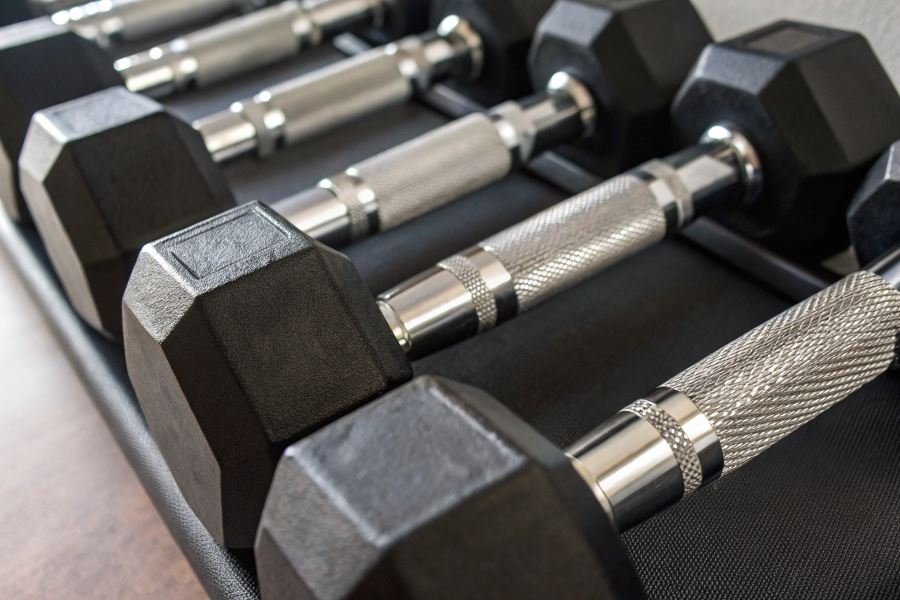
For serious strength athletes, nothing beats the raw feedback and grip development potential of metal handles with knurled patterns.
Advantages of metal grips:
- Maximum force transfer between hand and weight
- Superior grip development through skin adaptation
- Unmatched durability (often outlasting the dumbbell itself)
- Minimal maintenance requirements
The diamond or cross-hatched knurling patterns create friction points that prevent slippage during heavy lifts. The depth and pattern of knurling varies significantly between manufacturers, with Rogue Fitness and Eleiko offering some of the most respected knurling patterns in the industry.
| Knurling Type | Grip Security | Hand Comfort | Best For |
|---|---|---|---|
| Aggressive | Excellent | Low | Powerlifting, max lifts |
| Medium | Very Good | Moderate | General strength training |
| Passive | Good | High | High-rep workouts |
Best for: Powerlifters, Olympic lifters, and serious strength athletes who prioritize performance over comfort.
Foam and Ergonomic Options: The Specialists
Foam and ergonomically designed grips represent the cutting edge of specialized dumbbell design, catering to specific needs and training modalities.
Foam grip advantages:
- Ultra-lightweight feel
- Maximum comfort for high-repetition work
- Ideal for rehabilitation exercises
- Excellent for users with arthritis or joint issues
Modern ergonomic grips take comfort further by incorporating contoured designs that match natural hand positioning. These specialized grips often feature anti-microbial coatings to prevent odor buildup and extend product life.
Companies like PowerBlock have pioneered adjustable dumbbells with ergonomic grip designs that accommodate various hand sizes and workout styles.
Best for: Rehabilitation, senior fitness, high-repetition endurance work, and users with special grip requirements or hand sensitivities.
The perfect dumbbell grip material ultimately depends on your specific training goals, comfort preferences, and the type of exercises you perform most frequently. By matching the right material to your needs, you’ll enhance both performance and enjoyment in your strength training journey.
Making the Right Grip: Your Ultimate Dumbbell Material Guide
Aligning materials with training objectives
The grip material you choose isn’t just about comfort—it’s about performance. Different training styles demand different materials to maximize your results. For strength trainers focusing on heavy lifts, rubber and neoprene grips offer the stability and shock absorption needed when handling serious weight. The slight give in these materials reduces strain on your joints during those final challenging reps.
For those prioritizing endurance workouts with higher repetitions, chrome and stainless steel handles provide the smooth, consistent feel that prevents friction burns during extended sets. Meanwhile, functional fitness enthusiasts benefit from textured rubber compounds that maintain grip integrity even when hands get sweaty during circuit training.
CrossFit athletes often prefer knurled metal grips for their exceptional tactile feedback during complex movement patterns. The micro-texture creates a secure connection between hand and equipment, essential when transitioning between exercises at pace.
The material between your hand and the weight isn’t just a preference—it’s the critical interface that determines how effectively your effort translates into results.
Longevity and maintenance requirements
The lifespan of your dumbbell grips depends significantly on both material selection and maintenance practices. Here’s how different materials stack up:
| Material | Expected Lifespan | Maintenance Needs | Best For |
|---|---|---|---|
| Rubber | 5-7 years | Wipe with mild soap, avoid direct sunlight | Home gyms, general use |
| Neoprene | 3-5 years | Regular cleaning, avoid oils/solvents | Beginners, rehabilitation |
| Chrome | 10+ years | Occasional polishing, prevent moisture exposure | Commercial settings |
| Knurled Steel | 15+ years | Brush cleaning, light oil application | Serious lifters |
| Urethane | 8-10 years | Simple wipe-down, highly resistant | High-traffic environments |
Rubber and neoprene grips require regular cleaning to prevent sweat absorption that can degrade the material over time. A simple solution of water and mild soap works perfectly—just avoid harsh chemicals that can break down the compounds.
Metal grips like chrome and stainless steel are virtually indestructible with proper care. The primary maintenance concern is preventing oxidation, particularly in humid environments. A quick wipe with a dry cloth after use prevents moisture accumulation.
Urethane coatings represent the gold standard for maintenance-free performance, resisting chips, tears, and chemical damage while maintaining their appearance for years.
Investment considerations for quality grips
When evaluating the cost-benefit equation of different grip materials, consider the total ownership cost rather than just the initial purchase price.
Entry-level neoprene grips from brands like CAP Barbell might cost $15-30 per pair but typically require replacement within 3-5 years of regular use. Premium urethane options from Rogue Fitness might command $80-120 per pair but often last three times longer.
For home gym enthusiasts, rubber-coated handles offer the best balance between durability and cost. The initial investment is moderate, and with proper care, they’ll serve you through thousands of workouts.
Commercial settings benefit most from investing in premium materials like urethane or knurled stainless steel. The higher upfront cost is quickly offset by reduced replacement frequency and maintenance requirements.
The true value equation must also factor in performance benefits. A grip material that prevents slippage might enable just one more rep per set—a seemingly small advantage that compounds dramatically over months and years of training.
Remember that grip quality directly impacts workout safety. Investing in quality materials significantly reduces the risk of dropped weights and the injuries and equipment damage that can result—making premium grips not just a performance choice but a safety essential.