
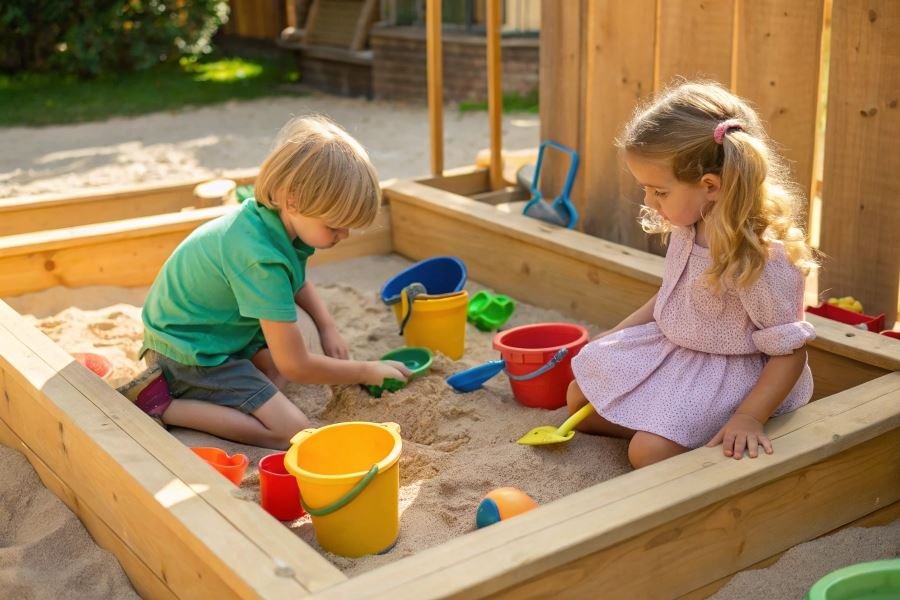
Remember when a sudden downpour or scorching sun meant the end of sandbox fun? Those days are officially over.
Outdoor play remains one of childhood’s greatest joys, yet weather has always been the unpredictable villain in this story. That’s where weather-protected sandboxes shine, offering innovative solutions that extend playtime regardless of what Mother Nature has planned. These thoughtfully designed play spaces combine the timeless appeal of sand exploration with practical protection against the elements.
Why weather protection matters more than you think
Sun exposure during peak hours can raise skin temperature by up to 5°F in just 30 minutes, while UV rays penetrate clouds even on overcast days. For children absorbed in creative play, time awareness disappears – making integrated protection not just convenient but essential.
“The right sandbox protection doesn’t just extend playtime; it fundamentally transforms how families approach outdoor activities.”
Key benefits beyond the obvious
Weather-protected sandboxes deliver multiple advantages:
- Extended play seasons – From early spring through late fall
- Reduced maintenance – Less water damage means sand stays cleaner longer
- Temperature regulation – Shade keeps sand cooler in summer
- UV protection – Critical during peak sun hours (10am-4pm)
Smart features worth your attention
When evaluating protected sandboxes, look beyond basic canopies. The best models offer:
- Adjustable coverage that tracks the sun’s movement
- Water-resistant materials with proper drainage systems
- Sturdy anchoring to withstand unexpected gusts
- Quick-fold mechanisms for when storms approach suddenly
The most innovative designs incorporate breathable fabrics that block harmful rays while allowing airflow – preventing that stuffy greenhouse effect that makes play uncomfortable.
Top 3 Sandboxes That Shield Kids From Sun and Rain
When playtime calls, nothing beats the simple joy of digging, building, and creating in a sandbox. But as any parent knows, the elements can quickly turn outdoor fun into a no-go zone. The best sandboxes with protection from the sun and rain solve this problem brilliantly, extending playtime regardless of weather conditions. Let’s dive into three standout options that keep the fun going while protecting little ones from harmful UV rays and unexpected showers.
Premium Protection: Step2 Naturally Playful Sandbox
The Step2 Naturally Playful Sandbox earns its premium status through thoughtful design and durability that justifies its $149.99 price tag. This sandbox doesn’t just offer protection—it creates an outdoor oasis.
Standout features:
- 60-square-foot play area accommodates multiple children
- UV-resistant canopy blocks up to 97% of harmful rays
- Reinforced corners prevent warping and structural damage
- Built-in seating for comfortable play sessions
- Molded-in drain holes prevent water accumulation
What truly separates this model is its canopy design. Unlike flimsy attachments, Step2’s canopy uses a robust support system that withstands winds up to 20mph without swaying. The height-adjustable feature allows growing children to play comfortably for years, making this an investment rather than a temporary purchase.
Budget-Friendly Shield: Little Tikes Turtle Sandbox
Not every family needs a premium sandbox, which is where the Little Tikes Turtle Sandbox shines at just $44.99. This adorable turtle-shaped option proves protection doesn’t require breaking the bank.
Value highlights:
- Removable shell cover protects sand from rain and outdoor debris
- Compact 38.75″ x 43.25″ footprint fits smaller yards
- 150lb sand capacity provides ample play space
- No assembly required—ready for immediate use
- Durable plastic construction withstands temperature extremes
While it lacks a traditional canopy, the turtle’s shell serves dual purposes—keeping sand clean and dry while providing shade when partially closed. Parents particularly appreciate how the cover secures tightly, preventing neighborhood cats from mistaking it for a litter box—a common problem with uncovered sandboxes.
Versatility Champion: KidKraft Wooden Sandbox
The KidKraft Wooden Sandbox strikes the perfect balance between aesthetics and functionality at $129.99. This cedar construction brings natural beauty to your backyard while offering superior adaptability.
Versatility features:
- Adjustable canopy rotates 180° to block sun from any angle
- Weather-resistant cedar construction with corner seating
- Mesh bottom allows drainage while preventing weeds
- Converts to covered storage bench when not in use
- Reinforced corners prevent warping and splitting
| Feature | Canopy Coverage | Material | Extra Functions |
|---|---|---|---|
| Step2 | Fixed overhead | Plastic | Built-in seating |
| Little Tikes | Full cover | Plastic | Decorative design |
| KidKraft | Adjustable angle | Cedar wood | Converts to bench |
The KidKraft’s ingenious canopy design deserves special mention. Unlike fixed canopies, this adjustable system can be positioned to block morning or afternoon sun, or removed entirely on overcast days. The natural cedar construction also means it blends seamlessly with patio furniture and garden elements, making it the most aesthetically pleasing option for design-conscious homeowners.
Each of these sandboxes offers unique advantages depending on your specific needs—whether you prioritize space, budget, or versatility. What they share is the ability to extend outdoor play sessions safely, turning simple sand play into protected adventures regardless of weather conditions.
Keeping Your Sandbox Paradise in Prime Condition
Caring for Weather-Resistant Materials
Weather-resistant sandboxes represent a significant investment in your child’s outdoor play experience. To maximize their lifespan, proper care is essential. Most sun and rain-protected sandboxes feature specialized materials like UV-treated canopies and water-resistant wood or plastic.
For UV-protected canopies, a gentle cleaning with mild soap and water every 4-6 weeks prevents dirt buildup that can degrade the protective coating. Avoid harsh chemicals that might compromise the UV-resistant properties. After cleaning, allow the canopy to dry completely before retracting it to prevent mildew growth.
The difference between a well-maintained canopy and a neglected one can be years of additional protection.
For sandbox frames, maintenance depends on the material:
| Material | Cleaning Method | Frequency | Special Considerations |
|---|---|---|---|
| Cedar | Mild soap, soft brush | Twice yearly | Apply wood sealer annually |
| Plastic | Disinfectant spray | Monthly | Check for cracks quarterly |
| Composite | Soap and water | Quarterly | No sealing required |
Seasonal Sandbox Maintenance
Your sandbox maintenance calendar should shift with the seasons to address specific challenges throughout the year.
Spring Revival: As temperatures warm, thoroughly inspect your sandbox for winter damage. Replace any sand that appears discolored or compacted. This is the perfect time to apply a fresh coat of water-resistant sealant to wooden components before the summer heat intensifies.
Summer Vigilance: During peak play season, rake the sand weekly to aerate it and check for foreign objects. The canopy will work hardest during summer, so inspect for tears or stretching monthly. Keep a spray bottle with a 3:1 water-to-vinegar solution nearby to quickly address any mildew spots that might develop in humid conditions.
Fall Preparation: As temperatures cool, clean the sandbox thoroughly and consider a partial sand replacement. Check all moving parts on adjustable canopies, lubricating hinges and tightening any loose hardware before winter weather arrives.
Winter Protection: In colder climates, consider a breathable waterproof cover for additional protection when the sandbox isn’t in use. This prevents snow accumulation that can strain the canopy structure and keeps the sand dry for next season.
A sandbox that receives proper seasonal attention will typically last 7-9 years, compared to just 2-3 years for neglected units.
Safety First in Protected Play
The protective features that make modern sandboxes so appealing require specific safety considerations:
-
Regular Canopy Inspection: Check for tears or weak spots monthly. Even small openings can allow harmful UV rays to penetrate or create water pooling hazards during rain.
-
Sand Quality Monitoring: Protected sandboxes create a microenvironment that can retain moisture. Test sand dampness regularly by squeezing a handful – it should crumble easily. Damp sand can harbor bacteria and should be replaced.
-
Ventilation Management: On hot days, ensure adequate airflow by partially opening the canopy sides. This prevents heat buildup while maintaining sun protection. The ideal sandbox temperature should feel cool to the touch even on warm days.
-
Height Adjustments: As children grow, adjust canopy height accordingly. The recommended clearance is 24-30 inches from the sand surface to prevent head injuries while maintaining effective protection.
-
Anchor Verification: Wind can transform protective canopies into hazards. Verify that all anchoring systems remain secure monthly, especially after storms or high winds.
By following these maintenance and safety protocols, your protected sandbox will remain a safe haven for creative play through every season and weather condition.