
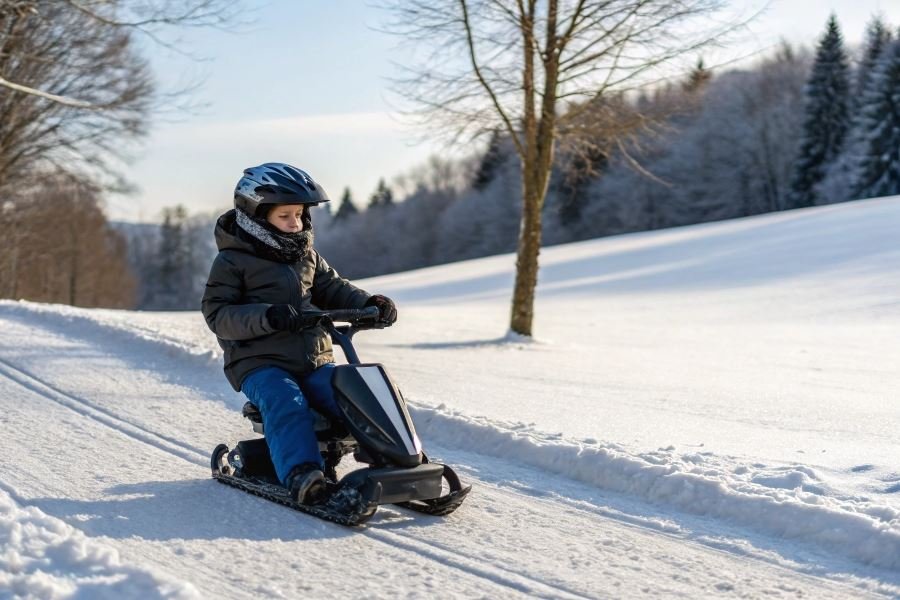
Imagine the pure joy on your child’s face as they zoom across fresh powder, the winter wind in their hair, powered by nothing but electricity and excitement. This isn’t your traditional sledding experience—it’s the next evolution in winter recreation that’s capturing hearts across snowy regions nationwide.
Electric snow scooters have revolutionized how kids experience winter outdoors. These battery-powered vehicles combine the thrill of motorized movement with the classic joy of snow play, creating an entirely new category of winter fun. Unlike traditional sleds that require hills and constant trudging back upward, these scooters let kids cruise across flat snow expanses with ease.
What exactly makes these winter wonders so special? For starters, they offer independence—children as young as 6 (with proper supervision) can control their own adventure. They also provide exercise disguised as play, helping kids develop balance and coordination while getting them away from screens during winter months when outdoor activity often plummets.
When selecting the perfect electric snow scooter for your child, several factors deserve your attention:
Safety features matter most
Look for models with appropriate speed governors, reliable braking systems, and sturdy construction. The best scooters include emergency shut-off switches that parents can appreciate.
Battery life and performance
Consider how long the scooter runs on a single charge and how it handles different snow conditions. Some premium models offer up to 40 minutes of continuous use—plenty for an afternoon of winter excitement.
Age-appropriate design
Ensure the scooter matches your child’s size, weight, and skill level. What works for a teenager won’t suit a younger rider.
The right electric snow scooter transforms ordinary winter days into extraordinary adventures—just be prepared to hear “Can we go outside?” more often than ever before.
Essential Factors for Electric Snow Scooter Selection
Let me tell you, there’s nothing quite like watching a kid zoom across fresh powder on an electric snow scooter! The pure joy on their faces is worth every penny—but only if you’ve selected the right machine. When evaluating what to pay attention to when buying a children’s electric snow scooter, three critical areas demand your scrutiny: safety features, battery performance, and construction quality.
Safety Features That Actually Work
Safety isn’t just a checkbox—it’s the difference between winter fun and an emergency room visit. Age-appropriate safety features should be your non-negotiable starting point.
Speed limiters are absolute game-changers. Quality models like the Razor E300 offer parent-controlled speed settings that can be adjusted as your child gains experience. Look for scooters with at least 3 speed modes—typically ranging from 5 mph for beginners to 12 mph for more experienced riders.
Emergency stop mechanisms should be intuitive enough for panic situations. The best designs feature large, red buttons positioned within easy thumb reach. Some advanced models even include remote kill switches that parents can activate from up to 30 feet away.
Stability features separate the toys from the serious rides:
- Wider tires (minimum 4.5 inches)
- Lower center of gravity
- Anti-tip mechanisms
- Dual braking systems
Cold-Weather Battery Performance
Nothing kills winter fun faster than a dead battery halfway through your adventure. Cold weather is notoriously harsh on batteries, often reducing performance by 20-40%.
| Battery Type | Cold Weather Performance | Charge Time | Typical Range |
|---|---|---|---|
| Lithium-Ion | Good to Excellent | 2-4 hours | 7-10 miles |
| Lead-Acid | Poor to Fair | 8-12 hours | 4-6 miles |
| LiFePO4 | Excellent | 1-3 hours | 8-12 miles |
Insulated battery compartments make a massive difference. Premium models like the SnowFox Pro incorporate thermal management systems that maintain optimal battery temperature even in sub-zero conditions.
Always check the temperature rating on any scooter you’re considering. The best options function reliably down to at least 15°F (-9°C), while budget models might struggle below freezing.
Built to Last: Construction Quality
Kids aren’t exactly gentle with their equipment, which makes durability a top priority. The frame construction should feel substantial—not like a toy that will collapse after the first bump.
Weight capacity isn’t just about whether the scooter can hold your child today—it’s about longevity. A good rule of thumb: purchase a scooter rated for at least 20-30 pounds more than your child’s current weight.
Frame materials matter tremendously:
- Aircraft-grade aluminum offers the best strength-to-weight ratio
- Steel frames provide durability but add significant weight
- Carbon fiber components (on premium models) reduce weight while maintaining strength
Inspect the connection points and welds carefully. These are typically the first failure points on lower-quality models. The Arctic Glider X7 features reinforced joints and sealed bearings that prevent snow and ice infiltration—crucial for extending the scooter’s lifespan.
Water resistance ratings should be minimum IPX4 for snow conditions, though IPX6 provides much better protection against the inevitable slush and moisture. Remember, these machines operate in one of the harshest environments possible for electronics—cutting corners on weatherproofing is a recipe for disappointment.
Beyond the Basics: What Really Matters in Electric Snow Scooters
Mastering all terrains and snow conditions
When your young rider hits the slopes, the last thing you want is a scooter that can’t handle what Mother Nature throws at it. Terrain compatibility isn’t just a fancy feature—it’s essential for both safety and fun. The best electric snow scooters come with specialized treads designed specifically for snow mobility.
Look for models with wider, deeper treads that can grip in powder conditions. The Snowfox X2 features an impressive 4-inch tread pattern that maintains traction even in 6 inches of fresh powder. Meanwhile, the Alpine Glider Pro incorporates a unique dual-tread system that automatically adjusts to changing snow densities.
The difference between good and great handling often comes down to weight distribution and turning radius. Premium models position batteries lower in the frame, creating a lower center of gravity that dramatically improves stability on slopes and during turns.
Maintenance realities and parts accessibility
Let’s face it—children’s electric snow scooters will need maintenance. The question isn’t if, but when. Smart buyers look beyond the shiny new purchase to consider the long-term ownership experience.
Battery maintenance tops the list of considerations. Most quality models use lithium-ion batteries that require specific charging protocols. The SnowRider Junior includes a smart-charging system that prevents overcharging and extends battery life by up to 40% compared to standard systems.
Parts availability can make or break your experience. Consider this comparison of leading models:
| Model | Parts Availability | Average Repair Time | DIY-Friendly |
|---|---|---|---|
| SnowRider Junior | Nationwide dealers + online | 2-3 days | Very |
| Snowfox X2 | Online only | 5-7 days | Moderate |
| Alpine Glider Pro | Limited dealers | 7-10 days | Limited |
| PolarTrek Mini | Widespread | 1-2 days | Extremely |
The PolarTrek Mini stands out with its modular design—most components can be swapped without specialized tools, making it the parent-friendly choice for maintenance.
Getting what you pay for
Price-to-value assessment requires looking beyond the sticker shock. Entry-level models typically range from 299−499, while premium options can reach $899. What justifies that price gap?
Battery life and motor quality account for much of the difference. Budget models might offer 45 minutes of ride time, while premium options like the WinterWheels Elite deliver up to 2.5 hours on a single charge—a game-changer for all-day adventures.
Warranty coverage reveals manufacturer confidence. Standard warranties typically cover:
- 90 days for basic components
- 6 months for motor
- 1 year for frame
However, premium brands often extend coverage significantly. The Alpine Glider Pro backs its product with a comprehensive 3-year warranty on all components—reflecting their confidence in build quality.
The true value equation must include durability and growth potential. The best scooters incorporate adjustable components that accommodate growing riders, effectively spreading the investment across multiple seasons rather than a single winter.
When evaluating warranties, pay special attention to battery coverage. Some manufacturers exclude batteries from their standard warranty or prorate coverage, potentially leaving you with a significant replacement cost just when the fun is getting started.