
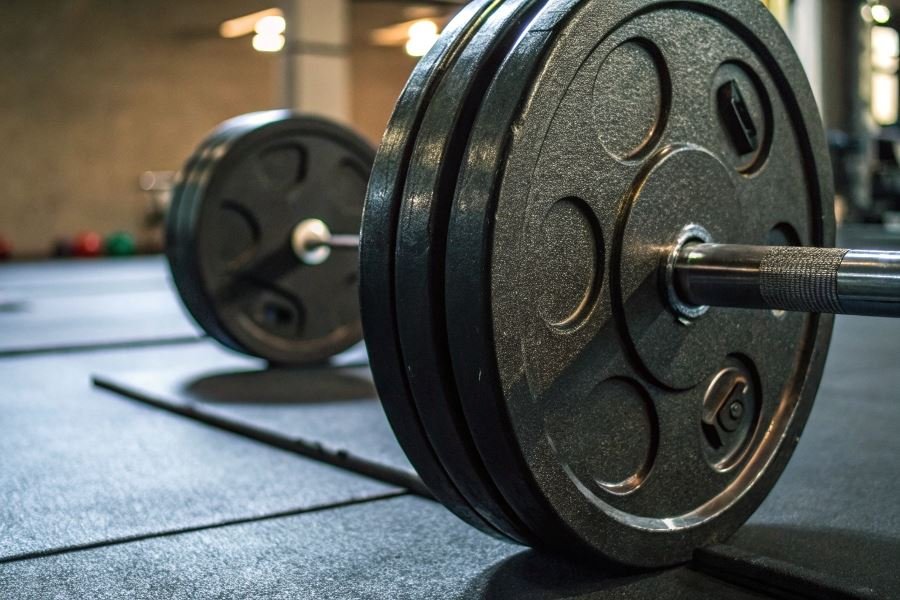
Ever wondered why some weight plates have massive holes while others don’t? The answer might reshape your entire training approach.
When Jim Delaney clean-and-jerked a then-impressive 317.5 pounds at the 1932 Los Angeles Olympics, he wasn’t using the same equipment you’ll find in modern gyms. The evolution of weight plates tells a fascinating story of strength training’s transformation from crude iron discs to precisely calibrated training tools.
Weight plates have been around since ancient Greece, where athletes lifted stone weights to build strength. But the modern distinction between Olympic and standard plates emerged in the mid-20th century as weightlifting became standardized as a competitive sport. Olympic plates—with their distinctive 2-inch diameter holes—were designed specifically for Olympic weightlifting, while standard plates with 1-inch holes remained popular for general strength training.
The anatomy of a plate
The differences between these two types go far beyond hole size:
- Olympic plates feature a 50.4mm (2-inch) center hole, are typically bumper-style or metal, and are designed for dynamic movements
- Standard plates have a 25.4mm (1-inch) center hole, are usually cast iron, and are built for controlled strength exercises
Your choice between these two systems isn’t just about aesthetics—it fundamentally affects your training potential. Olympic setups allow for explosive movements like cleans and snatches, while standard plates excel in controlled strength building with less equipment investment.
The right choice depends on your training goals, space limitations, and budget. For serious lifters pursuing competitive strength or power development, the Olympic system offers unmatched versatility. For home gym enthusiasts focused on general fitness, standard plates might provide everything you need without the premium price tag.
The Technical Showdown: Olympic vs Standard Weight Plates
When you step into the weight room, those circular hunks of metal might seem interchangeable at first glance. They’re not. The difference between Olympic and standard weight plates goes far beyond aesthetics—it’s about performance, precision, and purpose. Understanding these differences is crucial when deciding which plates deserve a spot in your training arsenal.
Let’s dive into the nitty-gritty of Olympic vs standard plates: what is the difference and what to choose depends largely on your training goals, equipment setup, and performance expectations. The technical specifications reveal why serious lifters tend to gravitate toward one over the other.
Diameter and Hole Size: The Foundation of Compatibility
The most immediate difference between these plate varieties lies in their center holes. Olympic plates feature a 2-inch (50.8mm) diameter hole, while standard plates have a 1-inch (25.4mm) opening. This isn’t just a random design choice—it fundamentally affects stability, loading speed, and overall performance.
Olympic plates maintain consistent external diameters across weight classes:
- 45lb plates: 450mm diameter
- 25-35lb plates: 350mm diameter
- 10-15lb plates: 300mm diameter
Standard plates, meanwhile, typically scale their diameter proportionally to weight, creating a less uniform stacking experience.
Why does this matter? Olympic plates’ larger hole creates less friction against the sleeve, allowing for smoother rotation during dynamic lifts. The standardized diameter ensures consistent bar height for deadlifts and floor-based movements regardless of load.
Material Quality and Weight Precision
| Feature | Olympic Plates | Standard Plates |
|---|---|---|
| Material | Cast iron, rubber-coated, urethane | Primarily cast iron |
| Weight Tolerance | ±1-2% | ±3-5% |
| Durability | High impact resistance | Moderate impact resistance |
| Finish Options | Chrome, rubber, urethane, competition colors | Basic enamel, vinyl coating |
Olympic plates, particularly competition-grade versions, offer remarkable weight accuracy. Many are calibrated to within 10 grams of their stated weight—critical for competitive lifters where every gram counts. The materials used in Olympic plates also tend to be higher grade, with better casting processes that reduce air pockets and inconsistencies.
Standard plates often have wider weight tolerances. While this might not matter for general fitness, it can create significant imbalances when lifting heavier loads. A 5% variance on a 45lb plate means you could be lifting over 2lbs more or less than intended on each side!
Equipment Compatibility and Training Applications
The compatibility factor cannot be overstated. Olympic plates are designed exclusively for Olympic barbells with 2-inch sleeves, while standard plates fit only on 1-inch bars. This distinction creates entire ecosystems of equipment.
Olympic plate advantages:
- Compatible with competition-grade equipment
- Work with specialized bars (trap bars, safety squat bars)
- Fit commercial gym equipment standards
- Better suited for Olympic lifts (clean and jerk, snatch)
Standard plate advantages:
- Work with most home fitness equipment
- Compatible with many adjustable dumbbells
- Often more affordable for beginners
- Sufficient for basic strength training movements
The training application differences extend to feel and performance. Olympic plates’ larger diameter hole creates more sleeve rotation, critical for Olympic lifting where the bar needs to rotate independently of the plates during explosive movements. Standard plates, with their tighter fit, create more direct transfer of force—sometimes preferable for pure strength movements.
When selecting between these options, consider not just your current setup but your long-term training trajectory. Many lifters who start with standard equipment eventually migrate to Olympic setups as their training advances, finding the precision and versatility worth the investment.
Making the Right Choice: Olympic vs Standard Plates
When it comes to building your home gym or choosing equipment for your training regimen, the weight plate decision can make or break your fitness journey. Let’s dive into how to match your plate choice with your specific needs, goals, and financial reality.
Matching plates to your training ambitions
Your training goals should be the primary driver behind your weight plate decision. Are you looking to build serious strength, train for competitive lifting, or simply maintain general fitness?
Olympic plates shine for those pursuing:
- Powerlifting or Olympic lifting competitions
- Progressive overload with heavy weights
- Technical lifts requiring balanced weight distribution
- Consistent training with barbells
Standard plates make more sense if you’re:
- Focusing on general fitness maintenance
- Working with limited space constraints
- Primarily using dumbbells or fixed-weight equipment
- Incorporating lighter resistance training into cardio routines
The best weight plate isn’t the most expensive one—it’s the one that aligns with your specific training methodology and goals.
Space considerations also play a crucial role. Olympic setups typically require a dedicated area with proper flooring and clearance, while standard plates can work in more compact environments. Measure your available space before investing in either system.
Financial investment and long-term value
The price difference between Olympic and standard equipment is substantial, but thinking long-term reveals the true value proposition:
| Equipment Type | Initial Investment | Durability | Resale Value | Expandability |
|---|---|---|---|---|
| Olympic Setup | 300−1,500+ | 10-20+ years | High | Excellent |
| Standard Setup | 100−400 | 3-8 years | Low | Limited |
Olympic equipment represents a significant upfront investment but offers exceptional durability. Quality Olympic plates from manufacturers like Rogue Fitness or Eleiko can last decades with proper care.
Standard plates cost less initially but may need replacement sooner, especially if you’re progressing in strength. They also tend to have minimal resale value compared to Olympic equipment, which often retains 60-80% of its value years after purchase.
Recommendations across experience levels
For beginners:
If you’re new to resistance training, standard plates provide an affordable entry point. A simple 110-pound standard weight set allows you to learn proper form without overwhelming investment. However, if your fitness journey has clear long-term goals, consider starting with basic Olympic equipment to avoid eventual replacement costs.
For intermediate lifters:
This is where the Olympic advantage becomes clear. As you progress beyond basic movements and begin lifting heavier weights, Olympic bars and plates offer greater stability, safety, and growth potential. Consider investing in a quality Olympic barbell and a starter set of bumper plates from Rep Fitness.
For advanced athletes:
Olympic equipment is non-negotiable at this level. Focus on building a comprehensive set with specialized plates for different training modalities. Competition-grade equipment from Titan Fitness or Vulcan Strength will support your advanced training needs.
Remember that hybrid approaches work too—many serious lifters maintain both systems, using Olympic equipment for primary lifts and standard plates for accessory movements or travel workouts.
The right choice ultimately depends on your honest assessment of where you are in your fitness journey and where you plan to go.