
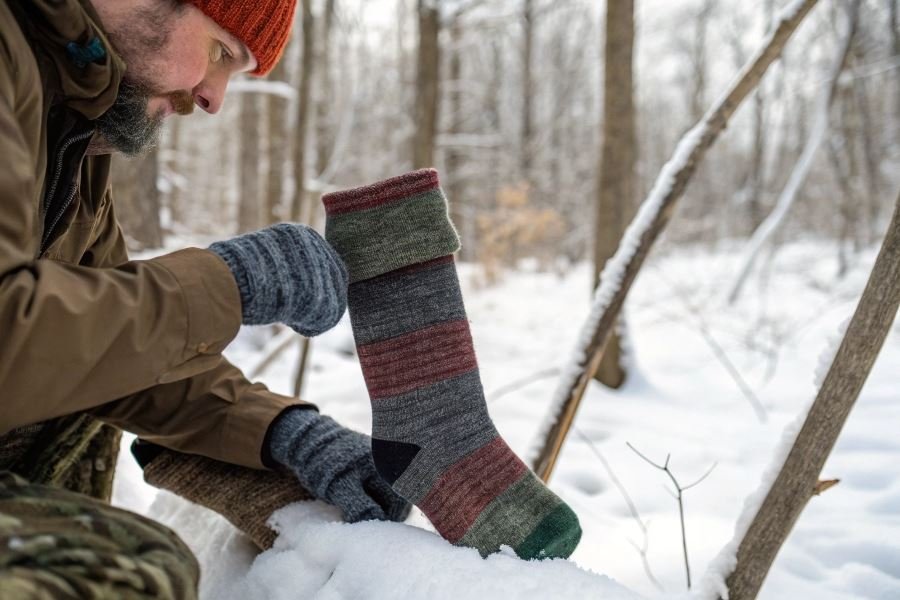
Ever stood ankle-deep in marsh water for hours, tracking that perfect shot, only to discover your feet have become a science experiment gone wrong? That burning sensation isn’t just fatigue—it’s your body sending an SOS.
When you’re miles from civilization pursuing game, your feet become your most critical yet overlooked asset. The hunting community has witnessed a revolution in specialized footwear technology, with antibacterial socks emerging as essential gear rather than an afterthought. These aren’t your standard cotton tubes—they’re engineered foot fortresses designed specifically for the punishing conditions hunters face.
The hunting advantage goes beyond odor control. While eliminating bacteria that cause that distinctive “three-day trek” smell is valuable (especially when sharing a hunting cabin), the real magic happens in performance enhancement. Antibacterial treatments prevent blisters by reducing friction-causing moisture and bacteria. This translates to longer, more comfortable stalks and stands without the distraction of hot spots developing with each step.
“The difference between success and failure in the field often comes down to endurance. When your feet fail, your hunt ends.”
Selecting the right antibacterial hunting socks requires understanding three critical factors: material composition (merino wool blends reign supreme), cushioning zones (targeted to hunting movements), and moisture management systems. The best options incorporate silver ion technology that actively hunts bacteria rather than simply creating a hostile environment.
Your feet deserve the same attention as your firearm or optics—perhaps more.
The Tech Behind Hunting Comfort
When you’re tracking game through dense underbrush or waiting motionless in a blind for hours, your feet become your most critical connection to success. The right antibacterial socks for hunting can mean the difference between staying focused on the hunt and being distracted by discomfort, moisture, or worse—game-alerting odor. Selecting proper technical footwear requires understanding the science behind what makes these specialized socks perform.
Choosing antibacterial socks for hunting requires attention to material composition, moisture management capabilities, durability factors, and seasonal adaptability. These aren’t just ordinary socks with a fancy label—they’re engineered tools designed specifically to enhance your hunting experience through targeted performance features.
Material Mastery: The Foundation of Performance
The magic starts with what these socks are actually made of. Merino wool stands as the gold standard in hunting sock materials, offering natural temperature regulation that keeps feet warm in cold conditions yet cool in warmer weather. Unlike standard wool, merino fibers are finer (typically 15-24 microns) and softer against skin.
Silver-infused fibers represent the technological evolution in antibacterial protection. These threads contain actual silver particles that naturally inhibit bacterial growth—the primary cause of odor. Game animals with highly developed olfactory senses can detect human scent from remarkable distances, making odor control a hunting necessity, not a luxury.
Synthetic blends complete the material trifecta, with components like:
| Material | Primary Benefit | Secondary Advantage |
|---|---|---|
| Nylon | Structural support | Quick-drying properties |
| Spandex | Compression and fit | Prevents bunching during movement |
| Polyester | Moisture wicking | Durability in harsh conditions |
The ideal hunting sock typically contains a strategic blend of these materials—often 60-70% merino wool, 20-30% synthetics, and 5-10% silver-infused fibers for maximum performance.
Moisture Management: The Comfort Equation
Moisture control technology represents perhaps the most critical feature in hunting footwear. When tracking game across varied terrain, feet typically produce significant perspiration—up to 8 ounces per day during active hunting.
Advanced hunting socks employ multi-zone moisture management systems that:
- Wick moisture away from skin through capillary action
- Transport that moisture to outer sock layers
- Disperse moisture for rapid evaporation
This three-stage process prevents the wet, clammy feeling that leads to blisters and, in cold weather hunting scenarios, potentially dangerous heat loss through conduction.
Built to Last: Reinforcement Where It Matters
The punishing conditions of hunting demand exceptional durability. Premium antibacterial hunting socks feature strategic reinforcement in high-wear zones:
- Heel cups with 200% density increase
- Toe boxes with abrasion-resistant threading
- Achilles protection zones that prevent early breakdown
These reinforcements extend sock lifespan significantly while providing crucial support during long stalks or extended sits in hunting blinds.
Seasonal Adaptability: One Size Doesn’t Fit All Conditions
Early season bow hunting in September requires fundamentally different sock construction than late-season rifle hunting in December. Seasonal-specific designs account for these variations through:
- Varying thickness (measured in mg/cm²)
- Targeted ventilation panels for warm-weather hunting
- Insulation zones for cold-weather pursuits
- Height variations from ankle to over-calf depending on terrain and conditions
The most versatile hunters maintain separate sock systems for different seasons rather than compromising with all-season options that excel nowhere but perform adequately everywhere.
When selecting your next pair of hunting socks, remember that these technical garments represent the critical interface between you and the ground beneath. Their performance directly impacts your endurance, comfort, and ultimately, hunting success.
The Ultimate Trifecta: What Makes Hunting Socks Worth Every Penny
When you’re miles deep in rugged terrain with a day’s worth of hunting ahead, your socks become your most intimate allies. Not just any fabric tube will do—especially when bacterial growth and moisture can transform a promising expedition into a painful ordeal. Let’s dive into the three critical factors that separate exceptional antibacterial hunting socks from the pretenders.
The Perfect Fit: Your Foundation for Endurance
The relationship between fit, cushioning, and mobility isn’t just important—it’s everything. Properly fitted hunting socks prevent the micro-movements that create friction and eventually lead to blisters.
Premium hunting socks like those from Darn Tough feature targeted cushioning zones that absorb impact where you need it most—typically the heel and ball of the foot. This strategic padding doesn’t just prevent blisters; it dramatically reduces foot fatigue during those final critical hours of your hunt.
The difference between standard cushioning and anatomical cushioning can mean adding miles to your range before discomfort sets in.
Look for socks with:
- Compression panels around the arch
- Seamless toe construction
- Reinforced heel cups that prevent slippage
- Graduated compression that improves circulation
Thermal Regulation: The Delicate Balance
The thermal regulation capabilities of your hunting socks can make or break your experience, especially during dawn and dusk temperature swings.
The best hunting socks don’t just keep you warm—they actively manage moisture to prevent both overheating and cold exposure.
Modern hunting socks from brands like Smartwool have mastered the insulation-breathability equation through multi-zone construction:
| Zone | Primary Function | Material Composition |
|---|---|---|
| Foot Bed | Moisture wicking | Merino wool/synthetic blend |
| Arch | Ventilation | Mesh panels or thinner weave |
| Calf | Insulation | Higher wool content |
| Top Band | Circulation | Elastic without constriction |
The most advanced options incorporate temperature-responsive fibers that adapt to both external conditions and your body’s heat output. This dynamic response prevents the sweat-chill cycle that can lead to hypothermia in extreme conditions.
Antimicrobial Arsenal: Beyond Basic Protection
The antimicrobial effectiveness of hunting socks varies dramatically based on both treatment type and application method.
Silver-ion technology remains the gold standard for lasting antibacterial protection. Unlike topical treatments that wash out after 15-20 laundry cycles, socks from Silverlight integrate silver particles directly into the fiber structure, providing protection that lasts the lifetime of the sock.
Other effective treatments include:
- Copper-infused fibers that kill bacteria through oxidation
- Zinc-based compounds that prevent odor-causing microbe reproduction
- Natural antimicrobials like extracted tea tree oil compounds
The most effective antibacterial socks combine multiple approaches—typically a durable inorganic agent like silver with a secondary organic compound that targets specific fungal species common in outdoor environments.
The difference becomes apparent after multiple days in the field—quality antimicrobial socks can remain functionally odorless even after 72+ hours of continuous wear.
When selecting your next pair, remember that true performance hunting socks represent an investment in both comfort and endurance. The right combination of fit, thermal regulation, and antimicrobial protection transforms these essential garments from mere accessories into critical gear that extends your time in the field and preserves your focus when that perfect moment arrives.