
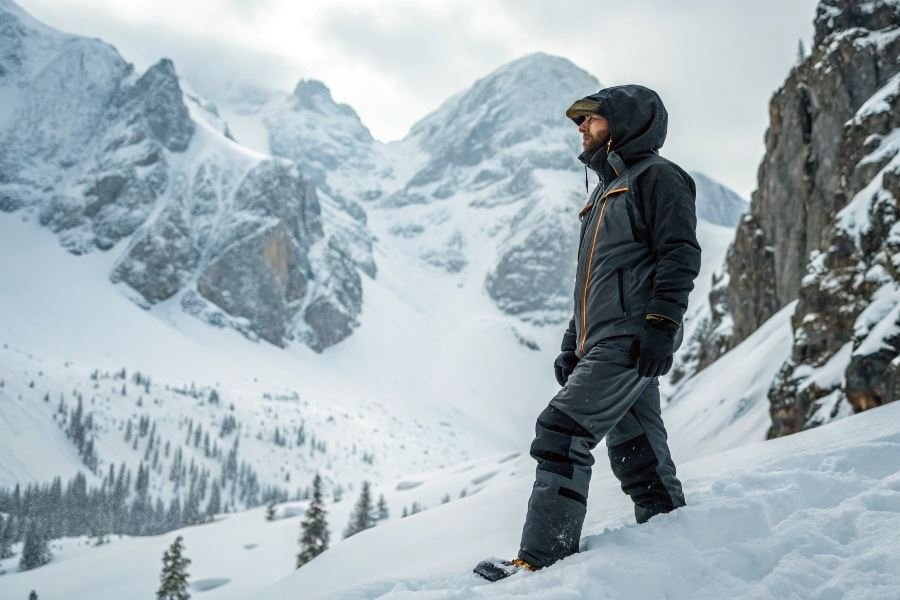
Ever stood on a mountain ridge with rain pelting your face at 40 mph while your “waterproof” jacket slowly surrenders to the elements? That soggy, chilling sensation isn’t just uncomfortable—it can be dangerous.
When you’re kayaking through class IV rapids or scaling ice-slicked peaks, your waterproof jacket becomes more than apparel—it’s survival equipment. The difference between staying dry during a sudden alpine storm or becoming dangerously hypothermic often comes down to the technical specifications you probably glossed over when making your purchase.
Waterproof ratings matter more than you think. That mysterious “10K/10K” or “20K/20K” on the tag? It’s telling you exactly how your jacket will perform when the weather turns hostile. A 10,000mm rating means your jacket can withstand the equivalent of 10,000mm of water pressure—roughly a light rain. But for extreme environments, you’ll want to aim for 20,000mm or higher, capable of handling the heaviest downpours and snow.
“Breathability is the unsung hero of waterproof technology. A jacket that traps your sweat is just as dangerous as one that lets rain in.”
Different extreme sports demand different protection profiles. Backcountry skiing requires exceptional breathability during high-output climbs but bombproof waterproofing for those powder descents. Whitewater kayaking needs reinforced shoulders and arms that can withstand constant water pressure. Mountain biking? Look for strategic ventilation zones that prevent overheating on technical climbs.
The membrane technology that keeps you dry has evolved dramatically—from early Gore-Tex innovations to today’s ultralight, super-breathable options that weigh mere ounces while still performing in hurricane-force conditions.
The Technical Backbone of Waterproof Performance
When you’re hanging off a cliff face in a torrential downpour or carving through powder in a snowstorm, your jacket isn’t just clothing—it’s survival equipment. The difference between staying dry and suffering through a miserable (or dangerous) experience comes down to the technical features engineered into your outer shell.
Selecting waterproof jackets for extreme sports requires understanding the critical technical elements that separate mediocre gear from exceptional protection. The membrane technology, seam construction, and ventilation systems work together as an integrated defense system against the elements, allowing you to push boundaries while maintaining comfort and safety.
Membrane Magic: The Invisible Shield
At the heart of every high-performance waterproof jacket lies its membrane technology—the microscopic marvel that determines how your jacket breathes and blocks moisture.
Gore-Tex remains the gold standard with its ePTFE (expanded polytetrafluoroethylene) membrane containing over 9 billion pores per square inch. These pores are 20,000 times smaller than a water droplet but 700 times larger than a water vapor molecule—the physics behind its legendary “waterproof yet breathable” performance.
eVent takes a different approach with its Direct Venting™ technology, eliminating the need for moisture to condense before transferring through the membrane. This creates noticeably faster vapor transfer in high-output activities.
Proprietary solutions like Columbia’s Omni-Tech and The North Face’s FUTURELIGHT offer compelling alternatives. FUTURELIGHT, introduced in 2019, uses nanospinning to create an ultra-thin, air-permeable membrane that delivers exceptional breathability while maintaining waterproof integrity.
| Membrane | Waterproof Rating | Breathability | Best For |
|---|---|---|---|
| Gore-Tex Pro | 28,000mm+ | 25,000g/m²/24hr | Alpine expeditions |
| eVent DValpine | 20,000mm | 20,000g/m²/24hr | High-output activities |
| FUTURELIGHT | 20,000mm | 75,000g/m²/24hr | Versatile mountain use |
Seam Science: Where Waterproofing Succeeds or Fails
A jacket’s membrane becomes irrelevant if water seeps through its seams. Modern extreme sport jackets employ sophisticated seam construction techniques to ensure complete protection.
Fully taped seams represent the minimum standard for serious waterproofing. This involves applying waterproof tape over the tiny holes created during stitching. Premium jackets feature 3D-mapped seam placement that positions seams away from high-wear or high-exposure areas.
The most advanced jackets utilize welded seams where fabric panels are fused together using ultrasonic welding or adhesive bonding. This eliminates needle holes entirely and creates a stronger, more flexible joint. Arc’teryx’s WaterTight™ zippers and welded construction exemplify this technology at its finest.
Critical reinforcement zones—typically shoulders, elbows, and hips—often feature additional layers or more robust materials. These reinforcements prevent premature wear in areas that contact backpacks, climbing harnesses, or terrain.
Ventilation: The Breathability Equation
Even the most breathable membrane can’t keep up with the heat and moisture your body produces during intense activity. Strategic ventilation systems provide the necessary release valve.
Pit zips remain the classic solution—underarm zippered vents that can be opened to dump heat quickly. Advanced designs feature mesh-backed vents that allow airflow while preventing snow or rain ingress.
Core vents positioned on the chest or back provide additional options for temperature regulation. Patagonia’s TorrentShell jackets feature cleverly designed pocket vents that serve dual purposes.
The most sophisticated systems employ automated moisture management through materials that expand or contract based on temperature and humidity. Polartec’s NeoShell fabric dynamically adjusts air permeability as conditions change, creating what they call “adaptive breathability.”
When selecting your next extreme sports shell, remember that these technical features aren’t just marketing jargon—they’re the engineering that keeps you performing at your peak when the elements are at their worst.
Sealing the Deal: Your Ultimate Waterproof Jacket Guide
Performance meets practicality
Finding that perfect waterproof jacket for extreme sports isn’t just about grabbing the most expensive option on the rack. It’s about smart investment. Premium jackets from brands like Arc’teryx or Patagonia might start at 300, buttheir3 − layerGore − Texconstructionoftendeliversunmatchedperformanceanddurability.Thatsaid, solidmid − rangeoptionsfrom[Columbia](https : //www.columbia.com)or[TheNorthFace](https : //www.thenorthface.com)(150-250) can deliver exceptional value with their proprietary waterproofing technologies.
The key is identifying your non-negotiables. Backcountry skiers need maximum breathability and durability. Mountain bikers might prioritize packability and ventilation. Kayakers? Absolute waterproofing and mobility.
Budget hack: Last season’s models often deliver 90% of the performance at 60% of the price. The technology rarely changes dramatically year-to-year.
Remember that a $400 jacket that lasts five intense seasons works out cheaper than replacing a $200 jacket every other year. Factor in the environmental impact of manufacturing, and suddenly “investment pieces” make even more sense.
Extending your jacket lifespan
Even the most bombproof waterproof jacket needs proper care. The number one mistake? Improper washing. Contrary to popular belief, technical jackets need regular cleaning to maintain breathability and water repellency.
Essential maintenance routine:
- Wash with technical cleaner (not regular detergent)
- Rinse thoroughly
- Apply DWR treatment when water stops beading
- Tumble dry on low heat to activate DWR
Products like Nikwax Tech Wash and Grangers Performance Wash are specifically formulated to clean without damaging the delicate membranes.
Storage matters too. Hanging your jacket in a cool, dry place prevents membrane degradation. Never store a damp jacket compressed in your gear bag – that’s asking for mildew and compromised waterproofing.
Top performers across disciplines
After testing dozens of jackets across multiple extreme sports, these three consistently outperform the competition:
Mountain adventures champion
The Arc’teryx Beta AR ($599) dominates alpine environments with its bombproof Gore-Tex Pro construction. The helmet-compatible hood, pit zips, and articulated patterning make it perfect for everything from ice climbing to backcountry skiing. The reinforced shoulders and elbows shrug off rock abrasion and heavy pack straps.
Water sports specialist
For paddlers and surfers, the Kokatat Passage Anorak ($375) offers unmatched waterproofing with its 3-layer Hydrus construction. The extended paddling sleeves, neoprene wrist gaskets, and stowable hood create a system that keeps water out while allowing exceptional range of motion. The front pocket doubles as a self-draining storage pouch.
Trail blazing performer
Trail runners and mountain bikers swear by the Patagonia Storm10 ($299) for its ultralight 3-layer H2No construction. Weighing just 8.3 oz, it packs down to the size of an apple yet delivers surprising durability. The minimalist design eliminates excess features while maintaining essential performance where it counts.
Remember, the best jacket is the one that meets your specific needs and gets used regularly. Choose wisely, care for it properly, and it’ll have your back through countless adventures.