
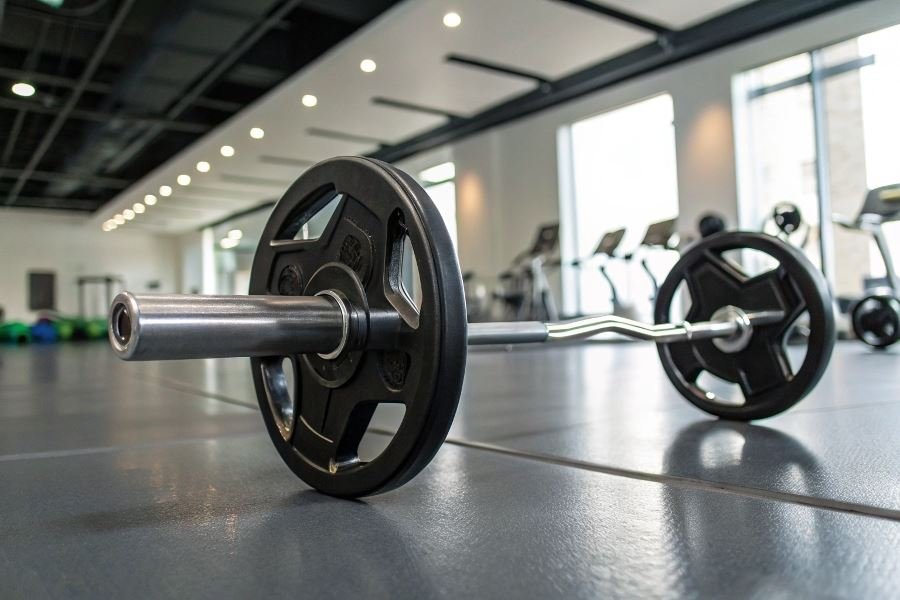
Ever watched someone grimace through bicep curls with a straight bar, wrists awkwardly twisted? Or noticed how some lifters effortlessly flow through exercises with that oddly-angled EZ bar? The difference isn’t just aesthetic—it’s biomechanical brilliance at work.
When we talk about strength training equipment, the battle between EZ bars and straight bars represents one of the most consequential choices you’ll make for your lifting journey. These seemingly similar tools create dramatically different training experiences and results.
The straight bar—the classic weightlifting staple—features a completely horizontal grip that allows for maximum load capacity. Its uncompromising design creates a perfect platform for compound movements like deadlifts and bench presses. Meanwhile, the EZ bar, with its distinctive W-shaped curves, offers varying grip angles that reduce strain on wrists and elbows during isolation exercises.
Your fitness goals should dictate your bar selection. Bodybuilders seeking targeted muscle development might gravitate toward the EZ bar’s ability to isolate specific muscle groups with reduced joint stress. Powerlifters and strength athletes, however, often prefer straight bars for their stability and load capacity during heavy compound lifts.
Biomechanically, these tools create different muscle activation patterns. The angled grips of an EZ bar slightly alter which muscle fibers engage during curls and extensions, while straight bars typically allow for greater overall muscle recruitment—but at the potential cost of increased joint strain.
The right bar isn’t about which looks cooler in your gym selfies—it’s about which one aligns with your body’s mechanics and training objectives.
Bar Wars: The Science Behind EZ vs Straight Bars
When you step into the weight room, the choice between an EZ-bar and a straight bar isn’t just about aesthetics—it’s about biomechanics, muscle engagement, and injury prevention. Let’s dive deep into what makes each bar unique and how to select the right one for your specific training goals.
Muscle Activation: Different Bars, Different Gains
The grip position forced by each bar type creates distinct muscle recruitment patterns. When deciding between an EZ-bar or straight bar for effective workouts, understanding these differences becomes crucial for targeting specific muscle groups.
Research from the Journal of Strength and Conditioning Research shows straight bars maximize forearm supinator and biceps activation during curls, making them superior for pure bicep development. The neutral hand position allows for complete contraction and extension.
EZ-bars, with their angled grips, shift some tension from the biceps to the brachialis and brachioradialis. This creates a more balanced arm development but slightly reduces peak bicep activation.
| Bar Type | Primary Muscles | Secondary Muscles | Activation Level |
|---|---|---|---|
| Straight Bar | Biceps Brachii | Forearm Supinators | Maximum |
| EZ-Bar | Brachialis, Brachioradialis | Biceps Brachii | Moderate-High |
Joint Stress and Injury Prevention
The wrist and elbow joints take a beating during resistance training, and bar selection plays a significant role in joint health.
The EZ-bar’s angled grips place your wrists and forearms in a semi-supinated position—a more natural alignment that significantly reduces stress on the wrist joints and medial elbow. This makes EZ-bars the preferred choice for lifters with a history of wrist or elbow issues.
Straight bars force a fully supinated grip during curls and a pronated grip during pressing movements. While this maximizes muscle activation, it also increases joint stress, particularly at heavier loads.
“The 30-degree angle of most EZ-bars reduces wrist strain by approximately 60% compared to straight bars during heavy curling movements.”
For pressing movements like bench press or overhead press, the straight bar allows for more natural shoulder positioning, while the EZ-bar can create awkward angles for some lifters.
Exercise Versatility and Movement Limitations
The straight bar offers unmatched versatility across major compound movements:
- Deadlifts
- Bench press
- Squats
- Overhead press
- Rows
Its uniform grip allows for standardized form and technique across these foundational exercises. The straight design also permits wider grip variations, essential for targeting different muscle groups during pulling movements.
The EZ-bar excels in isolation exercises:
- Bicep curls
- Tricep extensions
- Skull crushers
- Upright rows
The cambered design of the EZ-bar limits its application in certain compound movements but creates a mechanical advantage for isolation work. The angled grips allow for more comfortable supination and pronation during curl variations, making it ideal for high-volume arm training.
For comprehensive development, most serious lifters incorporate both bars into their training regimen, selecting the appropriate tool based on the specific exercise, training goal, and individual biomechanics. This strategic approach maximizes muscle activation while minimizing joint stress—the perfect formula for sustainable, long-term progress.
Making the Right Bar Choice for Your Training Goals
Aligning Your Bar with Your Fitness Ambitions
Your choice between an EZ-bar and straight bar should ultimately serve your specific training objectives. For muscle hypertrophy in the biceps and triceps, the EZ-bar often delivers superior results by allowing a more comfortable grip that enables higher volume training. The angled handles reduce wrist strain, letting you push through those crucial extra reps that stimulate growth.
For pure strength development, particularly in compound movements, the straight bar remains undefeated. Olympic lifters and powerlifters gravitate toward straight bars because they allow for maximum force production through a mechanically advantageous position. The neutral wrist alignment during deadlifts and bench presses creates the shortest distance between points of force application.
The bar you choose isn’t just equipment—it’s a strategic training decision that directly impacts your results.
Matching Bars to Your Experience and Physical Needs
Your training experience and physical limitations should heavily influence your bar selection:
For beginners, the EZ-bar provides a gentler introduction to resistance training. The reduced stress on joints allows newcomers to focus on proper form and muscle engagement without being distracted by wrist discomfort. This makes the EZ-bar particularly valuable during the critical skill acquisition phase of training.
Intermediate lifters should begin incorporating both bars, using the straight bar for primary compound movements and the EZ-bar for accessory work.
Advanced lifters with no limitations often prefer straight bars for their core training, as the slightly more challenging grip position can enhance neuromuscular recruitment.
For those with existing joint issues or injuries, the EZ-bar isn’t just preferable—it’s often essential. Individuals with carpal tunnel syndrome, tennis elbow, or wrist injuries can maintain training intensity while minimizing aggravation of these conditions.
Creating the Ultimate Bar Rotation Strategy
The most effective training programs incorporate both bars strategically:
| Training Phase | Primary Bar | Secondary Bar | Purpose |
|---|---|---|---|
| Strength Focus | Straight Bar | EZ-Bar | Use straight bar for main lifts, EZ-bar for accessory work |
| Hypertrophy Focus | EZ-Bar | Straight Bar | Maximize volume with EZ-bar, maintain strength with straight bar |
| Rehabilitation | EZ-Bar | None | Reduce joint stress while maintaining training stimulus |
| Skill Development | Straight Bar | EZ-Bar | Master technical lifts with straight bar, build supporting muscles with EZ-bar |
The ideal approach involves periodizing your bar selection. During heavy strength phases, prioritize the straight bar for your primary lifts. When transitioning to hypertrophy-focused training blocks, increase EZ-bar usage to maximize training volume while minimizing joint stress.
For comprehensive development, consider a weekly rotation where certain days emphasize straight bar movements (typically earlier in the week when fresh) and others focus on EZ-bar work for isolation and accessory movements.
Remember that bar selection isn’t an either/or proposition—it’s about strategic implementation based on your goals, physical condition, and the specific demands of each exercise in your program. By thoughtfully incorporating both tools, you’ll create a training approach that maximizes results while minimizing injury risk.