
Ever watched a flock of mallards flare away from your blind at the last second? That split-second reaction wasn’t random—it was their remarkable vision detecting something amiss in their environment. Waterfowl possess some of nature’s most sophisticated detection systems, making proper concealment not just helpful, but essential for hunting success.
Ducks and geese can see colors we humans can’t even perceive. Their eyes detect ultraviolet light and have nearly 300-degree vision, allowing them to spot predators—or hunters—from almost any angle. Research from the University of Missouri shows waterfowl can detect movement from up to a mile away in optimal conditions. This extraordinary visual acuity means your camouflage strategy must be comprehensive and deliberate.
Wetland environments present unique camouflage challenges. Unlike forest hunting where stationary patterns work well, marshes and waterways require adaptable concealment that matches seasonal changes. The reflective quality of water creates another dimension to consider—your silhouette against the sky can be mirrored below, effectively doubling your visibility.
Effective waterfowl camouflage follows three core principles:
- Pattern matching: Replicating the exact colors and textures of your hunting environment
- Breaking outlines: Disrupting the human silhouette that birds instinctively recognize as danger
- Minimizing movement: Restricting motion when birds are in sight, as movement is the quickest way to get spotted
The most successful hunters don’t just wear camouflage—they become part of the landscape, disappearing into the reeds, grasses and water that waterfowl consider safe. This complete concealment creates the foundation for consistent, successful hunts.
Disappear in Plain Sight: Mastering Waterfowl Camouflage
When a flock of mallards circles overhead, scanning the marsh below, success hinges on one critical factor: whether they spot you before you spot them. The science and art of concealment in wetland environments has evolved dramatically, with today’s waterfowl hunters benefiting from advanced patterns and materials that would make military special forces envious.
Effective camouflage for hunting waterfowl requires understanding both your quarry’s exceptional vision and the environments you’ll be hunting in. Ducks and geese possess color vision superior to humans, with the ability to detect ultraviolet light and movement from remarkable distances. This evolutionary advantage means your concealment strategy must be comprehensive, addressing pattern, texture, and environmental adaptation.
Wetland patterns that actually work
The most effective waterfowl camouflage patterns mimic the specific environments where you’ll be hunting. For marshes and cattail-heavy areas, patterns featuring vertical elements in tan, brown, and olive tones create the visual break-up needed. Realtree Max-5 and Mossy Oak Shadow Grass Blades have become industry standards by incorporating multi-layered imagery of reeds, grasses, and cattails.
For open water hunting, patterns with more blue-gray tones and ripple effects help blend with water surfaces. Timber hunting demands darker patterns with vertical tree trunk elements and overhead canopy representations.
Pattern effectiveness varies by region: What works perfectly in Mississippi backwaters might stand out in Dakota potholes. Local adaptation is key.
Materials that perform when it matters
| Material | Weather Resistance | Noise Level | Durability | Best For |
|---|---|---|---|---|
| Modern Polyester Blends | Excellent | Very Low | High | All-season use |
| Treated Cotton Canvas | Good | Medium | Very High | Cold, dry conditions |
| Neoprene-faced Fabrics | Excellent | Low | Medium | Wet, cold environments |
| Breathable Laminates | Excellent | Low | Medium | Early season, active hunting |
The days of soaking cotton duck cloth are long behind us. Today’s premium waterfowl camouflage incorporates waterproof membranes, silent-brushed outer fabrics, and insulation technologies that maintain warmth even when wet. Sitka Gear’s Waterfowl Marsh collection exemplifies this evolution, using GORE-TEX membranes with specialized outer fabrics that remain silent even when frozen.
The material’s performance under stress—when you’re reaching for your call or shouldering your shotgun—separates adequate gear from exceptional equipment.
Seasonal shifts in concealment strategy
Waterfowl seasons span dramatic environmental changes, requiring adaptable camouflage approaches:
Early Season (September-October)
Vegetation remains green and abundant. Lighter patterns incorporating greens and tans match standing crops and early-turning marshes. Breathability becomes critical in higher temperatures.
Mid-Season (November-December)
As vegetation dies back, patterns should shift toward browns, tans, and grays. This period often demands the most versatile camouflage as conditions can vary dramatically.
Late Season (January-February)
Snow and ice dominate many hunting areas. White-incorporated patterns like Sitka Optifade Elevated II or Kryptek Wraith provide critical concealment against snow-covered backgrounds.
The most successful hunters maintain a seasonal wardrobe, adapting their concealment strategy as the landscape transforms throughout the migration. This approach might require greater investment initially, but pays dividends in consistent success throughout the entire season.
The Vanishing Act: Mastering Waterfowl Hunting Camouflage
When ducks and geese fly overhead, success hinges on one critical factor: whether they see you before you see them. Waterfowl possess extraordinary vision, capable of detecting the slightest unnatural movement or out-of-place color from hundreds of yards away. Let’s dive into the art of disappearing in plain sight with strategies that will transform you into a waterfowl hunting phantom.
Building the Perfect Blind
The foundation of waterfowl concealment starts with your hunting blind. Whether you’re working with a permanent structure or a portable setup, the key is matching your surroundings with obsessive attention to detail.
For marsh hunting, incorporate natural vegetation directly from your hunting area. Avery Outdoors blind materials work wonderfully as a base, but nothing beats weaving in local reeds, cattails, and grasses. This creates a blind that doesn’t just blend in—it belongs.
For field hunting, consider these proven techniques:
- Use stubble straps to attach harvested crop material to your blind
- Position blinds in natural depressions or along field edges
- Incorporate shadows strategically—ducks rarely question dark spots
The most effective blinds disappear twice: once from a distance and again up close when birds commit to landing.
Personal Camouflage From Head to Toe
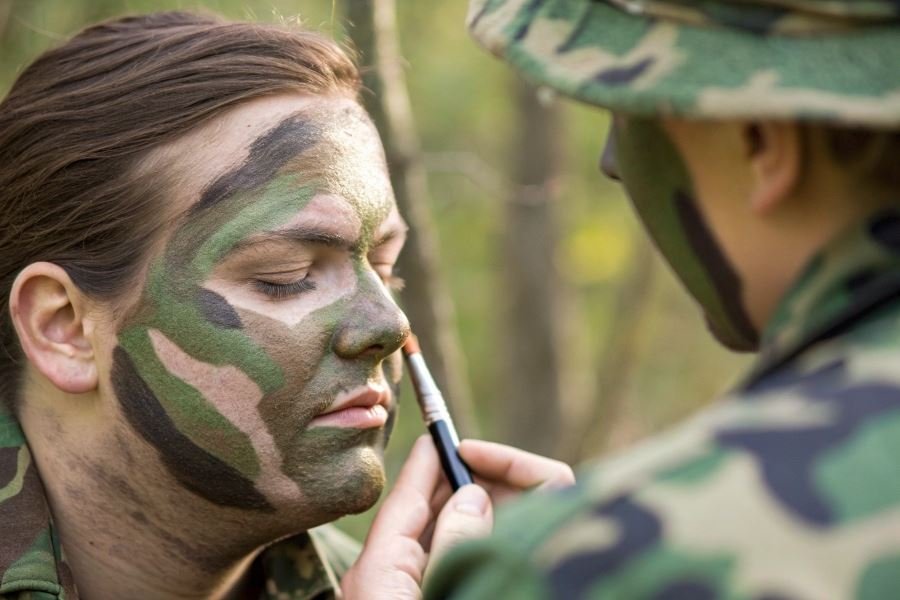
Your blind might be perfect, but if your face shines like a beacon, you’ve already lost. Start with a quality face mask or paint from Mossy Oak that breaks up the human outline.
For clothing, layering is essential:
| Layer | Purpose | Key Features |
|---|---|---|
| Base | Moisture management | Synthetic, non-cotton materials |
| Mid | Insulation | Quiet fabrics, full range of motion |
| Outer | Weather protection | Waterproof, pattern-matched to habitat |
Gloves and headwear deserve special attention—they’re often what moves first when birds approach. Opt for neoprene gloves in wetland settings and insulated options for cold-weather hunts.
Footwear considerations vary dramatically by hunting style:
- Wading: Premium LaCrosse waders with reinforced knees
- Field hunting: Insulated, waterproof boots with neutral earth tones
- Layout blinds: Specialized boots with minimal profile
Pattern selection should reflect your primary hunting environment, not just what looks “ducky” in the store. Late-season corn fields demand different camouflage than early-season marshes.
Equipment Concealment and Movement Discipline
Your shotgun’s gleaming barrel can alert waterfowl faster than any other equipment failure. Apply camouflage tape or specialized coatings from Mossy Oak or Realtree to eliminate shine.
For calls, lanyards, and accessories:
- Use matte-finish calls that won’t reflect light
- Secure lanyards inside your jacket to prevent swinging
- Keep shell boxes and other gear stowed until needed
Movement discipline represents the final frontier of concealment. Even perfectly camouflaged hunters fail when they can’t resist the urge to watch approaching birds. Practice these techniques:
- Limit face movement until birds commit
- Track birds with your eyes, not your head
- Designate a single caller to minimize group movement
- Establish clear shooting lanes to reduce last-second adjustments
The most successful waterfowl hunters don’t just wear camouflage—they become it, adopting the stillness and patience of the environment itself.
By implementing this comprehensive approach to concealment, you’ll find yourself consistently in the sweet spot: close enough for ethical shots while remaining invisible to even the wariest waterfowl.