
Ever watched a pro athlete tape up their fingers before a big game and wondered why? That simple act might be the difference between peak performance and season-ending injury. When LeBron James carefully wraps his fingers before hitting the court, he’s not just following superstition—he’s applying decades of sports medicine wisdom.
The human hand contains 27 bones, 29 joints, and over 123 ligaments—a complex machine perfectly designed for everything from throwing fastballs to gripping climbing holds. But this intricate design also makes our fingers incredibly vulnerable. Jammed fingers, dislocations, and sprains rank among the most common sports injuries, affecting athletes across virtually every discipline from basketball to mountain biking.
When comparing bandages and finger protectors for sports protection, we’re really examining the evolution of athletic safety. Traditional athletic tape—the mainstay of locker rooms since the 1950s—has now been joined by specialized silicone guards, compression sleeves, and custom-molded protectors. This evolution reflects our growing understanding that proper finger protection doesn’t just prevent injury—it enhances performance.
“The best protective gear disappears when you’re playing. You only notice it when it saves you from injury.” — Dr. James Andrews, renowned sports medicine specialist
Modern finger protection has transformed from bulky, restrictive necessities into streamlined performance enhancers. Today’s protective solutions offer the perfect balance between mobility and support, allowing athletes to push boundaries while minimizing risk. Whether you’re setting up for a three-pointer or reaching for that climbing hold, the right finger protection becomes your invisible advantage.
The Ultimate Battle: Bandages vs. Finger Protectors
When you’re pushing your limits on the court, field, or gym, the last thing you want is for your fingers to tap out before you do. The comparison of bandages and finger protectors for sports protection reveals crucial differences that could make or break your performance—and potentially save you from weeks on the sidelines.
Material Composition: The Foundation of Protection
Athletic tape and bandages typically feature cotton or synthetic fabrics with adhesive backing. They’re lightweight, conformable, and often disposable after a single use. The classic athletic tape contains zinc oxide adhesive that provides excellent stick-factor even during intense sweating.
Finger protectors, by contrast, are typically constructed from more substantial materials:
- Neoprene sleeves offer compression and thermal regulation
- Silicone guards provide impact absorption
- Thermoplastic splints deliver rigid support for severe sprains
The durability difference is substantial. While Mueller Sports Medicine tape might last a single practice session, a quality McDavid finger sleeve can endure an entire season with proper care.
Protection Level: What’s Really at Stake
When it comes to injury prevention capabilities, the differences become even more pronounced:
| Protection Type | Acute Injury Prevention | Chronic Support | Impact Protection |
|---|---|---|---|
| Athletic Tape | Moderate | Excellent | Minimal |
| Finger Sleeves | Good | Good | Moderate |
| Rigid Splints | Excellent | Excellent | Excellent |
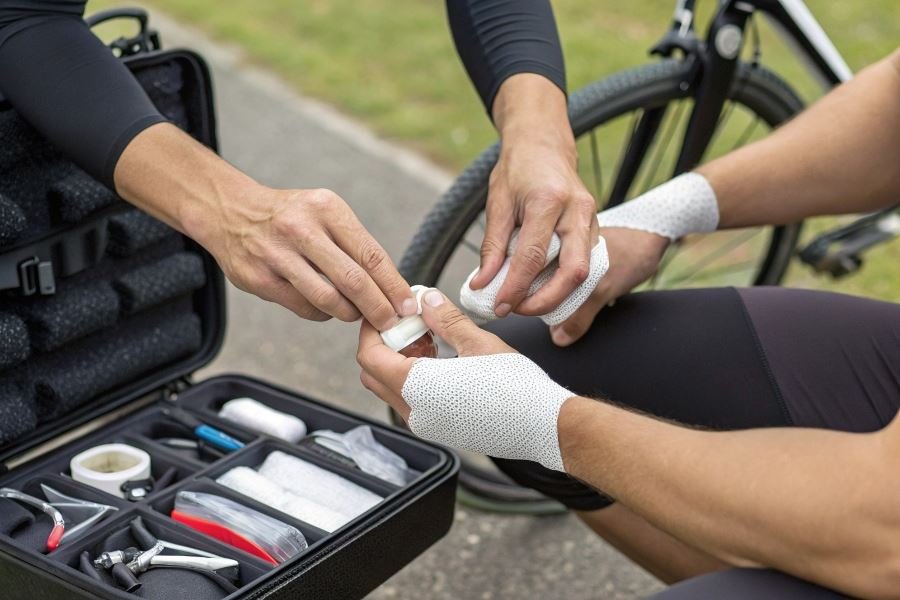
Bandages excel at preventing hyperextension and providing compression to reduce swelling. They’re particularly effective for taping techniques like “buddy taping” where an injured finger is secured to a healthy neighbor.
Finger protectors shine in their specialized design. Basketball players benefit from the impact protection of Nike finger sleeves when fighting for rebounds, while volleyball players rely on Mizuno finger supports to prevent repeated impact trauma from powerful spikes.
Performance Impact: The Mobility Trade-off
The protection-performance equation is where athletes face tough decisions. Bandages offer customizable support but require skill to apply correctly. Too tight, and you restrict blood flow; too loose, and protection vanishes.
Finger protectors provide consistent support but can affect:
- Tactile sensitivity (crucial for quarterbacks and basketball players)
- Grip strength (vital for racquet sports and climbing)
- Fine motor control (essential for baseball catchers)
The latest generation of finger sleeves from Under Armour incorporates silicone grip patterns that actually enhance ball control while providing protection—a significant advancement over earlier models.
Sport-Specific Applications: Finding Your Perfect Match
Different sports demand different solutions:
- Basketball and volleyball players typically prefer finger sleeves for their balance of protection and dexterity
- Football linemen often rely on heavy taping for maximum joint stabilization
- Climbers and gymnasts need minimal bulk with maximum grip, making specialized tape like Jtape their go-to choice
The limitations are equally important to recognize. Bandages require constant reapplication and can lose effectiveness when wet. Finger protectors may not be competition-legal in all sports and can cause overheating during extended use.
For combat sports practitioners, the protection requirements change dramatically. Hayabusa finger wraps provide the knuckle protection boxers need, while grapplers require tape systems that won’t unravel during the constant friction of a match.
The right choice ultimately depends on your specific sport, position, injury history, and personal preference—but understanding these fundamental differences ensures you’ll make an informed decision that keeps you in the game longer and performing at your peak.
Making the Right Choice: Bandages vs. Finger Protectors
Matching Protection to Your Injury
When you’re nursing a sports injury, choosing between bandages and finger protectors isn’t just about comfort—it’s about recovery trajectory and performance preservation.
For acute injuries like sprains and strains, elastic bandages provide the compression needed to reduce swelling and stabilize the area. The graduated pressure of products like ACE Bandages helps control inflammation while still allowing some movement.
Finger protectors, meanwhile, excel with specific digit injuries:
- Jammed fingers benefit from rigid splints that prevent further trauma
- Turf toe responds better to specialized toe protectors with reinforced bottoms
- Tendon injuries require the precise immobilization that finger sleeves provide
The severity gradient matters: mild sprains might need only light support, while complete tears demand rigid immobilization that only specialized protectors can deliver.
For chronic conditions like arthritis or recurring sprains, finger protectors with built-in stabilization technology often outperform traditional wrapping methods, providing targeted support to vulnerable joints.
Sport-Specific Protection Requirements
Different sports create unique demands on your fingers and hands:
| Sport | Common Injuries | Recommended Protection |
|---|---|---|
| Basketball | Jammed fingers, dislocations | Buddy taping, finger sleeves |
| Football | Fractures, hyperextensions | Rigid finger splints, padded gloves |
| Climbing | Pulley strains, flappers | Tape rings, finger caps |
| Volleyball | Sprains, impact injuries | Finger sleeves with padding |
| Baseball | Mallet finger, thumb sprains | Position-specific guards |
Basketball players typically need flexibility with stability, making finger sleeves from brands like McDavid ideal. Their compression technology maintains blood flow while providing moderate support.
In contrast, football linemen require maximum protection against hyperextension. Heavy-duty finger splints that limit backward movement while allowing gripping are essential.
Climbers face unique challenges with repeated stress on finger pulleys. The H-taping method using RockTape provides targeted support while maintaining crucial tactile feedback.
Maintenance, Longevity and Value Assessment
The economics of protection gear extends beyond initial purchase price:
Bandages typically cost $5-15 per roll but require:
- Regular washing to prevent bacterial growth
- Replacement every 3-6 months with regular use
- Proper storage to maintain elasticity
Finger protectors range from $15-45 but offer:
- Durability spanning 1-2 seasons of consistent use
- Material technology that resists breakdown from sweat
- Specialized protection that reduces re-injury risk
The hidden value equation includes injury prevention. A 30setoffingerguardsthatpreventsasingledoctorvisit(150+) represents significant savings.
Maintenance requirements differ dramatically. Neoprene finger sleeves from Shock Doctor can be machine-washed weekly, while specialized carbon fiber splints require careful hand cleaning.
The most cost-effective approach often combines both: using washable, reusable finger protectors for regular training, and keeping specialized bandaging techniques in your kit for acute injuries or specific competition needs.
Remember that proper fit determines effectiveness—protection gear that’s too loose offers minimal support, while overly tight equipment restricts circulation and can worsen injuries.