
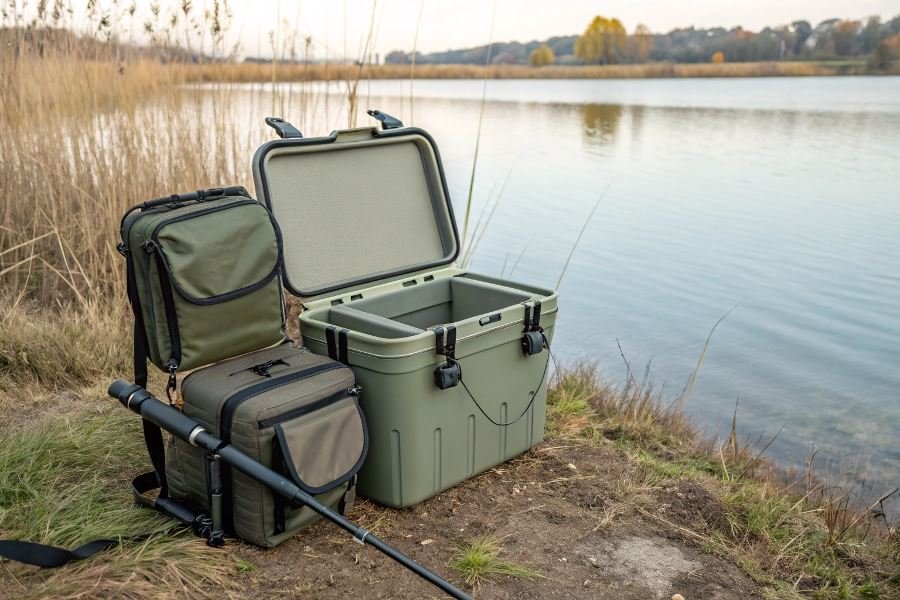
Ever watched your prized minnows floating belly-up before you even cast your first line? That sinking feeling isn’t just disappointment—it’s money and opportunity swimming away. The difference between a legendary fishing story and going home empty-handed often comes down to one overlooked detail: how you store your live bait.
Aerated buckets represent the gold standard for serious anglers who understand that lively, energetic bait attracts more strikes. These specialized containers incorporate oxygen-infusing systems that mimic natural aquatic environments, keeping your crickets chirping, your minnows darting, and your worms wriggling for hours longer than traditional methods.
How aeration actually works is brilliantly simple yet effective. Small battery-powered pumps force atmospheric oxygen through diffusers, creating thousands of tiny bubbles that dissolve into the water. This continuous oxygen exchange prevents the rapid buildup of carbon dioxide and ammonia that typically suffocates bait in conventional buckets.
The advantages over traditional storage methods are striking:
- Extended bait life: Keep minnows and shiners active for 8+ hours instead of 2-3
- Natural movement patterns: Livelier bait displays more authentic swimming behavior
- Reduced stress: Less stressed bait produces fewer alarm pheromones that can spook target fish
- Temperature stability: Better oxygen levels help bait withstand temperature fluctuations
When trophy fish are cruising nearby, the difference between sluggish, gasping bait and energetic, natural-acting bait can determine whether you’re showing off photos or telling stories about “the one that got away.”
The Ultimate Guide to Live Bait Aeration Systems
When you’re out on the water, nothing kills the excitement faster than discovering your live bait has gone belly-up. The difference between a trophy catch and a frustrating day often comes down to how well you’ve maintained your bait’s vitality. Modern buckets with aeration systems have revolutionized how anglers keep their live bait frisky and ready for action.
Selecting the right aeration bucket for your fishing adventures involves understanding several critical factors. Buckets with aeration: features of use for live bait range from simple battery-operated models to sophisticated systems with temperature control and water circulation technology. The right choice depends on your specific fishing style, bait preferences, and the environments you typically fish.
Size Matters: Matching Buckets to Bait
The optimal bucket size varies dramatically depending on what’s swimming inside it:
- Minnows and small baitfish: 2-3 gallon containers provide adequate space without excessive water weight
- Larger shiners or shad: 5-7 gallon buckets ensure proper swimming room
- Mixed bait collections: 8+ gallon systems with dividers prevent predation among different species
Design considerations go beyond mere volume. Rounded corners prevent bait from becoming trapped, while tapered sides make retrieval easier when water levels drop. The most effective designs incorporate translucent materials that allow you to monitor bait condition without constantly opening the lid and disturbing oxygen levels.
| Bait Type | Recommended Bucket Size | Key Design Features |
|---|---|---|
| Minnows | 2-3 gallons | Rounded corners, secure lid |
| Shiners/Shad | 5-7 gallons | Wider base, easy-access port |
| Crawfish | 3-5 gallons | Textured bottom, low water level |
| Worms/Leeches | 1-2 gallons | Cooling capability, minimal aeration |
Power That Goes the Distance
Battery life represents the lifeline of your aeration system. The most advanced models offer:
- 12-hour operation on standard D-cell batteries
- 24-hour+ runtime on rechargeable lithium power banks
- Solar panel compatibility for extended wilderness trips
Dual power options have become the gold standard, allowing anglers to switch between battery power and vehicle adapters during transport. The Frabill Aqua-Life systems exemplify this approach with their interchangeable power modules that prevent unexpected aeration failures.
Oxygen Distribution Technology
Not all aeration systems deliver oxygen equally. The difference between a basic bubbler and a professional-grade system lies in the distribution technology:
- Stone diffusers create smaller bubbles that maximize oxygen transfer
- Venturi systems pull surface air into circulating water
- Hybrid approaches combine bubbling with water movement
The most efficient systems maintain 6-8 ppm (parts per million) dissolved oxygen levels—the sweet spot for most baitfish species. Circulation patterns matter just as much as bubble production, with the best designs creating gentle currents that prevent dead zones without stressing the bait.
Built to Last: Environment-Specific Durability
Freshwater and saltwater environments place different demands on aeration equipment:
- Freshwater durability focuses on impact resistance and temperature stability
- Saltwater applications require corrosion-resistant components and sealed electrical connections
The Marine Metal Products Power Bubbles series demonstrates how specialized coatings and marine-grade materials can extend equipment life even in harsh saltwater conditions. For tournament anglers, UV-resistant materials prevent degradation during extended sun exposure, while reinforced bases withstand the inevitable boat deck impacts.
When selecting your next aeration system, remember that the initial investment in quality components pays dividends in bait vitality—and ultimately, in fishing success.
Mastering Live Bait Management with Aeration Buckets
Keeping your bait lively and frisky isn’t just good practice—it’s the difference between a trophy catch and a frustrating day on the water. After testing dozens of aeration systems across various fishing conditions, I’ve compiled the ultimate playbook for maximizing your live bait’s vitality and your equipment’s longevity.
Temperature control is everything
The metabolism of minnows, shiners, and other live bait is directly tied to water temperature. The sweet spot? 58-65°F (14-18°C) for most freshwater bait species. When temperatures climb above 70°F, oxygen consumption skyrockets while dissolved oxygen levels plummet—a deadly combination.
To maintain optimal temperatures:
- Use frozen water bottles instead of ice cubes (prevents shocking the bait)
- Position your bucket in shade whenever possible
- Consider a Frabill Aqua-Life Insulated Bait Station for extended trips
- Monitor temperature with an inexpensive aquarium thermometer
Temperature fluctuations of more than 5°F per hour can stress bait more than consistent suboptimal temperatures.
Maintenance routines that save money
Your aeration system is only as good as your maintenance routine. Neglect leads to premature failure and dead bait—often at the worst possible moment.
| Maintenance Task | Frequency | Notes |
|---|---|---|
| Battery check | Before each use | Verify 12+ hours of runtime |
| Air stone cleaning | Weekly | Soak in vinegar solution to remove mineral buildup |
| Hose inspection | Monthly | Check for cracks or kinks |
| Complete disinfection | After each trip | Use 1:10 bleach solution, rinse thoroughly |
Pro tip: Keep a maintenance log with your fishing gear. Equipment failures drop by nearly 70% with consistent maintenance schedules.
Bait density guidelines for maximum survival
Overcrowding is the silent killer in bait management. Even with perfect aeration, too many fish create waste faster than your system can compensate.
Follow these density guidelines:
- Small minnows (1-2″): Maximum 25 per gallon
- Medium baitfish (3-4″): Maximum 10-15 per gallon
- Large shiners (5″+): Maximum 5-7 per gallon
- Crawfish: Maximum 10-12 per gallon with hiding spots
When in doubt, reduce your density by 25%. The marginal cost of an extra bucket is nothing compared to replacing dead bait mid-trip.
Troubleshooting aeration emergencies
Even the best systems occasionally fail. Knowing how to respond quickly can save your bait and your fishing trip.
When your aerator stops working:
- Check power connections first – 80% of failures stem from loose connections or dead batteries
- Inspect the air stone and tubing for blockages
- Implement emergency oxygenation by pouring water between buckets to create surface agitation
- Add hydrogen peroxide as a last resort (1 teaspoon per 5 gallons) to provide temporary oxygen
For persistent bubbling issues with the Marine Metal Bubble Box, remove and clean the diaphragm—mineral deposits often restrict airflow after extended use.
Remember that properly managed live bait doesn’t just survive—it thrives, actively swimming and enticing predators with natural movements that artificial lures simply can’t replicate. Your attention to these details will translate directly to more successful hooksets and memorable catches.