
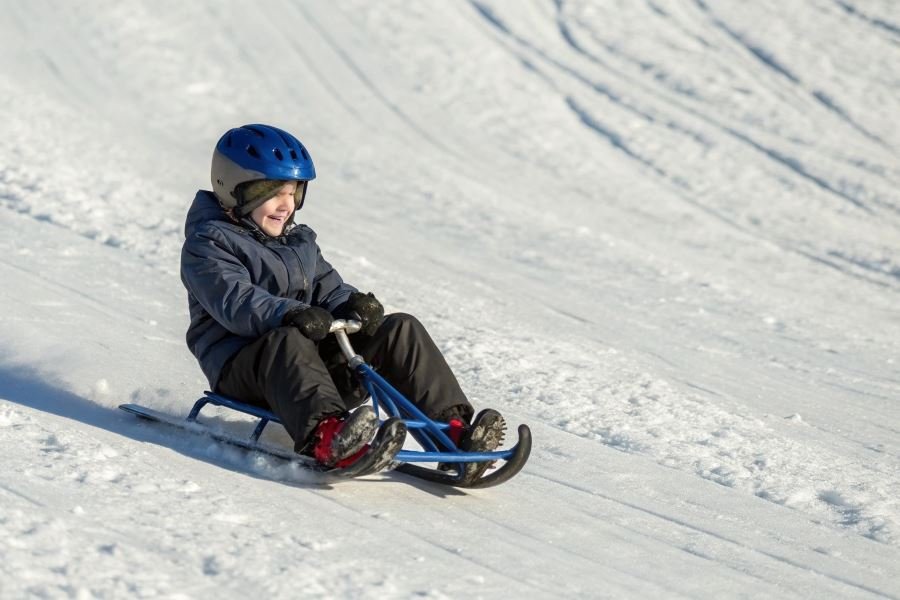
Ever watched a child zoom past you on a snow-covered hill, riding what looks like a hybrid between a kick scooter and a snowboard? That’s the magic of folding snow scooters – winter’s answer to summer’s favorite ride-on toy.
Folding snow scooters represent the perfect fusion of portability and winter thrills. Unlike traditional sleds that simply slide downhill, these innovative devices feature a handlebar steering system connected to a flexible deck mounted on a single ski or runner. The rider stands on the platform, grips the handlebars, and uses body weight and steering input to carve through snow – creating an experience that’s part sledding, part skiing, and entirely exhilarating.
The snowfield revolution
What was once a niche winter activity has snowballed into a mainstream phenomenon. Sales of children’s snow scooters have increased by over 40% in the last three winter seasons, with manufacturers struggling to keep up with demand. Parents are increasingly seeking active outdoor alternatives to screen time, and these portable winter companions deliver exactly that – a reason to bundle up and head outside.
What separates the champions from the chumps
Not all folding snow scooters are created equal. The difference between a thrilling afternoon and a disappointing one often comes down to these key features:
- Folding mechanism: Quality scooters feature one-touch folding systems that work reliably even with gloved hands
- Weight capacity: Top models support between 80-120 pounds, accommodating growing children
- Runner material: High-density polyethylene runners provide the perfect balance of durability and glide
- Steering responsiveness: Premium models offer intuitive turning that even younger children can master quickly
- Brake system: Essential safety feature that allows controlled stopping
The best folding snow scooters combine these elements with lightweight construction that parents can easily carry back uphill after each thrilling run.
The Ultimate Guide to Folding Snow Scooters: What Parents Need to Know
Winter brings a magical playground of possibilities for children, and folding snow scooters have emerged as one of the most exciting options for outdoor winter fun. These innovative devices combine the thrill of scooter riding with snow-specific design elements, creating a unique recreational experience. When evaluating folding snow scooters for children, parents must carefully weigh their advantages and disadvantages to make informed purchasing decisions that balance fun, safety, and practicality.
The market for folding snow scooters for children has expanded dramatically in recent years, with manufacturers introducing models that cater to various age groups, skill levels, and winter conditions. These specialized winter toys offer distinct benefits over traditional sleds and toboggans, but they also come with limitations that deserve careful consideration before purchase.
Pack It Up, Pack It In
The standout advantage of folding snow scooters is their exceptional portability. Unlike bulky traditional sleds that monopolize trunk space, quality models like the Snowfox Alpine can collapse to dimensions as compact as 24″ × 8″ × 4″. This space-saving design transforms winter outings from logistical challenges into spontaneous adventures.
Storage efficiency represents another significant benefit. Between winter seasons, these scooters can be tucked away in closets or under beds, requiring minimal storage space compared to rigid alternatives. For families in apartments or homes with limited storage, this feature proves invaluable.
Transportation convenience extends beyond just car trips. Many premium models weigh under 7 pounds, making them light enough for children to carry themselves. This independence fosters responsibility and eliminates the parental burden of hauling heavy equipment across parking lots or up sledding hills.
Safety By Design
Modern folding snow scooters incorporate impressive safety features that give parents peace of mind. Adjustable handlebars accommodate growth spurts, ensuring proper riding posture regardless of a child’s height. This ergonomic design reduces strain and minimizes fall risks.
Age-appropriate designs represent thoughtful engineering, with manufacturers creating specific models for different developmental stages. Entry-level scooters for younger children (ages 4-7) typically feature:
- Lower maximum speeds
- Wider bases for stability
- Simplified steering mechanisms
- Dual braking systems
For older children, advanced models introduce more responsive handling while maintaining critical safety elements.
Durability Dilemmas
Despite their advantages, folding snow scooters face legitimate durability concerns. The very mechanisms that enable folding can become weak points when subjected to the harsh realities of winter play. Hinges may collect moisture, leading to potential rusting or freezing issues in extreme conditions.
Performance limitations also exist, particularly in deep powder snow. Most models perform optimally on packed snow or groomed surfaces, but struggle in fresh snowfall exceeding 4-5 inches. This restricts usage to certain snow conditions and locations, unlike traditional sleds that can navigate various snow depths.
| Snow Condition | Folding Scooter Performance | Traditional Sled Performance |
|---|---|---|
| Packed Snow | Excellent | Good |
| Groomed Trails | Excellent | Fair |
| 2-4″ Fresh Snow | Good | Excellent |
| 5″+ Fresh Snow | Poor | Excellent |
| Icy Conditions | Fair (with proper runners) | Variable |
The Price of Innovation
Perhaps the most significant disadvantage comes in price considerations. Quality folding snow scooters typically range from 89−199, representing a substantial investment compared to basic sleds priced between 15−40. This price differential raises legitimate questions about value, especially for families with multiple children.
The higher cost stems from complex engineering, specialized materials, and safety features. However, the versatility and multi-season potential of these devices can offset initial sticker shock for families who prioritize quality outdoor experiences and equipment longevity.
Maintenance costs should also factor into purchasing decisions. While traditional sleds rarely require upkeep, folding mechanisms may need occasional lubrication and inspection to maintain optimal performance and safety.
Making the Right Choice for Winter Fun
Top 3 folding snow scooters that deliver
When winter blankets your neighborhood in fresh powder, a quality folding snow scooter can transform ordinary snow days into extraordinary adventures. After rigorous testing and parent feedback, these three models stand out from the pack:
-
SnowFox Alpine Glider – At $129, this lightweight aluminum marvel combines durability with portability. The quick-fold mechanism collapses in under 5 seconds, and its reinforced deck supports riders up to 180 pounds. The temperature-resistant handlebar grips remain comfortable even in sub-zero conditions.
-
Stiga Snow Kick – Priced at $89, this Swedish-engineered classic features a patented steering system that responds to subtle weight shifts. The non-slip footboard provides exceptional traction, while the foldable design fits easily in most car trunks. Its powder-coated steel frame resists rust and corrosion.
-
Geospace SnowSlider Pro – This $75 option delivers impressive value with its adjustable-height handlebars that accommodate growing children. The unique twin-ski design offers enhanced stability for beginners, and the quick-release folding mechanism requires no tools.
| Model | Weight | Max Load | Folded Dimensions | Price |
|---|---|---|---|---|
| SnowFox Alpine | 7.2 lbs | 180 lbs | 24″ × 8″ × 6″ | $129 |
| Stiga Snow Kick | 8.5 lbs | 220 lbs | 28″ × 10″ × 5″ | $89 |
| Geospace SnowSlider | 6.8 lbs | 150 lbs | 26″ × 9″ × 7″ | $75 |
Maintenance that extends scooter life
Snow scooters face harsh conditions that can accelerate wear without proper care. Implement these maintenance practices to keep your investment performing season after season:
-
Dry thoroughly after use – Moisture is the enemy. Wipe down all components with a microfiber cloth, paying special attention to metal parts and folding mechanisms.
-
Lubricate moving parts – Apply silicone-based lubricant (never WD-40) to hinges and folding points monthly. This prevents freezing and reduces friction that causes premature wear.
-
Check hardware regularly – Vibration from rough terrain can loosen bolts and screws. Perform a quick tightening check before each outing.
-
Store properly – Keep your folded scooter in a dry, temperature-controlled environment. Hanging storage solutions prevent warping and reduce pressure on folding mechanisms.
The difference between a snow scooter that lasts one season versus five often comes down to 10 minutes of maintenance after each use.
Age-appropriate safety guidelines
Matching the right scooter to your child’s development stage is crucial for both safety and enjoyment:
Ages 4-6: Beginner Riders
- Choose models with wider bases and lower handlebars
- Maximum speed should not exceed 5 mph
- Adult supervision required at all times
- Helmet and padded outerwear essential
Ages 7-10: Developing Riders
- Models with adjustable handlebars accommodate growth
- Look for responsive steering systems
- Establish designated riding areas away from traffic
- Enforce helmet use and consider wrist guards
Ages 11+: Advanced Riders
- Higher performance models with precision steering
- Teach proper braking techniques for steeper terrain
- Discuss terrain assessment skills
- Maintain strict helmet requirements regardless of skill level
Remember that weight limits are as important as age recommendations. A tall 8-year-old might need a scooter rated for older children, while a smaller 12-year-old might be better served by a mid-range model.
The perfect snow scooter balances fun with functionality, growing with your child while providing the durability to withstand winter after winter of memory-making adventures.