
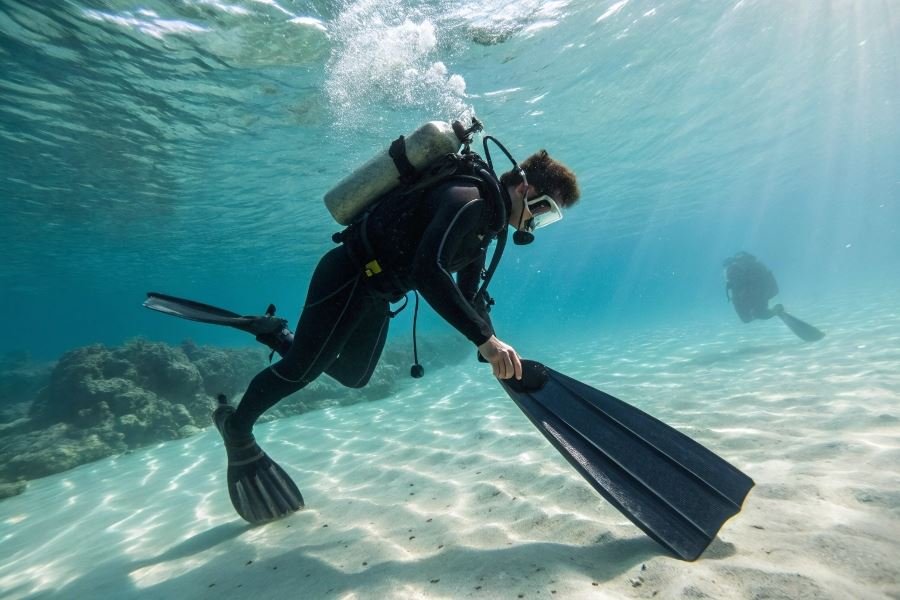
Ever wondered what transforms ordinary air into your underwater lifeline? Behind every exhilarating coral reef exploration and shipwreck adventure lies an unsung hero: the scuba diving compressor.
Scuba compressors serve as the critical link between our atmosphere and your tank, compressing ambient air to pressures exceeding 3,000 PSI. This isn’t just about filling tanks—it’s about delivering breathable air that meets stringent safety standards when you’re 100 feet below the surface. Your choice of compressor directly impacts what enters your lungs underwater.
The compressor’s vital role
Compressors don’t simply pump air; they filter contaminants, remove moisture, and ensure proper gas mixtures. A high-quality system eliminates harmful hydrocarbons, carbon monoxide, and other potential toxins that could trigger serious medical emergencies underwater.
Safety isn’t optional
The difference between a properly maintained, quality compressor and a substandard one can literally be life-threatening. Imagine discovering your air supply is contaminated when you’re exploring a deep wreck with no quick access to the surface. Proper filtration systems, regular maintenance, and appropriate certification are non-negotiable elements.
Compressor landscape
Three primary types dominate the market:
- Electric compressors: Ideal for dive shops and boats with power sources
- Gas-powered compressors: Perfect for remote locations without reliable electricity
- Portable compressors: Designed for expedition diving and smaller operations
Each type offers distinct advantages depending on your diving environment, frequency of use, and budget considerations.
Essential Factors for Selecting the Perfect Diving Compressor
Let’s dive deep into the world of scuba compressors—those magnificent machines that literally provide the breath of life underwater. Choosing the right one isn’t just about price tags; it’s about understanding what makes these engineering marvels tick and how they’ll serve your diving adventures for years to come.
When exploring how to choose a compressor for scuba diving, you’re essentially selecting a piece of equipment that stands between you and the mysterious underwater world. This decision deserves careful consideration of several critical factors that will determine not just performance, but safety and reliability when you’re 100 feet below the surface.
Air delivery rate and pressure capabilities
The heart of any compressor is its ability to deliver sufficient air at the right pressure. This isn’t just tech talk—it’s your lifeline underwater.
Cubic Feet per Minute (CFM) measures how quickly your tanks will fill. Recreational divers might be satisfied with 4-6 CFM compressors, while dive shops need robust 14+ CFM models to handle multiple tanks simultaneously.
Pressure ratings are equally crucial. Standard recreational tanks require 3000 PSI (pounds per square inch), while technical diving often demands 4500 PSI. Never compromise here—your compressor must comfortably exceed your maximum tank pressure requirements.
| Compressor Type | Typical CFM | Max Pressure | Best For |
|---|---|---|---|
| Entry-level | 3-5 CFM | 3000 PSI | Individual divers |
| Mid-range | 6-10 CFM | 3600 PSI | Small groups, boats |
| Commercial | 14+ CFM | 4500+ PSI | Dive shops, clubs |
Mobility matters: Portable vs stationary systems
Your diving lifestyle dictates whether you need a compressor that travels with you or serves as a home base operation.
Portable compressors offer freedom for boat diving and remote locations. Modern units from Bauer Compressors and Coltri Sub have shrunk to impressive sizes while maintaining respectable output. However, they typically sacrifice some CFM capacity for mobility.
Stationary systems deliver maximum performance and longevity. They’re the workhorses of dive shops and serious enthusiasts with dedicated filling stations. These units offer superior cooling systems and can run longer without overheating.
Power considerations: Electric, gas, or diesel?
Your power source choice dramatically impacts where and how you’ll use your compressor:
-
Electric compressors are clean, quiet, and maintenance-friendly—perfect for home or shop use. They require stable power sources (typically 220V for larger units).
-
Gasoline engines offer go-anywhere flexibility for remote diving spots. They’re louder but don’t require external power sources.
-
Diesel options provide the ultimate in reliability and efficiency for commercial operations or expedition vessels where fuel economy matters.
Filtration: The invisible essential
Never underestimate filtration quality. Breathing contaminated air can lead to serious health issues, from headaches to more severe conditions.
Modern compressors use multi-stage filtration systems that remove:
- Moisture (water vapor)
- Oil particulates
- Carbon monoxide
- Unpleasant odors
Look for systems that meet or exceed CGA E (Compressed Gas Association) standards for breathing air purity.
Maintenance requirements and longevity
The best compressor is one that still works flawlessly years after purchase. Quality units from manufacturers like Poseidon Diving Systems might cost more initially but offer lower cost-per-fill over their lifespan.
Key maintenance factors include:
- Filter replacement schedules
- Oil change intervals
- Parts availability
- Manufacturer support
Budget considerations and long-term value
Initial prices range from $2,000 for basic portable units to $20,000+ for commercial-grade systems. However, the true cost includes:
- Operating expenses: Power consumption, filter replacements, and maintenance
- Reliability factor: Downtime costs when diving plans depend on your compressor
- Resale value: Premium brands hold value remarkably well
The wisest approach is calculating your cost-per-fill over the expected lifespan rather than focusing solely on the purchase price.
Remember: this equipment delivers your breathing gas. It’s one area where cutting corners simply isn’t worth the risk.
The Ultimate Compressor Guide for Every Diving Level
Choosing the right compressor for your scuba adventures isn’t just about horsepower and price tags—it’s about matching the right machine to your diving ambitions. After testing dozens of models across reef systems from Florida to the Philippines, I’ve compiled this definitive breakdown of the best compressors that’ll keep your tanks filled and your diving dreams alive.
Recreational divers rejoice
For weekend warriors and vacation divers, simplicity and reliability trump industrial-grade capacity. These compressors deliver exactly what you need without breaking the bank:
-
Bauer Junior II – This portable powerhouse has become the gold standard for recreational divers with good reason. Weighing just 92 pounds with a 1.5 HP motor, it fills a standard tank in about 30 minutes while keeping noise levels manageable. The automatic condensate drain system means less maintenance headaches.
-
Nuvair MCH6 – If you’re diving with buddies, this Italian-engineered beauty offers slightly faster fill rates with its 2.0 HP motor. What sets it apart is the exceptional filtration system that consistently delivers air quality exceeding CGA Grade E standards.
-
Coltri MCH8 – For those who occasionally host small groups, this 2.5 HP unit bridges the gap between recreational and professional models. Its cooling system outperforms competitors in warmer climates, making it ideal for boat installations.
The sweet spot for recreational compressors is finding that balance between portability, reliability, and just enough capacity to support your diving frequency.
Dive shop dominators
Professional operations demand industrial-grade workhorses that can run continuously during peak season without faltering:
| Model | CFM | HP | Max Tanks/Hour | Best Feature |
|---|---|---|---|---|
| Bauer Verticus | 9.9 | 5.5 | 12 | Auto-stop system |
| Coltri MCH16 | 15.5 | 7.5 | 18 | Remote monitoring |
| L&W LW570E | 20.0 | 10.0 | 24 | Lowest maintenance cost |
The Bauer Verticus series has become the backbone of dive operations worldwide, with its legendary German engineering providing unmatched reliability. For high-volume shops, the L&W LW570E offers the best cost-per-fill ratio over a five-year operational period.
Technical diving titans
Technical diving demands exceptional air purity and specialized gas mixing capabilities:
-
Nuvair Pro CD4 – This 7.5 HP beast isn’t just about raw power—its integrated gas blending system allows precise nitrox mixing up to 40%. The four-stage filtration system delivers air quality that exceeds even the most stringent technical diving standards.
-
Bauer Mariner 320 – When reliability means life or death in technical diving scenarios, this marine-grade unit delivers with redundant filtration systems and corrosion-resistant components designed for the harshest environments.
-
Haskel M-5 – For those pushing the boundaries with trimix and specialized gas blends, this booster compressor system can achieve pressures up to 5000 psi, essential for technical deep diving operations.
Pro tip: Technical divers should prioritize compressors with moisture monitoring systems and CO detection. When you’re diving beyond recreational limits, air quality isn’t just about comfort—it’s about survival.
The investment in a technical-grade compressor pays dividends in peace of mind when exploring wrecks at 200+ feet or pushing the boundaries of cave diving. The difference between standard and technical filtration systems becomes apparent not just in air quality tests, but in how you feel after multiple deep dives.