
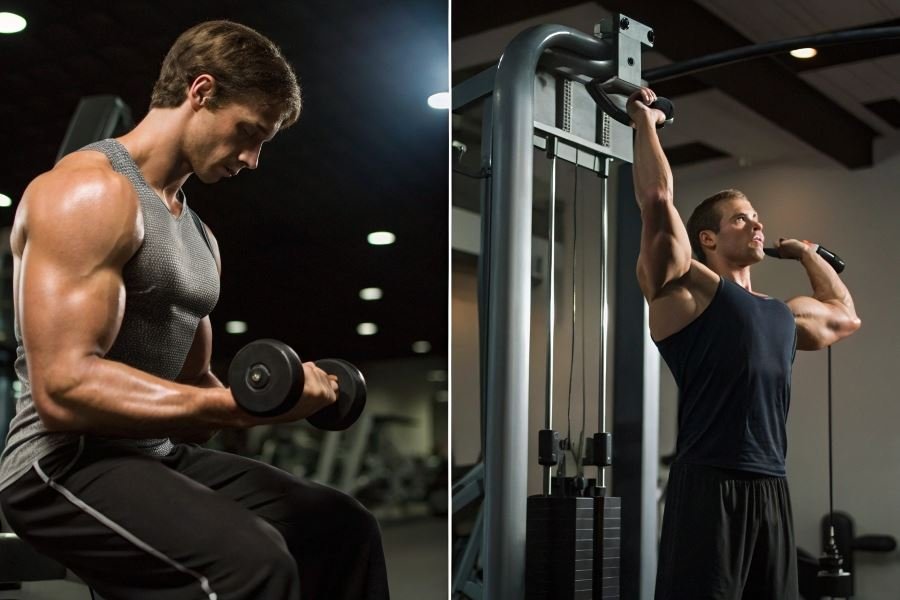
Ever stood in a gym, paralyzed by indecision between the clanking free weights section and the sleek row of machines? You’re not alone. This choice isn’t just about aesthetics—it could be the difference between reaching your fitness goals or plateauing for months.
When we talk about strength training equipment, we’re essentially comparing two distinct philosophies. Free weight machines require you to control both the weight and the movement path, engaging multiple muscle groups simultaneously. Think dumbbells, barbells, and kettlebells—tools that have been challenging humans since the ancient Greek Olympics. Built-in machines, by contrast, guide your movement along a fixed path, isolating specific muscles with predetermined ranges of motion.
“The equipment you choose should align with your fitness goals, not just what’s available or trendy.”
The evolution of strength training equipment tells a fascinating story of human innovation. While the ancient Greeks lifted stones and primitive weights, the modern gym experience began taking shape in the late 1800s with the development of plate-loaded machines. By the 1970s, Nautilus revolutionized fitness with cam-based resistance machines, forever changing how we approach strength training.
Your fitness journey deserves equipment that matches your specific goals—whether that’s functional strength, hypertrophy, rehabilitation, or athletic performance. The free weight versus machine debate isn’t about which is universally better, but rather which is better for you.
The Battle of Strength Machines: Free vs. Built-in
Muscle Activation: The Science Behind Your Gains
When athletes debate free weight machines versus built-in equipment, the conversation inevitably turns to muscle activation patterns. Free weight machines—those requiring you to load plates and control movement in multiple planes—consistently outperform their built-in counterparts in EMG studies. Research from the National Strength and Conditioning Association shows free weight squats activate 43% more stabilizing muscles than the guided Smith machine alternative.
The effectiveness debate between free weight machines vs. built-in equipment centers on how our bodies naturally move. Built-in machines follow fixed pathways that can feel restrictive to experienced lifters. Meanwhile, free weights force your body to recruit stabilizer muscles that might otherwise remain dormant. This functional strength development translates directly to real-world performance—whether you’re sprinting upfield or simply carrying groceries up stairs.
Key muscle activation difference: Free weights engage your core as a natural stabilizer, while built-in machines often isolate specific muscle groups without challenging your balance systems.
Safety First: Injury Prevention Considerations
Built-in machines shine brightest in the safety department. Their guided movement patterns significantly reduce the risk of form-related injuries, making them ideal for rehabilitation and beginners.
| Equipment Type | Beginner Safety | Advanced Safety | Spotting Required |
|---|---|---|---|
| Free Weights | Moderate Risk | Low-Moderate | Often Required |
| Built-in | Low Risk | Low Risk | Rarely Required |
The controlled environment of built-in equipment creates a safety net that many physical therapists prefer for patients returning from injury.
However, this safety comes with a trade-off. The fixed movement patterns of built-in machines can sometimes force your body into unnatural positions. Nautilus equipment, while excellently engineered, can’t account for every individual’s unique biomechanics. This occasionally leads to joint strain that wouldn’t occur with the self-selected movement paths of free weight training.
Versatility: Endless Possibilities vs. Specific Solutions
Free weight systems offer unmatched versatility. A single Olympic barbell from Rogue Fitness can be used for hundreds of exercises—from deadlifts to landmine presses to complex Olympic lifts. This adaptability allows for creative programming that keeps workouts fresh and challenging.
Versatility comparison at a glance:
- Free weights: Unlimited exercise variations, easily modified for progression
- Built-in machines: 1-3 exercises per machine, progression limited to weight increases
Built-in machines excel at targeting specific muscle groups with laser precision. When isolation is the goal—like during a bodybuilding-focused hypertrophy phase—the Hammer Strength chest press delivers consistent tension throughout the movement that’s difficult to replicate with free weights.
The ultimate training environment combines both systems—free weights for compound movements and built-in machines for isolation work and recovery days.
For athletes seeking balanced development, the hybrid approach offers the best of both worlds: the functional strength benefits of free weights with the targeted muscle development and safety advantages of built-in equipment. Your specific goals should dictate which system dominates your training program, not marketing claims or gym trends.
Making the Right Choice: Free Weights vs. Built-in Machines
When you step onto the gym floor, that moment of decision awaits: do you head for the rack of dumbbells or the row of shiny machines? This isn’t just about preference—it’s about matching your equipment to your fitness journey, physical space, and training goals.
Effectiveness Across Fitness Levels
Beginners often find built-in machines provide a crucial safety net. The fixed movement patterns of machines like the Nautilus line or Life Fitness equipment create a controlled environment where form mistakes are minimized.
“Built-in machines create confidence while teaching movement patterns—something critical for those just starting their fitness journey,” notes many certified trainers.
Meanwhile, advanced lifters typically gravitate toward free weights for their unmatched ability to engage stabilizer muscles. A 2018 study in the Journal of Strength and Conditioning Research found that free-weight bench presses activated 50% more muscle fibers than machine-based alternatives.
| Fitness Level | Free Weights | Built-in Machines |
|---|---|---|
| Beginner | Challenging, higher injury risk | Safer, guided movements |
| Intermediate | Progressive challenge, better for skill development | Good for isolation, less intimidating |
| Advanced | Maximum muscle recruitment, sport-specific training | Useful for targeted hypertrophy, recovery work |
Space and Budget Realities
The spatial footprint between these options couldn’t be more different:
Free weights require significantly less dedicated space. A basic setup with a bench and adjustable dumbbells like the Bowflex SelectTech can fit in a 6×8 foot area. The investment scales with your needs—starting around $300 for quality basics and climbing as you expand.
Built-in machines demand commitment both spatially and financially. A single commercial-grade machine can require 20-30 square feet and cost anywhere from $1,500 to $4,000. Home versions from brands like Marcy offer more affordable entry points but still require dedicated space.
For those in apartments or with limited home gym space, the decision often makes itself. However, those with garage or basement gyms face more nuanced choices.
Creating Your Optimal Training Program
The most effective approach isn’t choosing sides—it’s strategic integration:
-
Compound movements first: Begin workouts with free-weight compound exercises (squats, deadlifts, presses) when energy is highest
-
Machine finishers: Follow with machine-based isolation work to target specific muscles to failure safely
-
Periodization matters: Alternate emphasis between free weights and machines across training cycles to prevent plateaus
A sample balanced upper body session might look like:
- Barbell bench press: 4 sets × 6-8 reps (free weight compound)
- Dumbbell rows: 3 sets × 10-12 reps (free weight compound)
- Hammer Strength chest press: 3 sets × 12-15 reps (machine compound)
- Cable face pulls: 3 sets × 15-20 reps (cable isolation)
Injury considerations should also guide your choices. Those with joint issues often find the controlled paths of machines reduce pain while maintaining training intensity. Conversely, athletes preparing for competition benefit from the functional carryover of free weight movements.
The ultimate answer isn’t which is better—it’s which is better for you at your current stage, with your specific goals, in your available space. The most effective training program is one that balances both approaches while prioritizing consistency above all else.