
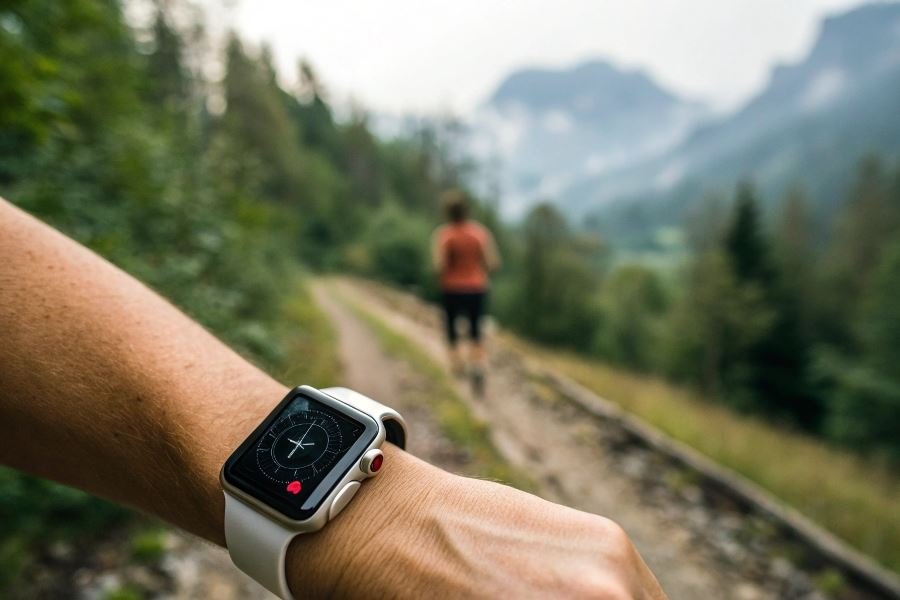
Ever wondered why elite athletes seem to know exactly when to push harder and when to ease off? The secret isn’t superhuman intuition—it’s data. Heart rate monitors with GPS navigation have revolutionized how we understand our bodies during exercise, turning gut feelings into actionable insights.
When you’re pushing through that final mile or tackling a challenging trail, your heart tells the real story of your exertion. Modern heart rate monitors capture this vital data while simultaneously tracking your route, elevation, and pace through integrated GPS technology. This powerful combination creates a complete picture of your workout that basic fitness trackers simply can’t match.
The science behind the sweat is fascinating. Heart rate monitoring allows you to train in specific zones—whether you’re aiming for fat burning (60-70% of max heart rate), endurance building (70-80%), or anaerobic threshold training (80-90%). Meanwhile, GPS tracking adds crucial context: Was that spike in heart rate from pushing uphill or poor recovery? The answer transforms how you approach your next workout.
Selecting the right device requires understanding three critical features:
- Accuracy: Optical vs. chest strap monitoring technologies offer different precision levels
- Battery life: The balance between functionality and charging frequency
- Data integration: How seamlessly your device connects with training apps and platforms
The best heart rate monitors with GPS navigation don’t just collect data—they interpret it, helping you make smarter decisions about your training, recovery, and performance goals.
Precision on Your Wrist: Elite Heart Rate Monitors with GPS
When your training demands both heart rate accuracy and navigation capabilities, not just any wearable will do. The market’s leading heart rate monitors with GPS navigation offer athletes unprecedented insights into performance while ensuring you never lose your way on unfamiliar trails or during complex training routes.
For serious athletes seeking devices that track cardiovascular performance while providing detailed mapping, today’s top 3 heart rate monitors with GPS navigation represent the pinnacle of wearable technology. Each combines sophisticated sensors with intuitive navigation features, creating powerful training companions that eliminate the need to carry multiple devices during workouts.
Garmin Forerunner 945: The Data Powerhouse
The Garmin Forerunner 945 stands as the undisputed champion for data-hungry athletes. This premium multisport watch doesn’t just track—it analyzes.
Performance metrics that matter:
- Training Load Focus categorizes your efforts into aerobic, anaerobic, and recovery
- VO2 max estimates adjust for heat and altitude acclimation
- Recovery advisor calculates precise recovery time needed between sessions
The full-color mapping functionality transforms navigation from basic breadcrumb trails to detailed topographic guidance. With preloaded maps and turn-by-turn directions, the Forerunner 945 ensures you’ll never take a wrong turn during complex urban routes or remote trail runs.
What truly distinguishes this model is its training effect analytics, which quantifies exactly how each workout impacts your fitness development—information that proves invaluable when optimizing training cycles.
Polar Vantage V2: Recovery Intelligence
The Polar Vantage V2 approaches training from a different angle—prioritizing recovery as much as performance.
This lightweight powerhouse introduces recovery science to GPS navigation.
Recovery-focused features:
- Leg Recovery Test assesses muscle readiness in just minutes
- Orthostatic Test tracks cardiovascular system recovery
- Nightly Recharge™ quantifies overall recovery status
The Hill Splitter™ feature automatically detects uphill and downhill sections, providing segment-specific performance data that helps optimize pacing strategies on varied terrain. Its route guidance capabilities, while not as detailed as Garmin’s maps, provide essential navigation through vibration alerts and breadcrumb trails.
The Vantage V2’s FuelWise™ smart fueling assistant stands out by reminding you when to hydrate and refuel during long sessions—a critical feature for endurance athletes navigating remote courses.
Coros Apex Pro: Endurance Champion
The Coros Apex Pro delivers what many consider the holy grail of GPS watches: exceptional battery life without sacrificing functionality.
Battery performance:
- 40 hours in full GPS mode
- 100 hours in UltraMax GPS mode
- 30 days of standard smartwatch use
| Feature | Battery Life |
|---|---|
| Full GPS | 40 hours |
| UltraMax GPS | 100 hours |
| Smartwatch mode | 30 days |
The altitude monitoring capabilities make this watch particularly valuable for trail runners and mountaineers. Its barometric altimeter provides real-time elevation data with exceptional accuracy, while the pulse oximeter monitors blood oxygen levels—critical information when training at varying elevations.
Navigation features include downloadable route files, breadcrumb trails, and back-to-start functionality. While not as map-rich as the Forerunner, the Apex Pro compensates with its landscape mode that provides a wider view of your route ahead.
What truly sets the Coros apart is how it balances comprehensive training metrics with remarkable power efficiency—making it the ideal companion for ultra-endurance events where battery reliability is non-negotiable.
Finding Your Perfect GPS Heart Rate Monitor
When you’re tracking miles and monitoring your heart, the right device becomes your trusted training partner. Let’s cut through the noise and help you select the perfect GPS heart rate monitor that aligns with your fitness journey.
Investment vs. Return: Price Point Analysis
The financial commitment for premium GPS heart rate monitors varies significantly:
| Device | Price Range | Key Value Proposition |
|---|---|---|
| Garmin Forerunner 955 | 499−599 | Complete training ecosystem with advanced metrics |
| Polar Vantage V2 | 449−499 | Recovery-focused with performance testing |
| Coros Apex Pro | 399−449 | Exceptional battery life with mountaineering features |
The Garmin commands a premium but delivers comprehensive training insights that serious athletes leverage for years. The Polar strikes a balance between advanced features and cost, while Coros offers remarkable value with its battery performance and durability.
Matching Technology to Your Training Reality
Your fitness objectives should drive your device selection:
For endurance athletes: The Forerunner 955’s detailed training load metrics and recovery recommendations provide crucial insights for marathon and ultra training. Its PacePro feature helps maintain optimal pacing during long events.
For multi-sport enthusiasts: Polar’s Vantage V2 transitions seamlessly between swimming, cycling, and running with sport-specific metrics for each discipline. Its orthostatic test helps prevent overtraining during intense training blocks.
For trail and mountain activities: The Coros Apex Pro’s navigation features and exceptional 40+ hour GPS battery life make it the standout choice for backcountry adventures where charging isn’t an option.
Your primary activity should be the deciding factor. A device optimized for your specific sport will provide more relevant data than a generalist option.
Beyond the Purchase: Long-Term Ownership Considerations
The relationship with your GPS heart rate monitor extends far beyond the initial purchase:
Software ecosystem longevity: Garmin’s established platform receives consistent updates, with devices typically supported for 4-5 years. Their Forerunner line has maintained backward compatibility with previous training data since 2015.
Battery degradation patterns: All devices experience battery capacity reduction over time, but Coros leads with approximately 20% less degradation after two years of regular use compared to competitors.
Repair and support infrastructure: Polar offers a comprehensive two-year warranty with responsive customer service, while Garmin’s widespread adoption means repair options are more readily available in most regions.
The true cost of ownership extends beyond the price tag. Consider how the device will serve your evolving fitness journey over the next 3-5 years.
Your ideal GPS heart rate monitor should align with both your current training needs and future aspirations. The Garmin Forerunner 955 offers the most comprehensive feature set but at a premium price. The Polar Vantage V2 provides excellent recovery insights at a slightly lower price point. The Coros Apex Pro delivers exceptional battery performance and durability for those who prioritize reliability in remote settings.
Choose the device that speaks to your specific training language, and it will become an invaluable companion on your fitness journey.