
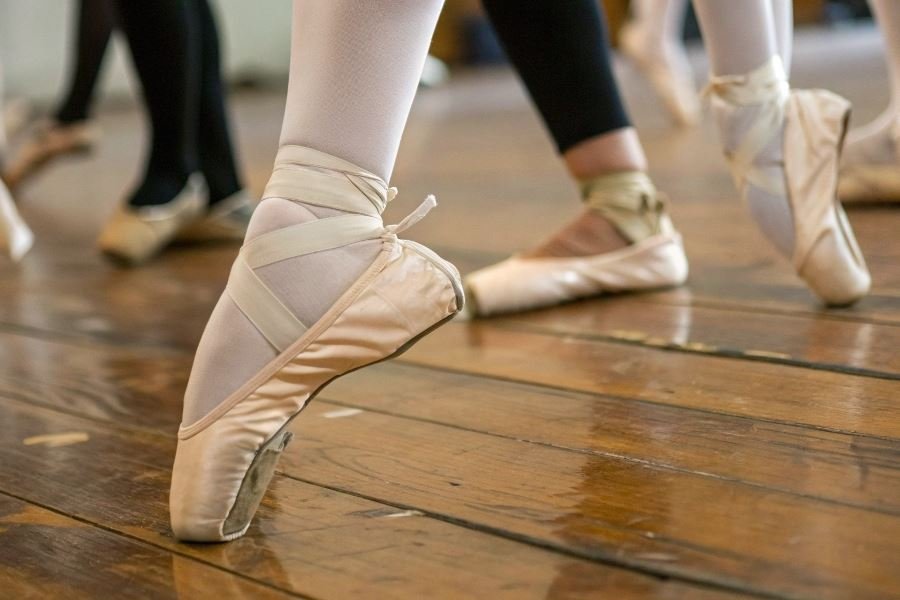
The right pair of half-pointe shoes can be the difference between a budding ballet star and a frustrated young dancer ready to hang up their leotard.
When 12-year-old Emma landed her first pirouette after switching to properly fitted half-pointe shoes, her dance instructor wasn’t surprised. The transformation wasn’t magic—it was biomechanics. Half-pointe shoes serve as the critical bridge between soft ballet slippers and the intimidating world of pointe work, creating a foundation that can shape a dancer’s entire journey.
Unlike standard ballet slippers that offer minimal support, or the rigid structure of full pointe shoes, half-pointe shoes provide that crucial middle ground. They feature a reinforced box and slightly stiffer sole that allows young dancers to strengthen their feet and ankles while practicing the fundamentals of pointe work safely. This distinction isn’t just technical—it’s developmental.
“The adolescent foot is still forming. Proper support during these formative years prevents injuries that could follow dancers throughout their careers.” — American Dance Medicine Association
The quality and fit of these transitional shoes directly impacts three critical areas:
- Technique development – Properly fitted shoes allow for correct alignment and muscle memory formation
- Injury prevention – Quality construction absorbs shock and supports growing bones
- Confidence building – When dancers feel secure in their footwear, they take more risks artistically
For developing dancers, these shoes aren’t just equipment—they’re partners in the artistic journey. The right pair doesn’t just protect growing feet; it empowers young artists to find their balance between technical precision and expressive freedom.
Finding the Perfect Fit: Essential Sizing Factors for Children’s Half-Pointe Shoes
When your young dancer transitions to half-pointe shoes, the excitement is palpable—but so is the pressure to get it right. The difference between properly fitted dance footwear and an ill-fitting pair can impact not just performance but physical development. Let’s dive into what truly matters when selecting these crucial tools for your budding ballerina or danseur.
Parents often struggle with what to pay attention to when buying children’s half-pointe shoes, balancing current comfort against room for growth while ensuring proper support. Unlike regular footwear, dance shoes require specialized fitting knowledge that considers both technical requirements and anatomical development.
Length and Width: The Foundation of Fit
The perfect half-pointe shoe should provide a snug embrace without constriction. When fitted correctly, you should be able to pinch approximately 1/4 inch of material at the longest toe—enough room to prevent cramping but not so much that the foot slides forward during relevés.
Width matters equally as length. Too narrow, and you’ll see uncomfortable pressure points forming; too wide, and the foot will shift laterally during turns, compromising stability and technique.
“A properly fitted half-pointe shoe should feel like a firm handshake—secure but not painful.”
Many brands like Capezio and Bloch offer width variations, typically ranging from narrow to wide. Always measure both feet, as asymmetry is common in developing dancers.
Arch Support and Flexibility Assessment
Half-pointe shoes occupy that critical middle ground between soft ballet slippers and rigid pointe shoes, making their flexibility profile particularly important.
The shoe’s shank (supportive midsole) should complement your child’s natural arch development:
| Arch Type | Recommended Shank | Benefits |
|---|---|---|
| Low | Softer, more flexible | Allows for proper foot strengthening |
| Medium | Moderate support | Balances flexibility with stability |
| High | Firmer support | Prevents overextension while building strength |
Test flexibility by gently bending the shoe—it should resist slightly but give way with moderate pressure. The goal is to find shoes that support the arch while still allowing the foot to articulate through demi-pointe positions.
Movement Testing: The Ultimate Comfort Check
Numbers and measurements only tell half the story. The true test comes with movement. Have your child perform these essential checks:
- Relevé test: Rising to demi-pointe should feel supported without pinching
- Tendu series: The shoe should move seamlessly with the foot through all positions
- Small jumps: Watch for any slippage or compression during landing
Pay special attention to the toe box area. Unlike pointe shoes, half-pointes shouldn’t create pressure points across the toes, but they should provide enough structure to support proper alignment through the metatarsals.
Remember that initial comfort doesn’t always indicate proper fit. A professional fitting at a specialized dance retailer like Discount Dance Supply can make all the difference, especially as your dancer develops their technique and strength.
The right half-pointe shoes become partners in your child’s dance journey—supporting technical development while protecting growing feet during this critical transition phase.
Material Mastery: The Building Blocks of Quality Half-Pointe Shoes
When your young dancer takes those first steps toward ballet excellence, what’s beneath their feet matters tremendously. Half-pointe shoes serve as that crucial bridge between soft ballet slippers and the demanding world of pointe work. Let’s dive into what truly makes these transitional tools either a dancer’s best friend or worst nightmare.
Canvas vs Leather: The Great Debate
The fabric battle in the dance world is legendary, and for good reason. Canvas half-pointe shoes offer remarkable breathability and flexibility right out of the box. They conform to the foot almost immediately, making them ideal for dancers who need minimal break-in time.
Canvas shoes typically weigh less than their leather counterparts, reducing foot fatigue during long practice sessions.
Leather options, meanwhile, bring their own impressive credentials to the barre:
- Superior durability that withstands rigorous training
- Natural molding capabilities that create a custom-like fit over time
- Structured support that helps develop proper foot strength
Capezio and Bloch both offer exceptional options in both materials, with their canvas models typically running $25-35 and leather versions commanding $35-50.
The best material choice often depends on your child’s specific foot structure and training intensity. Dancers with higher arches may benefit from the additional support of leather, while those with wider feet might appreciate canvas’s forgiving nature.
Sole Secrets: Construction That Counts
The sole construction represents the heart and soul of half-pointe shoe performance. When examining potential purchases, pay particular attention to:
Split-sole vs. Full-sole Design
| Feature | Split-sole | Full-sole |
|---|---|---|
| Flexibility | Superior arch articulation | More resistance (builds strength) |
| Foot visibility | Highlights line extensions | Provides more coverage |
| Durability | Moderate | Excellent |
| Weight | Lighter | Slightly heavier |
| Best for | Intermediate dancers | Beginners building strength |
The suede leather bottom should feel substantial without being rigid. Run your thumb across the sole—quality shoes will have consistent thickness throughout, with no thin spots that might wear through prematurely.
Elastic Engineering and Security Features
The final frontier in half-pointe excellence lies in how securely they stay on those growing feet. Modern half-pointe shoes feature innovative elastic configurations that deserve your scrutiny:
- Pre-sewn crossed elastics provide immediate security but limit customization
- Separate elastic pieces allow for personalized placement based on ankle structure
- Drawstring options offer additional adjustability for growing feet
The elastic itself should have substantial stretch recovery—meaning it returns to its original shape after being stretched. Lower-quality elastics lose their tension quickly, leading to floppy, unsafe shoes within weeks.
Some premium models from Russian Pointe and Grishko now incorporate silicone strips along elastic edges, providing remarkable slip resistance during challenging combinations.
When fitted properly, quality half-pointe shoes become nearly invisible to the dancer, allowing them to focus entirely on technique development rather than constantly adjusting their footwear. This seamless integration between dancer and equipment is precisely what separates adequate shoes from exceptional ones—and what will help your young dancer progress safely toward their ballet goals.