
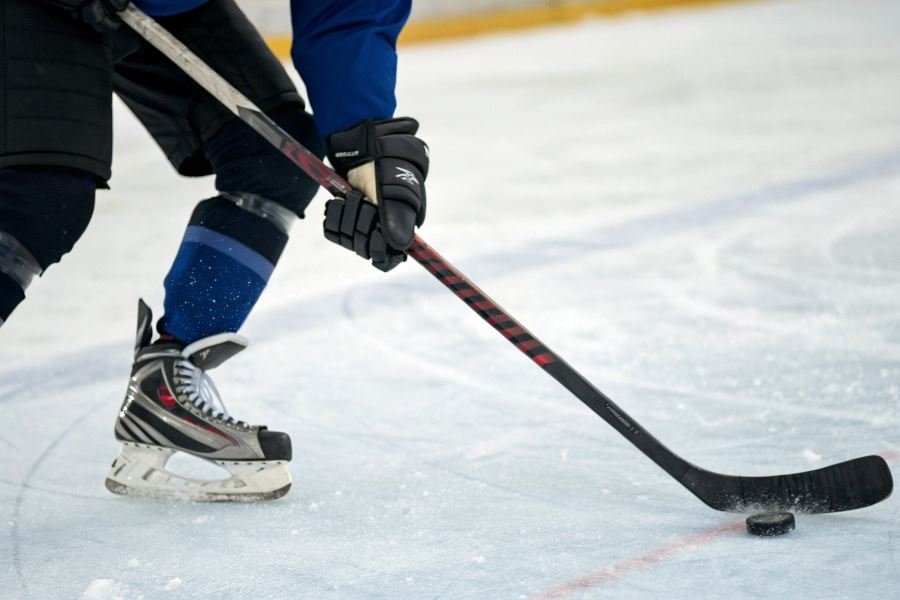
Ever wonder why some players seem to handle the ball like it’s attached to their stick by invisible string? The secret often lies not in the hands, but in what those hands are holding.
Floorball’s journey from Swedish gymnasiums in the 1970s to international arenas has been matched by remarkable evolution in equipment technology. What began as simple plastic sticks with wooden shafts has transformed into precision-engineered carbon fiber instruments. The original sticks from the late 1970s weighed nearly twice as much as today’s professional models and offered minimal flex – a far cry from the responsive, lightweight tools elite players now wield.
The evolution revolution
The development of floorball sticks mirrors the sport’s growth. Early pioneers like Exel and Salming introduced the first composite shafts in the 1990s, revolutionizing play with lighter, more responsive equipment. Today’s professional sticks feature advanced carbon layering techniques that would have seemed like science fiction to early players.
Finding your perfect match
Your skill level should dictate your stick choice – not just marketing hype. Professional sticks offer exceptional feel and response but demand technique to utilize properly. For developing players, amateur sticks provide forgiveness and durability at a fraction of the cost (typically $30-60 compared to $120-200 for pro models).
The dividing line
What truly separates professional from amateur sticks? Three critical factors:
- Materials: Pro sticks utilize premium carbon fiber composites; amateur sticks typically use fiberglass or carbon/fiberglass blends
- Shaft flexibility: Professional sticks offer precise flex points calibrated to player preference; amateur options provide standardized, more forgiving flex
- Blade technology: Elite blades feature multi-compound construction with specialized grip zones; recreational blades prioritize durability over feel
The right stick doesn’t just complement your game – it transforms it.
The Engineering Behind Floorball Excellence
Material Composition: The Foundation of Performance
When examining professional vs amateur floorball sticks, the material composition immediately reveals why pros demand premium equipment. Professional sticks typically feature carbon fiber composites with percentages ranging from 80-100% carbon, creating an optimal strength-to-weight ratio. These high-carbon constructions deliver exceptional durability while maintaining the responsiveness elite players require.
Amateur sticks, by contrast, predominantly use fiberglass or carbon-fiberglass blends (typically 30-50% carbon content). While serviceable for recreational play, these materials lack the structural integrity and performance characteristics of their professional counterparts. The difference becomes apparent after extended play—professional sticks maintain their structural properties even after hundreds of hours of intense gameplay.
Material impact on performance is measurable: professional sticks typically weigh 15-20% less than amateur models while offering up to 40% greater impact resistance. This translates to faster shots, more precise ball control, and significantly longer stick lifespans.
Blade Technology: Where Ball Control Lives
The blade represents perhaps the most significant technological divide between professional and amateur floorball sticks. Professional blades feature:
- Multi-compound constructions with specialized core materials
- Precision-engineered ball pockets
- Customizable stiffness profiles
- Pre-hook designs tailored for specific playing styles
Amateur blades typically offer standardized shapes with limited customization options. The performance gap becomes evident in ball retention, shot accuracy, and passing precision.
| Feature | Professional Blades | Amateur Blades |
|---|---|---|
| Core materials | Multi-density polymers | Single-density plastic |
| Customization | Extensive (curve, face angle, stiffness) | Limited or none |
| Ball pocket | Engineered surface textures | Basic texturing |
| Replacement | Interchangeable systems | Fixed or basic replacement |
Professional players from Salming and Unihoc often customize their blades to match specific playing conditions and personal preferences—options rarely available in amateur equipment.
Shaft Engineering: The Power Transfer System
The shaft serves as the power transfer system between player and ball. Professional shafts offer:
Flex profiles calibrated in precise increments (typically 26-32mm deflection under standardized testing), allowing players to select the perfect balance between power and control. Amateur sticks generally offer basic “soft” or “medium” flex options without specific measurements.
Weight distribution in professional sticks is meticulously engineered, with balance points calculated to the millimeter. This precision enables elite players to execute technical maneuvers with minimal effort. Amateur sticks typically have standardized, front-heavy designs.
Grip technology represents another significant difference. Professional sticks feature moisture-wicking, tacky grip compounds with replaceable options. Many top-tier sticks from Fatpipe include customizable grip systems allowing players to adjust diameter and texture based on personal preference.
Price and Value Considerations
The price differential between professional and amateur floorball sticks reflects their engineering differences. Professional sticks typically range from $150-300, while amateur options generally fall between $40-90.
However, value assessment requires looking beyond initial cost. Professional sticks offer:
- 2-3× longer functional lifespan
- Significantly better performance characteristics
- Customization options that grow with player development
- Replaceable components (blades, grips) extending overall stick life
For serious players, the performance benefits and extended lifespan of professional sticks often justify the higher initial investment. Recreational players may find amateur sticks provide sufficient performance at a more accessible price point.
The choice ultimately depends on playing frequency, competitive level, and performance expectations—with professional sticks delivering measurable advantages for those pushing their floorball skills to higher levels.
Making the Right Choice: Professional vs Amateur Floorball Sticks
Choosing between professional and amateur floorball sticks isn’t just about budget—it’s about matching equipment to your game. As someone who’s watched countless players struggle with the wrong stick, I can tell you: this decision can transform your performance on the court.
Know your skill level before shopping
Your honest skill assessment should drive your stick selection. Amateur sticks (typically $30-70) offer forgiving characteristics perfect for beginners and recreational players. They feature:
- More flexible shafts (28-32mm flex)
- Simpler blade designs
- Durable but heavier materials
Meanwhile, professional sticks ($120-200+) deliver:
- Precision-engineered carbon fiber construction
- Ultra-lightweight performance (often under 200g)
- Specialized blade patterns
- Customizable flex points (26-29mm)
Don’t fall into the gear trap! A pro stick won’t instantly elevate a beginner’s game and might actually hinder development by being too unforgiving. Conversely, serious competitors will find amateur sticks limiting their potential.
Match your playing style to stick characteristics
Your playing identity should dictate your stick choice:
| Playing Style | Recommended Characteristics | Amateur Option | Pro Option |
|---|---|---|---|
| Defensive | Stiffer shaft, durable blade | Unihoc Player | Salming Q5 |
| Playmaker | Medium flex, control-oriented blade | Exel F60 | Fatpipe Raw Concept |
| Sniper | Whippy shaft, shooting-focused blade | Oxdog Viper | Zone Supreme |
The right stick amplifies your natural tendencies while minimizing weaknesses.
Maintenance requirements and longevity expectations
Professional sticks demand more attention but reward you with performance:
- Amateur sticks typically last 1-2 seasons with minimal maintenance
- Pro sticks require regular blade maintenance and careful storage
- Carbon fiber sticks can crack catastrophically, while composite amateur sticks tend to gradually lose performance
Pro tip: Many elite players keep multiple sticks in rotation—game sticks, practice sticks, and backup sticks—extending the life of their primary equipment.
Progression pathway from amateur to pro equipment
The journey from beginner to advanced player should include strategic equipment upgrades:
- Start with a mid-range amateur stick focused on durability
- As fundamentals develop, upgrade to an intermediate stick with better feel
- Experiment with blade patterns before investing in pro equipment
- Consider hybrid options (pro shaft with amateur blade) during transition phases
The ideal progression isn’t about rushing to the most expensive equipment—it’s about finding the right tool for your current development stage.
When you’re ready to make the leap, test professional sticks whenever possible. Many clubs and specialty retailers offer demo programs that let you experience the difference before investing.
Remember that even professional players sometimes prefer certain “amateur” characteristics in specific game situations. The best equipment choice is always the one that makes you confident when the ball hits your blade.