
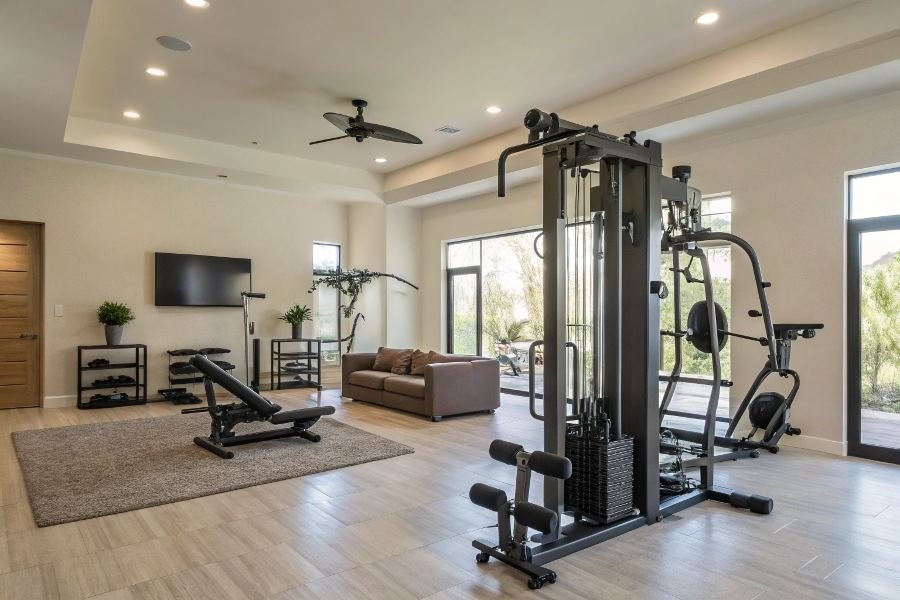
Ever walked into a gym and felt overwhelmed by that massive, multi-armed exercise machine dominating the corner? That’s a multi-station—and bringing one home might be the game-changer your fitness journey needs.
A home multi-station is essentially a compact fitness center, combining multiple strength-training exercises in one space-efficient unit. Unlike single-purpose equipment, these versatile powerhouses allow you to target different muscle groups without switching machines or locations. The beauty lies in their efficiency: one purchase replaces an entire collection of individual machines.
Before swiping that credit card, ask yourself some crucial questions. First, what’s your available space? Multi-stations range from compact corner units to comprehensive systems requiring dedicated rooms. Measure twice, buy once—including ceiling height for overhead exercises!
“The right multi-station isn’t necessarily the biggest or most expensive—it’s the one that aligns perfectly with your fitness goals and spatial reality.”
Matching machines to your mission
Your fitness objectives should drive your selection. Building mass? Look for heavy weight stacks and press stations. Focusing on toning? Prioritize cable systems with smooth resistance. Training for sports? Seek functional movement options that mimic real-world activities.
Consider who’ll be using the equipment. A household with multiple users needs adjustable components and quick transitions between exercises. Solo users might prioritize specific features aligned with personal goals.
Remember that the best multi-station isn’t just about today’s needs—it’s about supporting your evolving fitness journey for years to come. Choose wisely, and your home gym investment will pay dividends in convenience, consistency, and results.
Essential Features That Make or Break a Home Multi-Station
When setting up your home gym, the multi-station becomes the centerpiece of your fitness arsenal. These versatile machines pack multiple workout options into a single footprint, but not all are created equal. The difference between a dust-collecting eyesore and your daily fitness companion often comes down to a few critical features.
Choosing a multi-station for home use requires careful consideration of three main factors: weight capacity, exercise variety, and build quality. Each element plays a crucial role in determining whether your investment will deliver years of muscle-building workouts or become an expensive clothes hanger. Let’s break down what truly matters when evaluating these powerhouse machines.
Weight Capacity and Resistance Systems
The foundation of any worthwhile multi-station is its weight stack and resistance mechanism. Home units typically offer between 150-300 pounds of resistance, but the implementation matters more than raw numbers.
Weight stacks come in three primary configurations:
| Resistance Type | Pros | Cons |
|---|---|---|
| Traditional Plate Stack | Familiar, consistent resistance | Bulkier, noisier |
| Cable-Pulley Systems | Smooth motion, joint-friendly | Requires maintenance |
| Power Rod Technology | Compact, progressive resistance | Different feel than free weights |
Look for machines with weight increments of 10 pounds or less to allow for proper progression. The Bowflex power rod system offers a space-efficient alternative to traditional weight stacks, while brands like Life Fitness provide commercial-grade plate systems scaled for home use.
The resistance mechanism should match your fitness goals—bodybuilders might prefer traditional weight stacks, while those focused on functional fitness might appreciate cable-based systems.
Exercise Variety and Station Configurations
The true value of a multi-station lies in its versatility. Entry-level models typically offer 20-30 exercise options, while premium units can exceed 100 different movements.
When evaluating exercise variety, consider:
- Press station configuration: Look for adjustable seats and multiple grip positions
- Leg developer options: Both leg extension and curl capabilities are essential
- Pull-down station: Wide grip options and adjustable thigh pads make a difference
- Low pulley placement: Critical for rows and core exercises
The Marcy MWM-990 offers impressive variety in a compact footprint, while the Inspire Fitness FT2 functional trainer provides nearly unlimited exercise options through its dual adjustable pulley system.
Build Quality That Stands the Test of Time
Nothing kills workout motivation faster than a wobbly, creaking machine. Superior build quality manifests in several ways:
- Frame construction: Look for 11-gauge steel or thicker with reinforced joints
- Stability footprint: Wider bases prevent tipping during intense workouts
- Cable quality: Aircraft-grade cables with nylon coating resist fraying
- Upholstery durability: Commercial-grade vinyl resists tears and sweat damage
The difference between commercial and residential-grade equipment often comes down to materials used at stress points and weight-bearing surfaces.
Premium brands like Hoist Fitness and Body-Solid typically offer frame warranties of 10+ years, signaling confidence in their construction quality. Remember that a stable machine not only lasts longer but also provides safer, more effective workouts by eliminating unwanted movement during exercises.
Your multi-station represents a significant investment in your health—choosing one with the right combination of weight capacity, exercise variety, and build quality ensures that investment pays dividends for years to come.
Sealing the Deal on Your Home Multi-Station
Finding the perfect home multi-station isn’t just about comparing specs—it’s about making a smart investment that will transform your fitness journey for years to come. Let’s cut through the noise and focus on what really matters when finalizing your decision.
Smart budgeting for maximum muscle
The price range for quality multi-stations spans from $500 budget models to premium $5,000+ commercial-grade systems. But here’s the truth: spending more doesn’t automatically mean better results.
Fitness wisdom: The best multi-station isn’t necessarily the most expensive—it’s the one you’ll actually use consistently.
Consider your fitness commitment level before splurging. A mid-range option (1, 200−2,500) from brands like Bowflex or Marcy often delivers the sweet spot of durability and functionality without breaking the bank.
When assessing value, calculate the cost-per-exercise by dividing the total price by the number of possible exercises. A 1, 500stationoffering50 + exercises(30/exercise) might deliver better value than a 900modelwithjust20exercises(45/exercise).
Brand reputation matters enormously
The multi-station market is flooded with options, but not all manufacturers stand behind their products equally. Top-tier brands have earned their reputation through decades of innovation and reliability.
Established leaders worth considering:
| Brand | Known For | Typical Warranty |
|---|---|---|
| Life Fitness | Commercial-grade durability | 10+ years frame, 3-5 years parts |
| Nautilus | Biomechanically correct movements | 10 years frame, 2 years parts |
| Body-Solid | Lifetime warranties on many models | Lifetime on frames, up to lifetime on parts |
| Weider | Budget-friendly options | 90 days to 2 years |
Always read the warranty details carefully—some only cover the frame while charging for replacement parts. The best warranties include in-home service for repairs, saving you the hassle of disassembling and shipping heavy equipment.
The wisdom of the fitness crowd
User reviews reveal what spec sheets can’t: real-world performance. But approach reviews strategically:
- Look for longevity reviews from users who’ve owned the equipment for 1+ years
- Pay attention to complaints about specific issues rather than vague dissatisfaction
- Check for mentions of customer service experiences—crucial if something goes wrong
Expert recommendations provide another valuable perspective. Publications like Men’s Health and Women’s Health regularly test and review home gym equipment, while specialized fitness tech reviewers offer detailed breakdowns of mechanical components and durability factors.
The American Council on Exercise (ACE) occasionally publishes equipment recommendations based on biomechanical research—these science-backed insights can help you distinguish marketing hype from genuine innovation.
Before finalizing your purchase, try to test similar models in person. Many sporting goods stores like Dick’s Sporting Goods or specialty fitness retailers allow hands-on testing. Feel the smoothness of the pulleys, test the stability during movement, and ensure the seat adjustments accommodate your body comfortably.
Remember: this multi-station will be your fitness companion for years. Taking time to make an informed decision now means countless effective workouts in your future.