
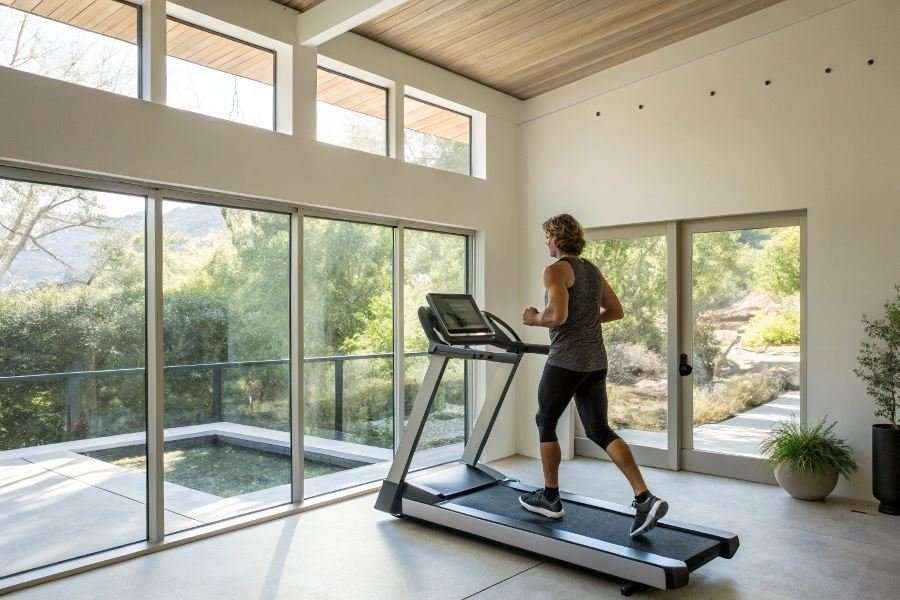
Ever wondered why 80% of New Year’s fitness resolutions fail by February? The missing piece isn’t motivation—it’s convenience. A home treadmill eliminates your biggest workout barrier: actually getting to the gym.
Selecting the right treadmill transforms it from just another dust-collecting purchase into your fitness sanctuary. Think of it as choosing a reliable training partner who’ll be with you through early morning sprints and late-night walks. The perfect match depends on understanding what you truly need.
Your fitness goals dictate everything about your ideal treadmill. Training for a marathon? You’ll need something completely different than someone recovering from injury or squeezing in quick workouts between meetings. The right machine aligns with your specific journey.
Three key factors will guide your decision: available space (that corner in your bedroom is smaller than you think), budget (quality ranges from $500 to $5,000+), and intended use (casual walking versus intense training). Each consideration narrows your options toward the perfect match.
“The best treadmill isn’t necessarily the most expensive—it’s the one you’ll actually use consistently.”
Having a treadmill at home offers benefits beyond convenience: privacy to exercise without judgment, weather-proof workouts, and the ability to squeeze in movement whenever you have five free minutes. This accessibility transforms occasional exercise into a sustainable lifestyle.
Essential Features That Make or Break Your Treadmill
When selecting the perfect treadmill for your home fitness sanctuary, the difference between a lasting investment and an expensive clothes rack often comes down to a few critical features. The process of how to choose a treadmill for home use requires understanding what separates premium machines from mediocre ones—beyond just price tags and flashy displays.
Motor Power: The Heart of Your Machine
The motor is quite literally the engine that drives your fitness journey. For walkers and occasional joggers, a 2.0-2.5 CHP (Continuous Horsepower) motor will suffice. However, if you’re planning regular running sessions or have multiple household users:
- 3.0+ CHP motors are essential for consistent runners
- 2.5-3.0 CHP works well for joggers and mixed-use households
- 2.0-2.5 CHP suits primarily walking workouts
A quality motor from brands like NordicTrack or Sole Fitness will operate more quietly and efficiently while generating less heat—extending the lifespan of your investment.
Remember that underpowered motors strain under heavy use, leading to premature failure and jerky belt movement that can impact your workout quality and safety.
Belt Dimensions and Cushioning: Your Joint Protection Plan
The running surface dimensions dramatically impact comfort and safety:
| User Height | Recommended Belt Length | Ideal Belt Width |
|---|---|---|
| Under 5’5″ | 55″ minimum | 20″ standard |
| 5’5″ to 6’ | 58″ minimum | 20″ standard |
| Over 6’ | 60″+ recommended | 22″+ preferred |
Cushioning technology varies significantly between manufacturers. Precor offers variable cushioning that’s firmer at push-off points and softer in impact zones. ProForm treadmills feature adjustable cushioning that can simulate road running or provide maximum impact reduction.
Space Efficiency: Making Room for Fitness
Home treadmills must balance performance with spatial practicality:
- Folding treadmills have come a long way—many premium models like those from Horizon Fitness now fold without compromising stability
- Hydraulic assist systems make folding and unfolding nearly effortless
- Deck length when folded varies dramatically between models—measure your storage space before purchasing
The footprint of a quality treadmill typically requires:
- 30-36 inches of width
- 70-80 inches of length
- At least 8 feet of ceiling clearance for taller users
Safety clearance zones of 24 inches on sides and 78 inches behind the treadmill are recommended by fitness professionals to prevent injuries.
Modern space-saving innovations include vertical storage options and ultra-slim profiles when folded. The LifeSpan TR1200i offers one of the most compact folded footprints while maintaining a robust running platform.
When evaluating treadmills, prioritize these core features over flashy extras. A machine with solid fundamentals—powerful motor, appropriate belt size with quality cushioning, and practical space efficiency—will deliver thousands of miles of reliable performance. The best treadmill isn’t necessarily the one with the most features, but the one that consistently supports your specific fitness needs year after year.
Making the Smart Investment: Budget and Decision Factors for Home Treadmills
Finding value across price points
The home treadmill market spans from basic $300 models to premium 4, 000 + machinesthatrivalcommercialgymequipment.Entry − leveltreadmills(300-$700) typically offer simpler consoles, smaller running surfaces, and motors in the 2.0-2.5 CHP range. While budget-friendly, these models work best for walking or light jogging rather than serious training.
Mid-range options (700−1,500) represent the sweet spot for most home users. These machines from brands like NordicTrack and Horizon Fitness deliver stronger motors (2.5-3.5 CHP), sturdier frames, and more advanced features like incline capabilities and expanded programming.
Premium treadmills (1, 500−4,000+) from manufacturers like Peloton and Woodway offer commercial-grade construction, powerful motors (3.5+ CHP), advanced cushioning systems, and immersive training experiences. The difference in durability and performance is immediately noticeable when comparing high-end models to budget alternatives.
Value tip: The best treadmill isn’t necessarily the most expensive one—it’s the one that meets your specific needs at the lowest possible price point.
Warranty protection matters more than you think
A comprehensive warranty isn’t just a nice-to-have—it’s a critical indicator of product quality and manufacturer confidence. Quality treadmills typically offer:
- Frame: Lifetime coverage
- Motor: 10+ years
- Parts: 2-5 years
- Labor: 1-2 years
Beware of short warranties (especially on motors), as they often signal potential reliability issues. Manufacturers like Sole Fitness have built reputations on exceptional warranty coverage that protects your investment.
After-sales support quality varies dramatically between brands. Before purchasing, research:
- Responsiveness to customer inquiries
- Availability of certified technicians
- Cost and availability of replacement parts
- User reviews specifically mentioning service experiences
Top recommendations for different home users
| User Profile | Recommended Model | Key Features | Approximate Price |
|---|---|---|---|
| Budget-conscious walkers | Horizon T101 | 2.5 CHP motor, 55″ deck, foldable design, basic programs | $649 |
| Serious runners | NordicTrack Commercial 1750 | 3.75 CHP motor, 22″ x 60″ deck, -3% decline to 15% incline, iFit compatibility | $1,899 |
| Tech enthusiasts | Peloton Tread | 59″ x 20″ belt, 23.8″ HD touchscreen, live and on-demand classes, performance tracking | $3,495 |
The Horizon T101 delivers exceptional value for casual users, with just enough features for effective workouts without overwhelming complexity. Its compact footprint makes it ideal for smaller spaces.
For dedicated runners, the NordicTrack Commercial 1750 offers the perfect balance of performance and technology. The spacious deck accommodates taller users and longer strides, while the powerful motor handles extended training sessions.
The Peloton Tread transforms home cardio with its immersive class experience and data-driven approach. While premium-priced, it delivers unmatched engagement that keeps users consistent—ultimately the most important factor in fitness success.
Your final decision should balance budget constraints against your specific fitness goals, space limitations, and technological preferences. The perfect treadmill is one you’ll actually use consistently for years to come.