
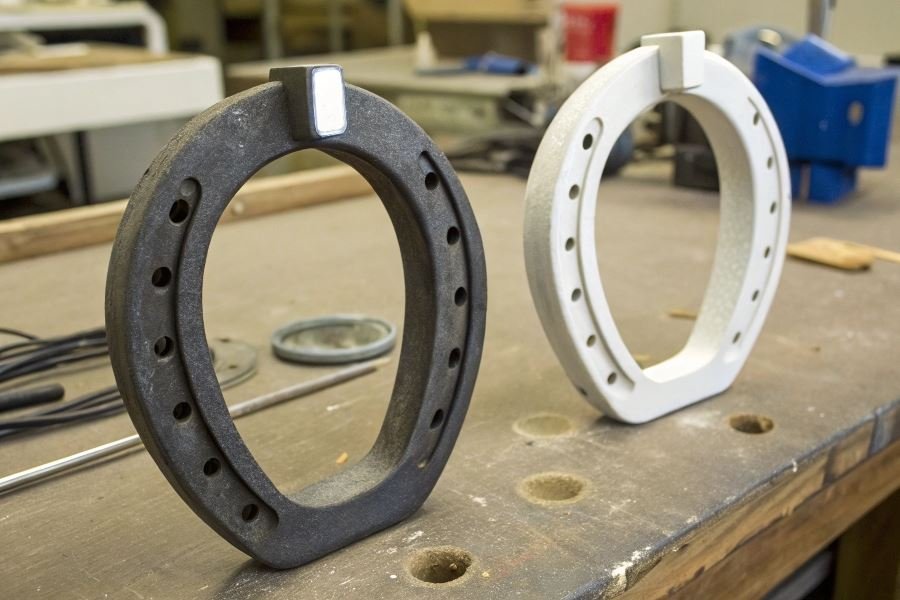
Ever watched a championship horse execute a perfect jump or sprint across the finish line with milliseconds to spare? That precision doesn’t start with training—it begins at the hooves. The difference between victory and injury often balances on four metal crescents, each weighing mere ounces.
Selecting the right horseshoes isn’t just a maintenance task—it’s a critical performance decision that affects everything from your horse’s stride to its long-term joint health. Think of horseshoes as the equine equivalent of athletic footwear: ill-fitting shoes can lead to discomfort, altered gait, and even career-ending injuries. The right fit, however, can enhance natural movement and provide the protection needed for peak performance.
Three key factors dominate the horseshoe selection process:
- Your horse’s unique hoof conformation
- The specific discipline and terrain
- Seasonal and environmental conditions
“The hoof is the foundation of the horse. No hoof, no horse.” This centuries-old wisdom remains the cornerstone of equine care.
When evaluating options, remember that horseshoes aren’t one-size-fits-all solutions. A dressage competitor needs different support than a trail horse navigating rocky terrain. Similarly, a horse with conformational challenges requires specialized shoes that compensate for natural imbalances.
The selection process involves collaboration between owner, farrier, and sometimes veterinarian—a team approach that considers both preventative care and performance enhancement. This holistic perspective ensures your equine athlete receives precisely what they need to move confidently and comfortably, whether competing at elite levels or enjoying recreational riding.
Matching Horse to Shoe: The Perfect Fit
When it comes to equine performance, few things matter more than what’s underneath those powerful hooves. Selecting the right horseshoes isn’t just about protection—it’s about enhancing movement, preventing injury, and supporting your horse’s unique biomechanics. The difference between appropriate and ill-fitting horseshoes can mean the difference between a champion and a sidelined athlete.
Understanding how to choose horseshoes for a horse requires careful assessment of your equine partner’s physical characteristics. Just as human athletes need shoes designed for their specific sport and foot structure, horses require customized solutions that account for their individual conformation, weight, and activity demands.
Reading the Hoof’s Story
The hoof itself tells you everything you need to know about proper shoe selection. Start by examining these key characteristics:
Size matters – Measure both the width and length of the hoof’s ground surface. A properly fitted shoe should match the hoof’s natural dimensions without extending too far beyond the heel (typically no more than ¼ inch).
Shape recognition – Hooves come in various shapes: round, oval, or even asymmetrical. The horseshoe must mirror this natural shape to provide balanced support.
Wall angle and thickness variations require different shoe modifications. A thin-walled hoof may need a wider shoe to prevent nail placement too close to the sensitive laminae.
Hoof condition also dictates shoe choice. Cracked hooves might benefit from clips or specialized support shoes, while thin soles often require additional padding or protective plates.
Material Selection Based on Horse Weight and Activity
| Horseshoe Material | Best For | Weight Consideration | Durability |
|---|---|---|---|
| Aluminum | Speed events, racing | Lightweight horses | Low-medium |
| Steel | General riding, jumping | Medium-heavy horses | High |
| Synthetic/Plastic | Therapeutic use, light work | All weights | Medium |
| Copper | Therapeutic applications | Medium horses | Medium |
Your horse’s weight significantly impacts material selection. Heavier draft horses (1,500+ pounds) typically require steel shoes with increased thickness and width for durability and support. Conversely, lightweight performance horses might benefit from aluminum shoes that reduce concussion and allow for quicker movement.
Activity level creates another dimension in selection:
- Trail horses benefit from shoes with borium or drill tek for traction
- Dressage competitors often need lightweight aluminum shoes that won’t interfere with precise movements
- Barrel racers may require specialized sliding plates on hind feet
Addressing Conformational Challenges
Some of the most impressive advances in farrier science involve corrective shoeing for conformational issues:
For base-narrow horses (legs too close together), shoes with lateral extensions can improve stability and reduce interference.
Horses with low heels benefit from egg bar shoes that provide additional heel support and reduce strain on the deep digital flexor tendon.
Navicular syndrome cases often respond well to rolled-toe shoes that facilitate breakover and reduce pressure on the navicular bone during movement.
For horses with uneven feet (common in many breeds), a skilled farrier might use different shoe thicknesses to create balanced loading across all limbs.
Remember that conformational correction through shoeing should be gradual. Dramatic changes can cause more harm than good by forcing joints and tendons to adapt too quickly.
The perfect horseshoe choice combines science, experience, and careful observation. When in doubt, consult with both your veterinarian and an experienced farrier who can evaluate your horse’s specific needs and develop a shoeing protocol that supports optimal performance and health.
Sealing the Deal on Perfect Horseshoes
Choosing the right horseshoes isn’t just about picking metal plates—it’s about securing your horse’s athletic future. After evaluating materials, styles, and specific needs, you’ve reached the final stretch. Now comes the critical phase where decisions transform into action and long-term hoof health.
The Farrier Factor
Never underestimate the power of professional expertise. Your farrier isn’t just a service provider—they’re your horse’s podiatrist, biomechanics specialist, and performance enhancer rolled into one. A qualified farrier brings years of experience and anatomical knowledge that no online article can replace.
The relationship between horse owner and farrier should resemble a healthcare partnership rather than a transaction.
When consulting with your farrier, bring your observations and research, but remain open to their recommendations. The American Farriers Association reports that horses often perform better with shoeing solutions customized to their specific conformation and movement patterns rather than trending products.
A quality farrier will:
- Evaluate your horse’s movement before making recommendations
- Consider your horse’s discipline and workload
- Explain why certain shoes might benefit your specific horse
- Discuss alternatives if budget constraints exist
Performance Monitoring
After the new shoes are on, your job has just begun. The true test of appropriate horseshoe selection happens in the days and weeks following application.
Document everything. Create a simple tracking system noting:
| Observation Area | What to Look For | Red Flags |
|---|---|---|
| Movement | Stride length, willingness to move | Shortened stride, reluctance |
| Comfort | Standing posture, weight distribution | Pointing, shifting weight |
| Performance | Work quality, energy levels | Decreased performance, resistance |
| Hoof condition | Wall integrity, growth pattern | Cracks, uneven wear |
Pay particular attention to transitions between surfaces. Does your horse move confidently from arena to trail? Does he hesitate on certain terrain? These observations provide valuable feedback for future shoeing decisions.
The first 72 hours post-shoeing often reveal the most about shoe suitability.
If you notice issues, don’t wait until the next scheduled appointment. Contact your farrier promptly—minor adjustments early can prevent major problems later.
Maintenance Mastery
Establishing a consistent maintenance schedule transforms good shoeing into exceptional hoof care. Most performance horses require attention every 4-6 weeks, though individual needs vary based on growth rates and work intensity.
Calendar consistency creates champions. Mark your shoeing dates in advance and treat them as non-negotiable appointments. Waiting too long between shoeings can compromise performance and potentially lead to injury.
Between professional visits, implement these practices:
- Daily hoof picking and inspection
- Weekly application of appropriate hoof conditioners based on environmental conditions
- Immediate attention to any loose clinches or shifted shoes
- Scheduled rest days to allow natural hoof recovery
Remember that seasonal changes often necessitate shoeing adjustments. What works in summer may need modification for winter conditions.
The ultimate measure of successful horseshoe selection isn’t just immediate comfort—it’s long-term soundness. By partnering with a skilled farrier, monitoring performance meticulously, and maintaining a religious care schedule, you’re not just choosing horseshoes—you’re investing in your horse’s athletic longevity and daily comfort.