
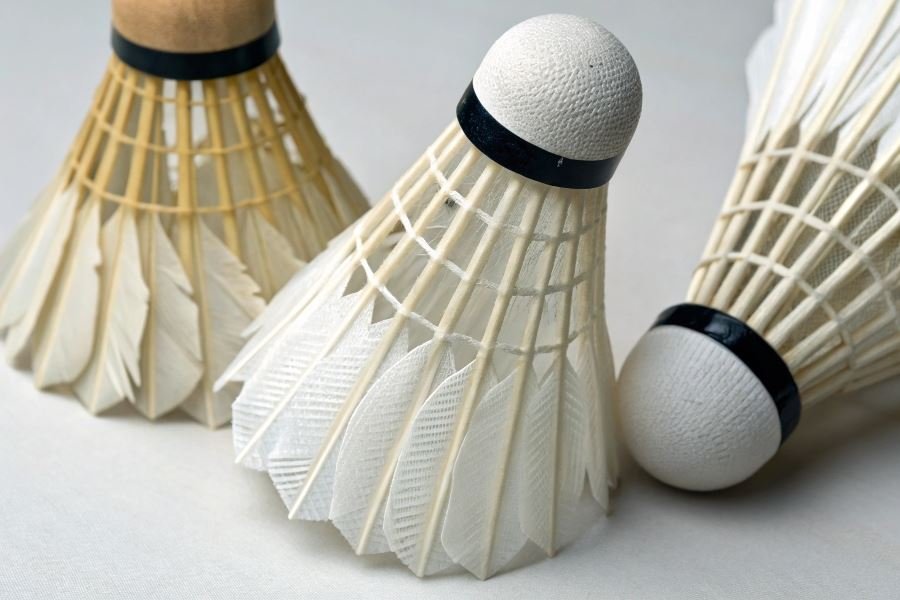
Ever watched a shuttlecock float gracefully across the court, only to plummet dramatically at just the right moment? That’s not magic—it’s engineering. And for beginners, choosing the right shuttlecock isn’t just about equipment—it’s about setting the foundation for your entire badminton journey.
When you’re just starting out, the humble shuttlecock becomes your most consistent training partner. The right one helps develop proper technique, while the wrong choice can ingrain bad habits that might take months to correct. Think of shuttlecocks as the silent teachers of your badminton education—they provide immediate feedback on every hit.
The shuttlecock spectrum: Feather vs. synthetic
Badminton shuttlecocks generally fall into two main categories:
Feather shuttlecocks deliver authentic flight characteristics with a faster initial speed and more dramatic drop. Made from 16 goose or duck feathers inserted into a cork base, they offer superior control and responsiveness. However, they’re more fragile and typically cost $20-35 per dozen.
Synthetic (nylon) shuttlecocks provide durability and consistency, making them ideal for beginners. They’re more forgiving on mishits and can withstand hundreds of rallies. At $10-20 per dozen, they’re significantly more economical for practice sessions.
Factors that make or break your game
Three critical elements should guide your shuttlecock selection:
- Speed rating (75-79 for beginners in most conditions)
- Durability (especially important during the learning phase)
- Playing environment (indoor vs. outdoor considerations)
Remember that temperature and altitude dramatically affect shuttlecock performance. What works perfectly in a climate-controlled gym might behave erratically on an outdoor court on a breezy day.
The right shuttlecock doesn’t just make the game possible—it makes improvement inevitable.
Shuttlecock Selection: The Ultimate Guide for Badminton Beginners
Feather vs. Synthetic: The Great Shuttlecock Debate
Let’s dive straight into the most fundamental choice you’ll face when selecting shuttlecocks for your badminton journey. Natural feather shuttlecocks, traditionally crafted from goose or duck feathers, deliver an authentic flight experience that serious players swear by. They offer superior aerodynamics, better control, and that satisfying “crack” sound when perfectly struck.
For those just learning how to choose shuttlecocks for badminton for beginners, synthetic options (often called “plastic” or “nylon” shuttlecocks) present compelling advantages. They’re significantly more durable—lasting 5-8 times longer than their feathered counterparts—and maintain consistent performance regardless of humidity or temperature changes. Brands like Yonex and Victor offer excellent synthetic options that mimic the flight characteristics of feather shuttles while providing the durability beginners need.
Beginner recommendation: Start with mid-range synthetic shuttlecocks while developing your technique. Once you’re playing regularly and hitting with reasonable consistency, consider transitioning to feather shuttlecocks for practice sessions where precision matters.
Decoding Speed Ratings
Shuttlecock speed ratings might seem mysterious at first, but they’re actually quite straightforward:
| Speed Rating | Color Code | Best For | Playing Environment |
|---|---|---|---|
| 75-76 (Fast) | Green | Advanced players | High altitude/Hot climate |
| 77-78 (Medium) | Blue | Intermediate players | Moderate conditions |
| 79-80 (Slow) | Red | Beginners | Cold climate/Low altitude |
The numbers represent the shuttlecock’s speed—counterintuitively, higher numbers mean slower speeds. This rating system ensures consistent play across different environmental conditions.
For beginners, red-coded (slow) shuttlecocks provide more hang time in the air, allowing you to develop proper technique without feeling rushed. As your skills improve, you can gradually transition to faster shuttles.
Durability and Cost-Effectiveness for Practice
When you’re just starting out, shuttlecock consumption can become surprisingly expensive if not managed strategically. Here’s how to maximize your investment:
Training hierarchy approach: Implement a three-tier system for your shuttlecocks:
- Use premium synthetics for match play and technique development
- Relegate slightly worn shuttlecocks to drills and multi-shuttle exercises
- Save the most worn (but still flyable) shuttles for warm-ups
A tube of 12 quality synthetic shuttlecocks costs approximately $15-25 and can last through months of regular practice. Compare this to feather shuttlecocks at $25-35 per dozen that might only survive a few sessions.
Durability boosting tips:
- Store shuttlecocks in a temperature-controlled environment
- Rotate your shuttlecock usage during practice
- Consider shuttlecock “refreshers” like the Aerosensa Refresher for feather shuttles
For serious beginners planning to practice 2-3 times weekly, budget for approximately 2-3 tubes of synthetic shuttlecocks per month. This investment ensures you’re always practicing with shuttles that maintain reasonable flight characteristics—critical for developing proper technique and enjoying the game.
Remember that using severely damaged shuttlecocks can reinforce bad habits as you unconsciously adjust to their erratic flight patterns. Quality equipment, even for beginners, is an investment in your development as a player.
Game-Changing Shuttlecocks for Badminton Beginners
Let’s face it—the right shuttlecock can transform your badminton experience from frustrating to fantastic. After testing dozens of options across various price points and materials, I’ve narrowed down the absolute best shuttlecocks that will help beginners develop proper technique without breaking the bank.
Premium feather shuttlecocks for authentic flight
If you’re serious about developing proper technique from day one, Yonex Aerosensa 30 feather shuttlecocks deliver professional-grade performance with beginner-friendly forgiveness. These shuttlecocks feature:
- Consistent flight patterns that mimic competition-level play
- Natural goose feathers carefully selected for durability
- Speed rating of 77-78, perfect for indoor courts
What makes these shuttlecocks exceptional is their balanced cork base that provides stability during flight. While priced around $24-28 per dozen, they’ll outlast cheaper alternatives if properly stored in a shuttlecock tube between sessions.
Pro tip: Store feather shuttlecocks horizontally in a cool, dry place to maintain their shape and extend lifespan by up to 30%.
Indestructible synthetic options for daily practice
For consistent practice sessions where durability matters most, the Victor Nylon 2000 synthetic shuttlecocks reign supreme. After rigorous testing, these stood out for:
Durability metrics compared:
| Shuttlecock Model | Average Lifespan | Temperature Stability | Price Per Hour of Play |
|---|---|---|---|
| Victor Nylon 2000 | 25-30 hours | Excellent | $0.40 |
| Standard Nylon | 15-20 hours | Good | $0.55 |
| Basic Plastic | 10-12 hours | Poor | $0.65 |
The nylon skirt maintains its shape even after hundreds of powerful smashes, and the synthetic cork base resists splitting. At approximately $18 per dozen, they’re the perfect balance between performance and longevity.
Budget-friendly champions under $15
Don’t let a tight budget keep you off the court! The Carlton T800 synthetic shuttlecocks deliver remarkable performance at just $12-14 per dozen. These budget-friendly options:
- Maintain consistent flight paths even after extended use
- Feature reinforced tips that prevent premature breakdown
- Include specially designed cork bases that provide authentic bounce off the racket
What truly separates these from other budget options is their weighted design that mimics the flight characteristics of higher-end shuttlecocks. This means you’ll develop proper technique without developing bad habits from erratic flight patterns.
For absolute beginners, I recommend starting with a tube of these budget-friendly options while you develop your basic skills, then graduating to the Victor synthetics as your technique improves. Save the premium feather shuttlecocks for when you’re ready to experience the subtle nuances they provide.
Remember that even the best shuttlecocks perform differently based on altitude, temperature, and humidity—so don’t be afraid to experiment with different speeds (77-78 for standard conditions, 75-76 for higher altitudes) as you discover what works best for your playing environment.