
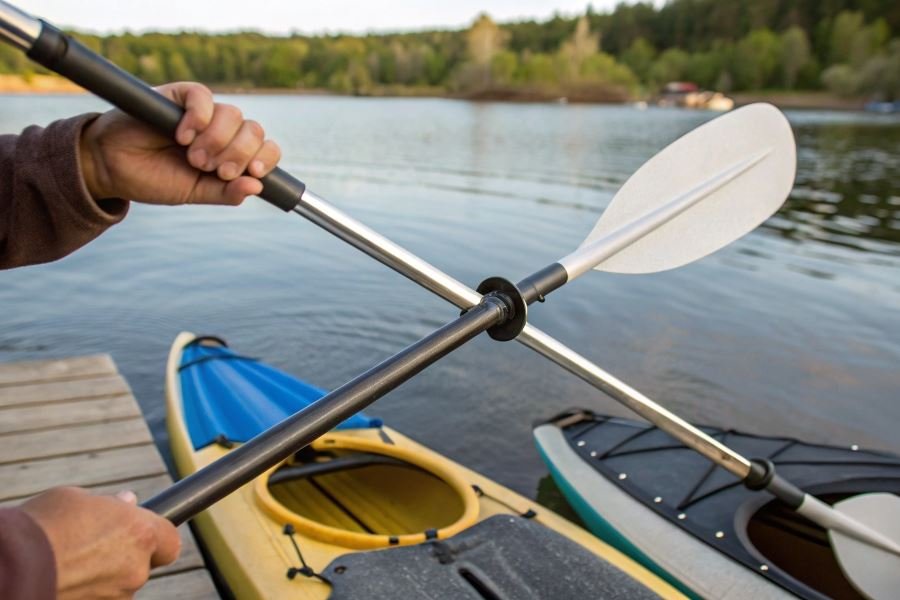
Picture this: Your child’s eyes lighting up as they paddle their very own kayak across crystal-clear waters, building confidence with every stroke.
Kayaking has surged beyond just an adult outdoor pursuit to become one of America’s favorite family adventures. What was once considered a niche sport has transformed into a mainstream family activity, with participation numbers climbing steadily year after year. The American Canoe Association reports that family kayaking experiences have increased by nearly 35% over the past five years alone.
When selecting the perfect kayak for your young paddler, parents face a sea of options that can quickly become overwhelming. The right children’s kayak isn’t just a smaller version of an adult model – it’s a carefully designed vessel that balances safety, stability, and the unique needs of developing paddlers.
The family that paddles together grows together
Introducing children to kayaking at the right age delivers benefits far beyond just physical activity. Young paddlers develop remarkable environmental awareness, learning to appreciate waterways and ecosystems firsthand. They build critical thinking skills while navigating routes, and perhaps most importantly, gain a profound sense of independence that carries over into everyday life.
“Kayaking teaches children self-reliance and decision-making in real-time – skills that are increasingly rare in our structured world.” – American Outdoor Youth Association
Key considerations before you buy
When evaluating children’s kayaks, focus on these critical factors:
- Weight capacity that allows for growth
- Stability features like wider hulls and anti-tip designs
- Adjustable seating that accommodates developing bodies
- Tracking systems appropriate for beginner paddlers
- Durability against the inevitable bumps of learning
The perfect children’s kayak strikes the delicate balance between being forgiving enough for beginners while still offering room for skill development as your young paddler progresses.
Essential Safety Features in Children’s Kayaks
When it comes to introducing your young paddler to the water, safety isn’t just a priority—it’s the foundation of their entire kayaking experience. The right kayak can spark a lifelong passion for water sports, while the wrong one might create unnecessary risks and frustration.
Selecting children’s kayaks requires careful attention to several critical safety elements that differ significantly from adult models. Parents need to consider not just the fun factor, but the specific design features that will keep their young adventurers secure while they develop confidence on the water. The market offers numerous options, but understanding what truly matters in children’s kayaks will help you make an informed purchase decision that balances safety, performance, and growth potential.
Age-Appropriate Design and Weight Capacity
The first rule of kayak selection is matching the vessel to your child’s size and skill level. Manufacturers typically design youth kayaks with specific age ranges in mind:
| Age Range | Typical Length | Weight Capacity | Key Features |
|---|---|---|---|
| 5-8 years | 6-7 feet | 80-120 lbs | Wider hull, simplified cockpit |
| 9-12 years | 7-8 feet | 100-150 lbs | More responsive steering, adjustable footrests |
| 13+ years | 8-10 feet | 130-200+ lbs | Performance features, transitional design |
Weight capacity deserves special attention. Always choose a kayak rated for at least 20-30% more than your child’s current weight. This provides a safety margin and room for growth, extending the usable life of your investment.
Many parents make the mistake of selecting a kayak their child can “grow into,” but oversized kayaks create control problems that can compromise safety. A properly sized kayak allows proper paddling technique and easier recovery if tipped.
Stability Features for Beginning Paddlers
For novice kayakers, stability trumps speed every time. Look for these beginner-friendly design elements:
- Wider hull designs provide primary stability, keeping the kayak steady during normal paddling
- Flat-bottomed hulls offer reassuring initial stability for nervous first-timers
- Multi-chine hulls combine stability with improved tracking for slightly more experienced kids
The Lifetime Youth Wave Kayak exemplifies smart beginner design with its twin-fin hull that prevents tipping while maintaining directional control. Similarly, the Old Town Heron Junior features a tri-form hull that balances stability with maneuverability.
Pontoon-style hulls represent the gold standard in beginner stability, with some models virtually impossible to capsize in calm conditions—perfect for building confidence.
Required Safety Equipment and Visibility
Even the most stable kayak requires proper safety equipment:
-
Personal Flotation Device (PFD): Non-negotiable for all child paddlers. Choose youth-specific PFDs with head support for younger children.
-
High-visibility colors: Bright orange, yellow, or lime green kayaks dramatically improve visibility on water. Some manufacturers like Perception Kayaks offer models with reflective deck lines for additional safety.
-
Integrated safety features: Look for:
- Built-in flotation chambers
- Self-bailing drain holes
- Paddle leashes
- Grab handles at bow and stern for easy rescue
The best children’s kayaks incorporate multiple safety elements while maintaining the fun factor that keeps kids engaged. Remember that safety features aren’t just about preventing accidents—they’re about creating the confidence that allows young paddlers to develop skills and truly enjoy their time on the water.
Performance Factors That Make or Break Children’s Kayaks
Material Durability That Withstands Adventure
When investing in a children’s kayak, material quality isn’t just a specification—it’s the difference between a summer of fun and a season of frustration. Polyethylene remains the gold standard for children’s kayaks, offering that sweet spot between durability and affordability. High-density polyethylene (HDPE) models from brands like Lifetime can withstand the inevitable bumps against rocks, docks, and shorelines that come with a child’s paddling journey.
The construction method matters just as much as the material itself. Rotomolded kayaks create a seamless one-piece design that eliminates weak points, while thermoformed models offer lighter weight with comparable strength. Look for reinforced bow and stern sections—these high-impact areas need extra protection against the enthusiastic beaching techniques most kids employ!
Quality hardware components separate premium models from budget disappointments. Stainless steel screws, marine-grade bungee cords, and UV-resistant deck fittings from manufacturers like Old Town ensure that small parts don’t become big problems down the road.
Weight and Storage Solutions
A kayak that’s too heavy becomes a burden rather than a joy. The ideal children’s kayak balances durability with manageable weight—typically between 18-30 pounds for youth models. This weight range allows most children ages 8-14 to participate in carrying their own equipment, building confidence and independence.
Portability features make all the difference in family paddling experiences:
| Feature | Benefit | Look For |
|---|---|---|
| Molded handles | Comfortable carrying | Ergonomic design, multiple positions |
| Stackable design | Efficient storage | Nesting capability, flat bottom |
| Compact length | Easy transport | 6-9 foot models fit in most vehicles |
Storage considerations extend beyond the off-season. Proper storage prevents hull warping and UV damage, extending your investment’s lifespan. Wall-mounted racks from Suspenz or ceiling hoists can transform kayak storage from a garage-consuming hassle to an organized system.
Growth Accommodation and Value Over Time
The most overlooked aspect of children’s kayak selection is growth accommodation. A quality youth kayak should offer adjustable footrests, adaptable seating, and sufficient weight capacity to accommodate at least 2-3 years of growth. Models from Perception often feature sliding seat systems that extend the usable lifespan significantly.
Consider these long-term value factors:
- Weight capacity buffer – Choose a kayak rated for at least 50-75 pounds beyond your child’s current weight
- Resale potential – Premium brands maintain higher resale value when properly maintained
- Sibling succession planning – Durable models can serve multiple children over years
The true cost of a kayak isn’t just the purchase price—it’s the price divided by years of use. A 350kayakthatlastsfiveseasons(70/year) delivers better value than a 150modelthatfailsafteronesummer(150/year).
Look for manufacturers offering transferable warranties, which significantly enhance resale value. Wilderness Systems provides warranty coverage that follows the product rather than the original purchaser, creating substantial long-term value.
When evaluating growth accommodation, remember that a slightly oversized kayak (with proper safety features) often represents better value than a perfectly-sized model that will be outgrown quickly. The sweet spot is finding a design that remains stable and manageable while offering room to grow.