
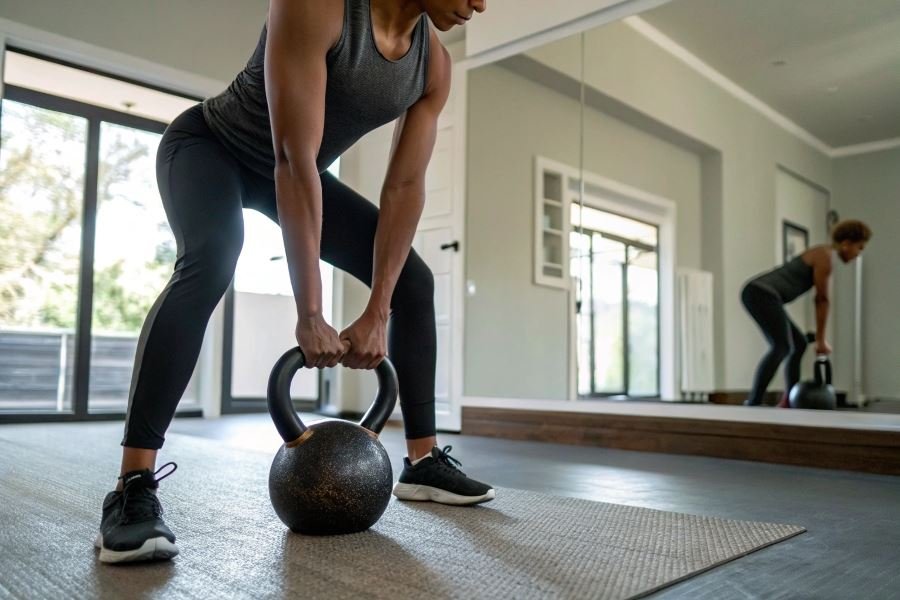
Ever watched someone swing a cannonball with a handle and wondered what all the fuss is about? That “cannonball” might be your ticket to the body you’ve been chasing. Kettlebells aren’t just another fitness trend—they’re a metabolic game-changer backed by serious science.
When you choose the right kettlebell, you’re essentially selecting a personal fat-melting, muscle-sculpting tool. The magic lies in the offset weight distribution that forces your body to recruit more muscles during every movement. Research from the American Council on Exercise found that kettlebell workouts can burn up to 20 calories per minute—that’s an astonishing 400 calories in just 20 minutes!
The metabolic furnace effect
Unlike traditional dumbbells that distribute weight evenly, kettlebells create an unstable force you must constantly control. This engages your core, stabilizers, and major muscle groups simultaneously, triggering what fitness experts call “metabolic conditioning.” Your body continues burning calories hours after your workout ends—a phenomenon not typically achieved with standard cardio equipment.
Beyond the treadmill: Why kettlebells win
Consider this: A treadmill takes up significant space, costs hundreds (sometimes thousands) of dollars, and works primarily lower body muscles. A single kettlebell costs between 30−150, fits in a closet, and delivers:
- Full-body conditioning rather than isolated muscle work
- Cardiovascular benefits without mind-numbing repetition
- Functional strength that translates to real-world activities
Matching metal to mission
Before grabbing the heaviest kettlebell you can find, pause to consider your objectives. Are you primarily focused on endurance and fat loss? A lighter kettlebell with higher repetitions might be your answer. Looking to build significant muscle tone? You’ll need sufficient weight to create resistance challenges.
Your perfect kettlebell isn’t determined by marketing—it’s determined by your unique fitness journey.
The Ultimate Kettlebell Selection Guide for Transformation
Let’s cut to the chase—kettlebells are game-changers for weight loss and muscle toning. But picking the right one? That’s where most people stumble. The difference between results and frustration often comes down to three critical factors: weight, material, and handle design.
When considering how to choose a kettlebell for weight loss and muscle toning, you need to think beyond just grabbing whatever looks good on the rack. Your kettlebell should match your fitness level, complement your body mechanics, and support the specific movements that torch calories and sculpt muscle.
Weight Selection: Finding Your Sweet Spot
The perfect kettlebell weight varies dramatically based on experience and biological factors:
For beginners:
- Women: Start with 8-12 lbs (4-6 kg)
- Men: Begin with 16-20 lbs (8-10 kg)
For intermediate users:
- Women: Progress to 16-25 lbs (8-12 kg)
- Men: Move up to 25-35 lbs (12-16 kg)
For advanced kettlebell enthusiasts:
- Women: Challenge yourself with 25-35+ lbs (12-16+ kg)
- Men: Push limits with 35-70+ lbs (16-32+ kg)
The right weight allows you to complete 8-12 reps with proper form while still feeling challenged by the final repetition.
Remember: starting too heavy compromises form and increases injury risk, while too light won’t stimulate enough metabolic response for weight loss.
Material Matters: Choosing Your Kettlebell Type
Each kettlebell material offers distinct advantages for weight loss training:
| Type | Pros | Cons | Best For |
|---|---|---|---|
| Cast Iron | Durable, traditional feel, affordable | Can chip, rough on floors | Home gyms, beginners |
| Competition | Consistent dimensions, smooth finish | Higher price point | Technical movements, advanced users |
| Vinyl-Coated | Floor-friendly, comfortable grip | Coating can tear, less durable | Shared spaces, beginners |
Competition kettlebells from Kettlebell Kings maintain the same size regardless of weight—ideal for technique consistency as you progress. Meanwhile, cast iron options from Rogue Fitness offer exceptional durability for high-intensity weight loss circuits.
Handle Design: The Overlooked Game-Changer
The handle might seem secondary, but it’s crucial for effective weight loss workouts:
Handle width matters: A handle that’s too narrow restricts two-handed swings—one of the most effective fat-burning movements. Look for handles approximately 1.5 inches in diameter for optimal grip.
Texture considerations: Slightly textured handles provide the perfect balance between grip security during sweaty sessions and hand protection during high-rep work.
Window size: The space between the handle and bell body should accommodate your forearm comfortably during cleans and snatches—movements that elevate your heart rate and maximize calorie burn.
For those serious about weight loss, kettlebells with powder-coated handles from Onnit offer exceptional grip security during high-intensity intervals without tearing up your hands.
Your kettlebell isn’t just equipment—it’s your partner in transformation. Choose wisely, and those swings, squats, and presses will deliver the weight loss and muscle definition you’re working toward.
Unleash Your Potential with Kettlebell Training
Three kettlebell moves that torch calories
Ready to transform your body with kettlebell training? Let’s dive into the exercises that deliver maximum calorie burn. The kettlebell swing reigns supreme as the ultimate fat-melting movement. This explosive exercise engages your entire posterior chain while sending your heart rate soaring. A study from the American Council on Exercise found that participants burned approximately 20 calories per minute during kettlebell workouts—comparable to running a 6-minute mile!
Next up, the kettlebell snatch combines strength, power, and cardiovascular demand in one fluid motion. This technical lift requires you to explosively drive a kettlebell from between your legs to overhead in one seamless movement. The oxygen demand is off the charts, making it perfect for those seeking to shed unwanted pounds.
Rounding out our top three is the kettlebell Turkish get-up. This comprehensive movement takes you from lying flat on your back to standing tall while stabilizing a weight overhead. It engages virtually every muscle in your body while demanding core stability throughout the entire range of motion.
The magic of kettlebell training isn’t just in the exercises themselves, but in how you combine them into metabolic circuits that keep your body guessing and adapting.
Building your progressive kettlebell plan
Sustainable results require a strategic approach. Begin with a 4-week foundation phase using a lighter kettlebell (35-45 lbs for most men, 18-26 lbs for most women) to master proper technique. Focus on basic movements performed for moderate repetitions (8-12) with ample rest between sets.
As your proficiency improves, transition to a 4-week intensification phase. Here’s a simple progression framework:
| Phase | Duration | Training Frequency | Work:Rest Ratio | Focus |
|---|---|---|---|---|
| Foundation | 4 weeks | 2-3x weekly | 1:2 | Technique mastery |
| Intensification | 4 weeks | 3-4x weekly | 1:1 | Volume increase |
| Peak | 4 weeks | 3-4x weekly | 2:1 | Density training |
During the peak phase, incorporate complexes—sequences of exercises performed back-to-back without setting the kettlebell down. This approach maximizes caloric expenditure while building functional strength and endurance.
Track your progress using performance metrics rather than just the scale. Can you perform more repetitions? Has your work capacity increased? These indicators often precede visible body composition changes.
Maintaining your kettlebell investment
Quality kettlebells from reputable manufacturers like Rogue Fitness or Kettlebell Kings require minimal maintenance but deserve proper care. Store your kettlebells in a dry environment to prevent rust, especially if you’ve purchased cast iron models rather than competition-style steel versions.
Safety considerations cannot be overstated. Always warm up thoroughly before training, focusing on mobility in the hips, shoulders, and thoracic spine. Wear appropriate footwear with flat, stable soles—never train in running shoes with compressible heels.
As your technique improves and your body adapts, gradually increase kettlebell weight rather than dramatically jumping up in size. This measured progression reduces injury risk while ensuring continued results.
Remember that recovery is when adaptation occurs. Schedule at least one full rest day between kettlebell sessions, and consider incorporating complementary mobility work to address any movement limitations that might compromise your technique.
With consistent application of these principles, your kettlebell training will deliver the dual benefits of fat loss and muscle toning that make this versatile tool a staple in effective fitness programs worldwide.