
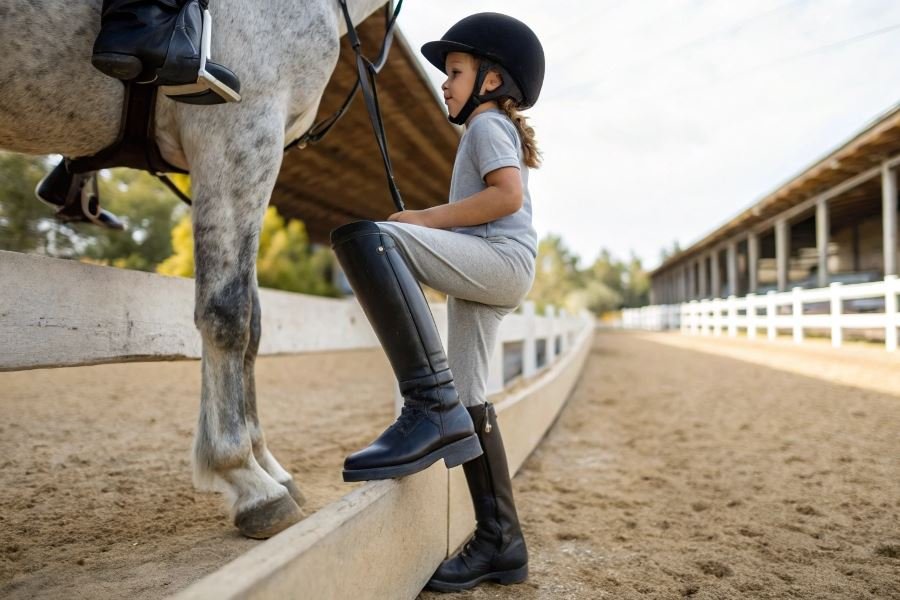
Ever watched a young rider’s face light up when they connect with a horse for the first time? That magical moment deserves proper protection—starting from the ground up.
Selecting the right equestrian boots for children isn’t just about style or comfort—it’s about safety, development, and confidence. When a child steps into the stirrup with proper footwear, they’re not just mounting a horse; they’re building a foundation for years of safe riding ahead. The right boot provides crucial ankle support, prevents the foot from sliding through stirrups (a serious safety hazard), and offers protection from unexpected hoof encounters.
The safety trifecta: Heel, fit, and durability
The most critical safety feature in any riding boot is the defined heel—typically 1-1.5 inches. This prevents the foot from sliding through the stirrup, which could lead to dragging if a fall occurs. Additionally, boots must fit snugly without pinching, allowing enough room for proper foot positioning and growth.
“A proper heel isn’t negotiable—it’s the difference between a safe dismount and a dangerous situation.”
Boot varieties for budding equestrians
Children’s equestrian footwear comes in several styles, each serving different disciplines:
- Paddock boots: Short ankle boots perfect for beginners and everyday riding
- Tall boots: Traditional field or dress boots that offer maximum leg protection
- Jodhpur boots: Similar to paddock boots but designed to be worn with jodhpur pants
- Muck boots: Waterproof options for barn chores and casual riding
The right choice depends on your child’s riding discipline, frequency, and growth stage. Remember that quality boots protect more than feet—they protect dreams and future champions.
Essential Features for Children’s Equestrian Boots
Finding the perfect pair of riding boots for your young equestrian isn’t just about style—it’s about safety, comfort, and durability that can withstand the demanding environment of the stable and arena. When parents approach the process of how to choose children’s boots for equestrian sports, they need to consider several critical factors that will impact both performance and protection. Let’s gallop through the essential features that separate exceptional riding boots from the merely adequate ones.
Perfect Fit: The Foundation of Safety
The fit of equestrian boots is non-negotiable. Too loose, and your child risks their foot slipping in the stirrup—a dangerous situation. Too tight, and circulation problems or painful blisters can develop during long riding sessions.
Sizing guidelines to follow:
- Measure late in the day when feet are naturally larger
- Have your child wear the same socks they’ll use for riding
- Allow approximately ½-inch of space at the toe
- Ensure the heel sits snugly with minimal lift when walking
Children’s feet grow quickly, but resist the temptation to size up too generously. Ariat and Dublin offer youth boots with expansion technology that accommodates growing feet while maintaining proper ankle support.
Material Matters: Durability Meets Comfort
The materials used in equestrian footwear directly impact longevity, maintenance requirements, and comfort during those long days at the barn.
| Material | Advantages | Considerations |
|---|---|---|
| Full-grain leather | Exceptional durability, molds to foot, water-resistant when treated | Requires regular maintenance, higher initial cost |
| Synthetic leather | Lower cost, easier to clean, lightweight | Less breathable, shorter lifespan |
| Rubber | Waterproof, ideal for muddy conditions | Limited breathability, less ankle support |
Premium boots often combine materials strategically—leather for structure and support, synthetic panels for flexibility at flex points.
Young riders who compete regularly benefit from investing in boots made with full-grain leather from established manufacturers like Parlanti or Der Dau, while recreational riders might find synthetic options from TuffRider perfectly adequate.
Safety Standards: Non-Negotiable Protection
The most beautiful boot in the world isn’t worth a penny if it doesn’t protect your child’s foot properly. Safety certifications provide peace of mind that the footwear meets established protection standards.
Key safety features to verify:
- Reinforced toe caps to protect against hoof strikes
- Defined heel (minimum 1/2 inch) to prevent foot sliding through stirrup
- Smooth, no-catch soles that release from stirrups in falls
- ASTM F1937-04 certification for riding boots (particularly important for jumping)
Tredstep and Mountain Horse have developed innovative safety features specifically for junior riders, including impact-absorbing materials and quick-release design elements.
Remember that even the highest-quality boots need replacement when they show significant wear in critical areas. The stitching along the sole, heel integrity, and ankle support should be regularly inspected—especially after growth spurts when boots might suddenly fit differently.
Investing in proper equestrian footwear isn’t just about equipment—it’s about investing in your child’s safety and confidence in the saddle. The right boots become trusted partners in your young rider’s equestrian journey.
Making the Final Decision: Children’s Equestrian Boots That Go the Distance
Finding that perfect pair of riding boots for your young equestrian isn’t just about today’s ride—it’s about setting them up for years of confident horsemanship. Let’s tackle the final considerations that will help you make a decision you won’t regret.
Smart spending for lasting quality
The price tag on quality riding boots can cause sticker shock, but there’s wisdom in strategic investment. Entry-level synthetic boots from reputable brands like Ariat or Dublin typically start around $65-90, while premium leather options can reach $150-250.
The cheapest boots are rarely the most economical in the long run.
Consider this approach to balancing budget and quality:
| Price Range | What to Expect | Best For |
|---|---|---|
| $65-90 | Synthetic materials, basic protection, 1-2 season lifespan | Beginners, fast-growing children |
| $90-150 | Leather/synthetic blends, better support, 2-3 season durability | Intermediate riders, weekly lessons |
| $150+ | Full-grain leather, superior protection, multi-year lifespan | Competitive riders, daily use |
Remember that a mid-range boot with proper care often outlasts multiple pairs of budget options. For rapidly growing feet, consider buying slightly larger boots with insoles that can be removed as they grow—extending usability by several crucial months.
Extending boot life through proper care
The difference between boots that last six months versus two years often comes down to maintenance. Establish these habits from day one:
-
Clean after every ride – Wipe down boots with a damp cloth to remove arena dust and sweat that deteriorate materials.
-
Condition leather monthly – Apply a quality leather conditioner like Effax Leather Balm to prevent cracking and maintain water resistance.
-
Proper storage matters – Use boot trees or stuff with newspaper to maintain shape and absorb moisture. Never store near heaters or in direct sunlight.
-
Rotation is key – If possible, alternate between two pairs to allow complete drying between uses.
Simple maintenance tasks take minutes but add months to boot lifespan.
Recognizing when replacement time has arrived
Even the finest boots eventually reach retirement age. Watch for these non-negotiable signs it’s time for new footwear:
-
Compromised safety features – Any damage to the toe cap, heel structure, or significant sole wear demands immediate replacement.
-
Growth-related issues – When toes are compressed or heels slip consistently, developmental foot problems can follow.
-
Structural failure – Separated soles, broken zippers, or cracked leather around flex points indicate end-of-life.
-
Performance decline – When boots no longer provide adequate ankle support or grip in the stirrups, safety is compromised.
Most quality children’s riding boots should last 18-24 months of regular use with proper care, though competitive riders may need replacement sooner due to intensity of use.
The final decision comes down to finding that sweet spot where quality meets budget reality. Invest in the best boots you can reasonably afford, maintain them diligently, and replace them promptly when safety or function becomes compromised. Your young rider’s confidence, comfort, and safety in the saddle depend on what’s on their feet.