
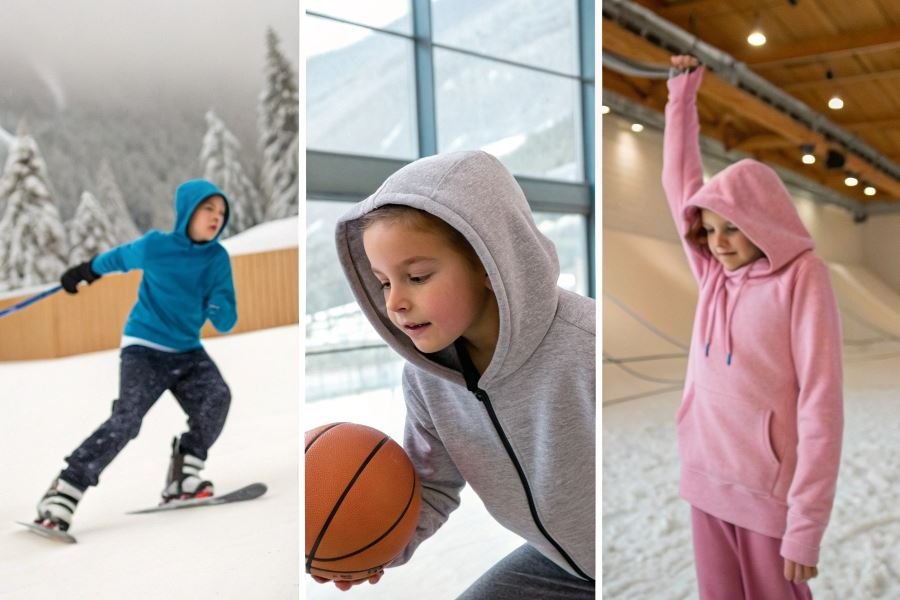
Ever watched a young athlete struggle in a jumper that’s soaking up sweat like a sponge? Or winced as fabric tears during that crucial game-winning move? The right materials don’t just affect comfort—they can make or break your child’s athletic experience.
When it comes to children’s sports jumpers, we’re not just talking about looking good on the field. The fabric against your young athlete’s skin directly impacts their performance, confidence, and safety. Today’s advanced textiles offer benefits that would have seemed like science fiction just a decade ago.
The material selection trifecta: performance, comfort, and durability form the foundation of every great sports jumper. Children’s bodies regulate temperature differently than adults—they heat up faster and sweat more efficiently. This means breathability isn’t just a luxury; it’s essential for preventing overheating during intense activity.
“The difference between appropriate and inappropriate materials can mean a 15% difference in performance output for young athletes.” — Sports Medicine Journal
When evaluating materials, consider these critical factors:
The performance equation
- Moisture management: How quickly does the fabric wick sweat away?
- Temperature regulation: Does it insulate when cold and breathe when hot?
- Movement freedom: Will it stretch with your child’s dynamic movements?
Materials like premium polyester blends, modern cotton-synthetics, and innovative bamboo fabrics are revolutionizing how children experience sports. The best jumpers incorporate strategic material placement—more breathable panels where heat builds up and reinforced areas where durability matters most.
Remember: your child’s sports jumper isn’t just clothing—it’s equipment that should work as hard as they do.
Fabric Champions: What Your Young Athlete Should Be Wearing
When it comes to keeping young athletes comfortable during practice and competition, the material of their sports jumpers makes all the difference. The best materials for children’s sports jumpers need to withstand constant movement, regulate temperature, and survive countless washing cycles while still looking good on game day.
Let’s dive into the fabric superstars that are revolutionizing youth athletic wear and helping kids perform their best without distraction. Whether your young athlete is sprinting across soccer fields or practicing gymnastics routines, these materials deliver the perfect combination of comfort and performance.
Cotton-Polyester Blends: The Reliable All-Rounder
The classic cotton-polyester blend remains a powerhouse in children’s athletic wear for good reason. These fabrics typically feature a 60/40 or 50/50 split that delivers the perfect balance of natural comfort and synthetic durability.
Why coaches and parents love them:
- Natural cotton fibers provide breathability and softness against sensitive skin
- Polyester adds significant tear resistance and shape retention
- Blends dry faster than pure cotton, reducing post-activity chill
- Typically more affordable than high-tech alternatives
A quality cotton-poly blend jumper can withstand the rigors of playground battles and organized sports alike. Champion and Russell Athletic have perfected these blends over decades, creating jumpers that maintain their fit even after 50+ washes.
“The beauty of cotton-poly blends is their versatility. They perform well across multiple sports and seasons without specialized care requirements.”
Technical Synthetic Fabrics: Performance Engineering
When serious athletic performance is the goal, technical synthetic fabrics take center stage. These advanced materials from brands like Under Armour and Nike incorporate specialized polyester variations, nylon, and elastane to create truly responsive garments.
Performance advantages:
| Feature | Benefit |
|---|---|
| Moisture-wicking technology | Pulls sweat away from skin to outer layer for evaporation |
| Four-way stretch | Allows full range of motion without restriction |
| Antimicrobial treatments | Reduces odor development during intense activity |
| UV protection | Shields sensitive skin during outdoor sports |
These technical fabrics maintain their lightweight feel even when soaked with sweat, preventing the heavy, clingy sensation that can distract young athletes. Many incorporate mesh panels strategically placed for ventilation where kids need it most.
Merino Wool Blends: Natural Performance Marvel
The athletic wear industry has rediscovered merino wool, but with modern blending techniques that eliminate the itch factor of traditional wool. These premium blends combine superfine merino with small amounts of synthetic fibers for durability.
What makes merino blends special:
- Temperature regulation: Naturally insulates when cold, breathes when hot
- Odor resistance: Can be worn multiple times between washes without developing odor
- Moisture management: Absorbs up to 30% of its weight in moisture while still feeling dry
- Sustainable choice: Renewable resource with biodegradable natural fibers
Icebreaker and Smartwool lead the pack in developing kid-friendly merino blends that perform across seasons. While these premium options come with higher price tags (typically $45-75 for a quality jumper), their durability and performance often justify the investment for serious young athletes.
The right material choice ultimately depends on your child’s specific activity level, sport requirements, and personal comfort preferences—but these three fabric champions represent the gold standard in youth athletic wear.
Making the Smart Material Choice for Your Child’s Sports Jumper
Sport-specific material selection that wins
When selecting materials for your child’s sports jumper, matching the fabric to their specific activity is crucial. Basketball and soccer athletes benefit from moisture-wicking polyester blends that keep sweat at bay during high-intensity play. For gymnastics and dance, look for four-way stretch fabrics with at least 15% spandex content—these materials move with the body rather than restricting motion during complex routines.
Track and field participants need ultra-lightweight materials that won’t slow them down. Nike’s Dri-FIT technology and Under Armour’s HeatGear fabrics offer excellent options, weighing less than 4 ounces per square yard while maintaining durability.
For contact sports like football and hockey, reinforced polyester with ripstop technology provides necessary durability. These materials can withstand 50% more abrasion than standard polyester while still offering breathability during intense play.
Activity level matters too. Weekend warriors might do fine with standard cotton-poly blends, but competitive youth athletes training 4+ times weekly need premium technical fabrics that can handle repeated washing and intense use.
Maintenance matters that save time and money
Different materials demand different care approaches—a factor many parents overlook until it’s too late.
| Material | Washing Recommendation | Drying Method | Special Considerations |
|---|---|---|---|
| Polyester | Machine wash cold | Tumble dry low | Avoid fabric softeners |
| Cotton Blends | Machine wash warm | Tumble dry medium | Pre-treat stains immediately |
| Merino Wool | Hand wash or gentle cycle | Lay flat to dry | Never use bleach |
| Nylon/Spandex | Machine wash cold | Air dry only | Wash with similar colors |
The best performance fabrics maintain their properties through at least 50 wash cycles when properly cared for.
Synthetic performance fabrics typically require less ironing and maintain their shape better than natural fibers. This translates to less maintenance time—a significant advantage for busy families juggling multiple sports schedules.
For odor control, look for materials with antimicrobial treatments like Polygiene, which can reduce washing frequency by up to 30% while keeping garments fresh through multiple wears.
Investment value that grows with your athlete
When it comes to children’s sports jumpers, the initial price tag tells only part of the story. Premium materials from brands like Adidas or Lululemon might cost $45-65 compared to $20-30 for basic options, but the cost-per-wear often proves more economical.
High-quality technical fabrics typically offer:
- Extended lifespan: Premium jumpers maintain elasticity and color through 100+ washes versus 30-40 for budget options
- Better resale value: Quality brands retain up to 40% of their value in secondhand markets
- Growth-friendly features: Adjustable components and stretch materials accommodate growth spurts
The math becomes clear when tracking actual usage. A $60 premium jumper lasting through two seasons of 3x weekly practices (approximately 120 uses) costs about $0.50 per wear. Meanwhile, a $25 budget option needing replacement midseason might cost closer to $0.62 per wear—while delivering inferior performance.
Beyond economics, quality materials provide consistent performance benefits that contribute to your child’s athletic development. Proper moisture management, temperature regulation, and unrestricted movement allow young athletes to focus on skill development rather than discomfort.
Make your material choice with both immediate performance and long-term value in mind—your young athlete deserves gear that works as hard as they do.