
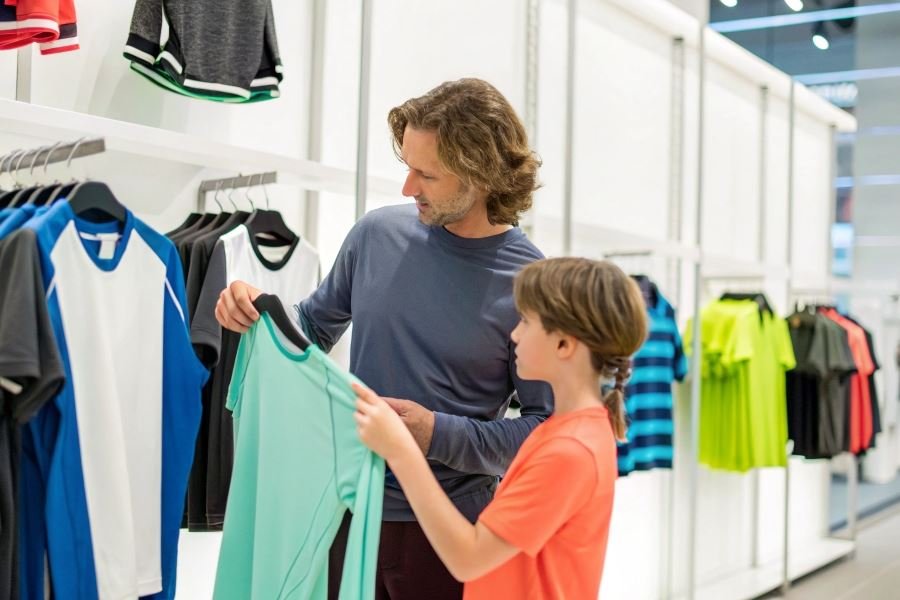
Ever watched a young athlete constantly tugging at an oversized jersey or wincing from a too-tight shirt during a crucial play? That’s not just a comfort issue—it’s a performance killer. When kids can’t focus on the game because they’re fighting with their clothing, they’re playing at a disadvantage before they even start.
The right sports t-shirt fit does more than just look good on the sideline photos. It’s the difference between your child feeling confident enough to make that game-winning move or being held back by restrictive or distracting clothing. Yet finding that perfect fit has become surprisingly complex, with sizing inconsistencies across brands leaving parents puzzled in store aisles or staring at confusing online size charts.
The sizing challenge is real. A 2023 study found that 68% of parents purchased the wrong size athletic wear for their children at least once in the past year. Why? Because children’s bodies grow in unpredictable spurts, and because a “Medium” in one brand might be a “Large” in another.
“The right fit in youth sports apparel isn’t just about comfort—it’s about performance, confidence, and safety,” notes performance wear specialist Dr. James Keller. “Properly fitted athletic wear allows for full range of motion while providing necessary support.”
This guide will walk you through the essential measurements, brand-specific quirks, and practical tips to ensure your young athlete has the performance edge that comes with perfectly fitted sportswear—no more guesswork required.
Measuring for the Perfect Fit
Getting the right size sports t-shirt for your young athlete isn’t just about comfort—it’s about performance. When a shirt fits properly, kids can focus on their game instead of adjusting uncomfortable clothing. The process of selecting the correct size for a children’s sports t-shirt requires attention to specific body measurements that ensure freedom of movement while maintaining proper coverage during intense activity.
Taking accurate measurements is the foundation of finding that perfect fit. Parents often struggle with how to choose the size of a children’s sports t-shirt because standard age-based sizing can be wildly inconsistent between brands. Instead, grabbing a measuring tape and spending five minutes getting precise numbers will save hours of frustration and potential returns later.
Chest Measurement: The Critical Starting Point
The chest measurement reigns supreme when sizing athletic wear. Here’s how to nail it:
- Have your child stand naturally with arms slightly away from their sides
- Wrap the measuring tape around the fullest part of their chest
- Ensure the tape is parallel to the floor and snug but not tight
Pro tip: Take measurements while they’re wearing a thin shirt, not bulky clothing that can skew results.
For high-intensity sports like soccer or basketball, allow for 1-2 inches of breathing room beyond the exact measurement. For precision sports like gymnastics or dance, a more fitted approach with just ½-1 inch of extra space works better.
Shoulder Width and Sleeve Dynamics
Different sports demand different considerations for shoulders and sleeves:
| Sport Type | Shoulder Fit | Sleeve Length | Why It Matters |
|---|---|---|---|
| Baseball/Softball | Slightly loose | Mid-bicep | Allows for throwing motion |
| Swimming | Fitted | Cap sleeve or sleeveless | Reduces drag |
| Tennis | Medium fit | Short sleeve with mobility | Accommodates serving motion |
| Soccer | Relaxed | Short to mid-length | Ventilation during running |
To measure shoulder width correctly, measure from the outer edge of one shoulder to the other, following the natural curve across the upper back. For sleeve length, measure from the shoulder seam to where you want the sleeve to end.
Remember that sleeves that are too long can interfere with ball handling in sports like basketball, while sleeves that are too short may cause chafing during repetitive movements.
Height-to-Length Ratio: The Movement Factor
The length of a sports t-shirt directly impacts how it performs during activity. Too short, and it rides up during overhead movements. Too long, and it bunches uncomfortably when tucking or bending.
For accurate length measurement:
- Measure from the high point of the shoulder to the desired hem position
- Add 1-2 inches for active sports with lots of jumping or reaching
- Consider the sport’s specific movements—gymnasts need more length for inversions, while runners prefer slightly shorter shirts to reduce fabric bunching
The ideal length typically falls at mid-hip for most sports, allowing for full range of motion without excess material. For sports requiring tucking in the shirt, add an additional 2-3 inches to the length.
When measuring your child, remember that growth spurts are real! For seasonal sports, consider sizing up slightly if your child is approaching a growth phase, but not so much that the excess fabric interferes with performance now.
Mastering the Perfect Fit for Young Athletes
Finding that sweet spot between “room to grow” and “fits just right” can feel like threading a needle in the dark. But nailing the perfect size for your child’s sports t-shirt isn’t just about comfort—it’s about performance, confidence, and getting the most value from your purchase.
Future-proofing without swimming in fabric
When selecting a sports t-shirt for a growing child, the temptation to size up significantly is strong—especially when you’re eyeing that price tag. However, excessive room can actually hinder athletic performance. The key is strategic sizing:
- Allow approximately 1-2 inches of growth space in the torso and sleeves
- Ensure shoulder seams still align reasonably close to the actual shoulder
- Check that the bottom hem falls no more than 2-3 inches below the waistband
The “pinch test” remains reliable: you should be able to pinch about an inch of fabric at the sides without the shirt looking baggy.
A properly sized shirt with modest growth allowance will typically last 1-2 sports seasons, depending on your child’s growth rate. Remember that performance fabrics from brands like Under Armour and Nike often feature mechanical stretch that accommodates growth better than traditional cotton.
Sport-specific sizing considerations
Different sports demand different fits, and understanding these nuances can make all the difference:
| Sport | Sizing Consideration | Recommendation |
|---|---|---|
| Soccer/Football | Freedom of arm movement | Slightly looser in shoulders |
| Basketball | Heat management, full extension | True to size or slightly larger |
| Track & Field | Aerodynamics, minimal drag | More fitted, minimal excess |
| Tennis | Unrestricted swing motion | Roomier in chest and shoulders |
| Swimming | Compression benefits | Fitted but not restrictive |
For high-intensity sports with significant upper body movement, prioritize shirts with raglan sleeves that won’t restrict motion at the shoulder joint. Meanwhile, sports requiring precision movements might benefit from a more tailored fit that won’t bunch or shift during play.
Navigating brand variations and fabric properties
The frustrating truth: a size Medium in one brand might fit like a Small or Large in another. This size inconsistency becomes even more pronounced in children’s sportswear.
Brand-specific sizing tips:
- Adidas tends to run slightly smaller in youth sizes
- Nike often fits true to size but with a slimmer cut
- New Balance typically offers a more generous fit
- Store brands like Target’s All In Motion often run larger
When deciding between sizes, consider the fabric composition. Synthetic performance fabrics with high elastane content (4-8%) will provide more give and accommodate growth better than rigid cotton blends. However, these technical fabrics also tend to be more form-fitting by design.
Size down if the shirt is primarily polyester with significant stretch properties; size up if it’s a cotton-dominant blend with minimal elasticity.
Remember that pre-washing can affect dimensions—most performance fabrics experience minimal shrinkage, while cotton blends may shrink up to 5% after the first wash. When in doubt between sizes, the activity level of your young athlete should be the tiebreaker: higher intensity sports generally benefit from a more precise fit.