
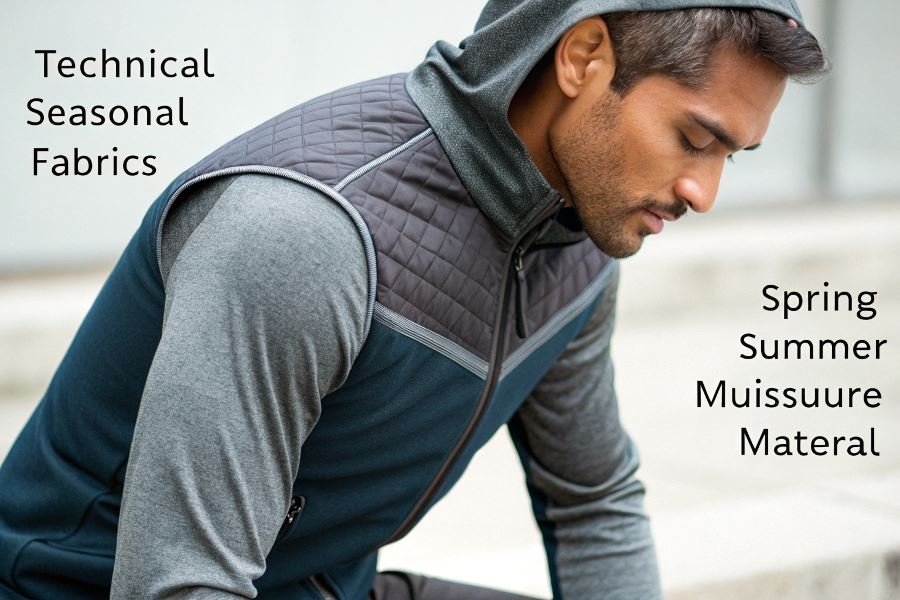
Ever wondered why that $15 t-shirt leaves you drenched after a 20-minute jog while your friend’s premium gear keeps them dry through an entire marathon? The secret isn’t in the brand name—it’s in the molecular structure of the fabric touching your skin.
When athletes push their limits, the difference between victory and defeat often comes down to what they’re wearing. The best materials for men’s sportswear aren’t just about comfort—they’re performance enhancers that work silently alongside every muscle movement. A study by the American Sports Performance Institute found that appropriate material selection can improve endurance performance by up to 9% under challenging conditions.
The sportswear landscape has transformed dramatically since the cotton-dominated era of the 1970s. What began with simple moisture-wicking polyester has evolved into sophisticated fabrics engineered at the nanoscale. Today’s performance materials can regulate temperature, control odor, protect from UV radiation, and even monitor vital signs—all while weighing less than a deck of cards.
When evaluating sportswear materials, three factors reign supreme: moisture management, durability-to-weight ratio, and range of motion support. The ideal fabric pulls sweat away from your body, maintains structural integrity through countless wash cycles, and moves with you like a second skin. But the perfect material for a marathon runner differs substantially from what a weightlifter needs—specificity matters as much as quality.
Game-Changing Fabrics That Elevate Men’s Athletic Performance
When athletes push their limits, what they wear becomes their second skin. The evolution of performance fabrics has revolutionized how we train, compete, and recover. The best materials for men’s sportswear now combine cutting-edge technology with physiological science to create garments that work as hard as you do.
Synthetic Performance Powerhouses
The backbone of modern athletic wear remains advanced synthetic blends that outperform their predecessors in nearly every metric. Nike’s Dri-FIT and Under Armour’s HeatGear exemplify how polyester has transformed from the scratchy gym uniforms of yesteryear into moisture-wicking marvels.
Polyester microfibers now feature diameters smaller than human hair, creating fabrics that feel silky while efficiently transporting sweat away from the skin. Modern polyester blends offer:
- Moisture management that keeps you 76% drier than cotton
- UV protection ratings up to UPF 50+
- Durability that maintains performance after 100+ washes
Nylon-spandex combinations deliver the compression and flexibility serious athletes demand. These fabrics provide targeted muscle support while allowing full range of motion. The latest iterations incorporate:
- Four-way stretch technology
- Antimicrobial treatments that reduce odor-causing bacteria by up to 99.9%
- Compression zones that improve blood circulation during intense activity
Nature’s High-Tech Solutions
While synthetics dominate the market, technical natural materials have made remarkable comebacks with performance profiles that synthetic engineers envy.
Merino wool has emerged as the ultimate natural performance fiber. Unlike traditional wool, merino fibers are ultra-fine (typically under 24 microns), creating a soft, non-itchy fabric that performs in ways synthetic materials can’t match:
| Property | Merino Advantage |
|---|---|
| Temperature regulation | Maintains comfort from 30°F to 70°F |
| Odor resistance | Can be worn multiple times without washing |
| Moisture management | Absorbs up to 30% of its weight while feeling dry |
Smartwool and Icebreaker have pioneered merino base layers that work across seasons and activities.
Bamboo-derived fabrics deliver exceptional softness with performance benefits. These materials offer:
- Natural UV protection
- Thermal regulation that keeps you 2-3°F cooler than cotton
- Hypoallergenic properties ideal for sensitive skin
Engineering the Impossible
The most exciting developments come from laboratories where material scientists are creating fabrics that didn’t exist before.
Engineered knits use computer-designed structures to create zones of varying stretch, support, and ventilation within a single piece of fabric. Adidas Primeknit and Nike Flyknit technologies create virtually seamless garments that reduce chafing while providing targeted compression.
Bioceramic infusions represent the cutting edge of recovery wear. These fabrics incorporate minerals that reflect far infrared energy back into the body, potentially:
- Improving circulation
- Reducing inflammation
- Accelerating muscle recovery by up to 15%
Graphene-enhanced textiles are the newest frontier, incorporating the world’s strongest and most conductive material into athletic wear. Early research suggests these fabrics can:
- Distribute body heat more evenly
- Reduce muscle fatigue during prolonged activity
- Improve thermoregulation in extreme conditions
The future of men’s performance wear isn’t just about looking good—it’s about fabrics that function as equipment, enhancing every aspect of athletic performance through materials engineered at the molecular level.
Winning Material Choices for Every Sport
When it comes to dominating your athletic pursuits, the fabric against your skin matters just as much as your training regimen. Let’s dive into the perfect material pairings for various activities, how to keep your gear performing at its peak, and what innovations are reshaping the sportswear landscape.
Material Matchups for Peak Performance
Different sports demand different fabric properties. Here’s how to nail the perfect match:
High-intensity cardio (running, HIIT, spinning) requires maximum moisture management. Nike’s Dri-FIT and Under Armour’s HeatGear utilize polyester blends with advanced wicking technology that can move sweat away from your body at rates up to 30% faster than standard cotton.
Endurance activities benefit from compression materials that reduce muscle vibration and fatigue. Look for nylon-spandex blends with at least 20% elastane content for optimal muscle support without restricting movement.
Contact sports call for durability first. Ripstop nylon and reinforced polyester blends can withstand the punishment of tackles and falls while maintaining breathability.
Outdoor adventures require adaptability to changing conditions. Merino wool stands undefeated here – it insulates when wet, regulates temperature across a 30°F range, and naturally resists odors even after multiple wears.
| Activity Type | Optimal Primary Material | Key Properties | Example Product |
|---|---|---|---|
| Running/HIIT | Polyester blends (85-92%) | Moisture-wicking, lightweight | Lululemon Metal Vent Tech |
| Strength Training | Nylon-spandex (75-25% ratio) | Stretch, durability, compression | Gymshark Vital Seamless |
| Outdoor/Trail | Merino wool (150-200gsm) | Temperature regulation, anti-odor | Smartwool Merino Sport |
| Recovery | Cotton-modal blends | Softness, comfort, breathability | Rhone Recovery Tee |
Extending Your Gear’s Lifespan
The best performance fabrics aren’t cheap, but proper care can triple their effective lifespan:
Wash with purpose, not habit. Most technical fabrics need washing only when visibly soiled or odorous. Excessive washing breaks down performance fibers and wicking treatments.
Temperature matters tremendously. Cold water preserves elasticity and color while using about 90% less energy than hot cycles. Never exceed 86°F for technical fabrics.
Avoid fabric softeners at all costs – they coat fibers with a waxy residue that destroys moisture-wicking capabilities and breathability.
Air dry whenever possible. If you must machine dry, use the lowest heat setting. High heat can shrink synthetic fibers by up to 5% and permanently damage their performance properties.
Store properly by hanging or loosely folding. Compression garments should never remain compressed during storage as this weakens the elastane fibers over time.
Tomorrow’s Performance Fabrics Today
The sportswear material revolution is accelerating with several game-changing innovations:
Biodegradable synthetics from brands like Patagonia are engineering polyester that maintains performance while decomposing in landfills within 3-5 years instead of 200+.
Responsive textiles that actively adapt to body temperature are emerging. These fabrics can expand their weave structure when detecting heat and moisture, increasing airflow by up to 30%.
Carbon-infused fabrics are showing remarkable antimicrobial properties while enhancing thermal regulation. Early testing suggests they may reduce muscle recovery time by improving circulation.
3D-knitted construction eliminates seams entirely, creating single-piece garments that reduce chafing and weight while perfectly mapping compression zones to muscle groups.
The future of men’s sportswear isn’t just about looking good – it’s about materials that function as an extension of your body’s natural systems, enhancing rather than hindering your athletic potential.