
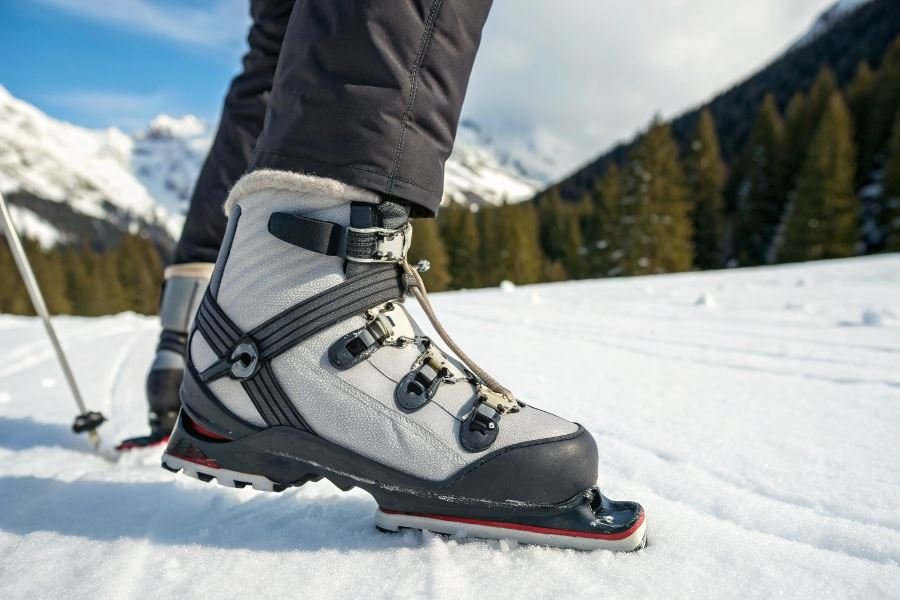
Ever wondered why some skiers glide effortlessly for hours while others struggle after just a few kilometers? The secret often lies not in technique or fitness—but in what’s strapped to their feet.
Cross-country skiing presents a unique challenge: your boots must simultaneously be your most comfortable footwear and your primary power transfer mechanism. This delicate balance determines whether your day on the trails ends with exhilaration or exhaustion. Finding boots that balance comfort and performance isn’t just about preference—it’s about unlocking your full potential on snow.
The comfort-performance relationship: More connected than you think
When your boots fit properly, something magical happens. Energy transfers efficiently from your legs to your skis, your technique improves naturally, and you can maintain proper form longer. Conversely, boots that prioritize performance at the expense of comfort might deliver explosive power for the first few kilometers but lead to pain, blisters, and compromised technique as fatigue sets in.
“The right boot doesn’t just feel good—it disappears from your awareness while maximizing your power output.” — Olympic coach wisdom that applies to recreational skiers too
How your boot choice shapes your skiing experience
Your boot selection impacts:
- Energy efficiency: Proper fit means less wasted motion and more forward propulsion
- Endurance: Comfortable boots extend your time on trails without discomfort
- Technique development: The right support helps maintain proper form
- Enjoyment factor: When your feet are happy, everything else follows
Key considerations before making your choice
Before selecting your perfect pair, consider your skiing style (classic vs. skating), skill level, foot shape, typical conditions, and duration of your outings. The most expensive boot isn’t necessarily the right one—it’s about finding the intersection between your specific needs and the boot’s design purpose.
Remember that even small discomforts magnify over distance. A boot that feels “pretty good” in the shop might become unbearable after 10 kilometers on snow.
The Perfect Fit: Unlocking Comfort and Performance in Cross-Country Ski Boots
When you’re gliding through pristine snow trails, the difference between an exhilarating experience and a painful ordeal often comes down to what’s on your feet. Cross-country ski boots represent that critical interface between your body and your skis, translating every ounce of effort into forward motion.
Finding the sweet spot between comfort and performance in cross-country ski boots isn’t just about personal preference—it’s about understanding the technical aspects that affect both. The most successful skiers know that neither should be sacrificed; instead, they work to find that perfect balance where comfort enhances performance rather than detracting from it. This delicate equilibrium varies based on your skiing style, physical characteristics, and the conditions you typically encounter.
Boot Fit and Sizing: The Foundation of Everything
The cornerstone of any good cross-country ski boot is proper fit. Unlike downhill boots that prioritize rigid support, cross-country boots need to accommodate the foot’s natural movement while providing necessary control.
Width matters tremendously. Too narrow, and you’ll experience numbness and pain; too wide, and you’ll lose precious control. Most manufacturers offer different width profiles:
| Width Profile | Measurement | Best For |
|---|---|---|
| Narrow | 98-102mm | Slim feet, racing |
| Medium | 102-106mm | Average width feet |
| Wide | 106mm+ | Wider feet, comfort-focused skiing |
Length considerations extend beyond your typical shoe size. Allow approximately 5-10mm of space beyond your longest toe to accommodate forward movement during the kick phase. Many skiers mistakenly size too small, leading to cramped toes and reduced circulation—especially problematic in cold conditions.
Volume is the third dimension often overlooked. High-volume feet need boots with adequate instep height, while low-volume feet may “swim” in boots with too much internal space. Brands like Fischer and Salomon offer different volume options within their lines.
Flex Patterns: The Power Transfer Equation
The flex pattern of your boot directly impacts your technique, efficiency, and control. This refers to how the boot bends and resists movement in different directions.
Lateral stiffness provides stability and precise edge control. More advanced skiers typically prefer stiffer boots that offer enhanced power transfer to the ski edges.
Longitudinal flex (front-to-back) determines how easily the boot allows ankle articulation during the kick phase. Consider your technique:
- Classic technique requires more forefoot flexibility
- Skate skiing demands greater ankle support and torsional rigidity
- Combination boots offer a middle ground but excel at neither
The boot’s cuff height also plays a crucial role in flex characteristics. Higher cuffs provide more support and control for aggressive skating but can restrict movement for classic technique. Rossignol offers variable cuff heights across their performance spectrum, allowing skiers to select based on their primary technique.
Temperature Regulation: The Comfort Multiplier
Even the perfect-fitting boot with ideal flex characteristics will fail you if your feet are freezing or swimming in sweat.
Insulation technology has evolved dramatically. Modern boots use targeted insulation that provides warmth where needed without overheating. Materials like Thinsulate™ and PrimaLoft® offer exceptional warmth-to-weight ratios.
Moisture management systems are equally important. Cross-country skiing is an aerobic activity that generates significant heat and sweat. Advanced boots incorporate breathable membranes similar to those found in high-performance outerwear, allowing vapor to escape while keeping external moisture out.
Boot liners from companies like Alpina now feature multi-zone construction with different materials handling different functions—wicking moisture at contact points, providing insulation where circulation is poorest, and offering cushioning at pressure points.
By understanding these key factors, you’ll be better equipped to select boots that deliver both the comfort needed for enjoyable outings and the performance required to reach your skiing potential.
Finding Your Perfect Cross-Country Ski Boot Balance
Selecting the right cross-country ski boots isn’t just about comfort or performance—it’s about finding that sweet spot where both exist in harmony. After exploring boot types, fit considerations, and technical features, let’s bring everything together to help you make a decision you won’t regret when you’re 20km into a breathtaking winter trail.
Match Your Boots to Your Skiing DNA
Your skiing style is as unique as your fingerprint. Recreational skiers who enjoy leisurely weekend outings need different boots than competitive racers pushing for personal bests.
Classic skiing enthusiasts benefit from boots with moderate ankle support and flexibility. The Fischer RC Classic boots offer that perfect middle ground—supportive enough for proper technique but flexible enough for the natural heel-to-toe rolling motion.
Skate skiing devotees require significantly more ankle support and torsional rigidity. The Salomon S/Race Skate Pro provides exceptional lateral stability while maintaining just enough forward flex for powerful pushes.
For multi-technique adventurers, consider combination boots like the Rossignol X-10 that feature adjustable cuffs to transition between styles.
Your terrain preferences matter just as much as technique. Groomed trails call for precision-focused boots, while backcountry exploration demands more insulation, waterproofing, and ankle support.
Professional Fitting: The Non-Negotiable Step
No article, video, or well-meaning friend can replace a professional boot fitting. Here’s why it’s worth every minute:
| Professional Fitting Benefits | DIY Fitting Risks |
|---|---|
| Precise shell size selection | Potential for painful hot spots |
| Customized footbed recommendations | Reduced power transfer efficiency |
| Expert analysis of foot shape | Premature boot wear and damage |
| Real-time adjustments during testing | Technique compensation for poor fit |
Testing is non-negotiable. Most specialty retailers have indoor test areas or demo programs. Spend at least 15 minutes in each potential boot, mimicking your typical skiing movements. Pay attention to pressure points that might become painful after hours on the trail.
The most expensive boot isn’t necessarily the best boot—the best boot is the one that fits YOUR foot perfectly.
Beyond the Purchase: Long-Term Boot Relationship
The perfect boot-foot relationship evolves over time. Most quality cross-country boots require a break-in period of 8-12 hours of skiing. During this time, the boot’s materials will adapt to your foot’s unique contours.
Break-in best practices:
- Start with shorter sessions (under 90 minutes)
- Gradually increase duration as comfort improves
- Address any persistent hot spots immediately with a boot fitter
- Consider custom insoles if discomfort continues
Maintenance extends your boots’ lifespan and performance. After each use, remove the liners to dry thoroughly. Clean the exterior with mild soap and water, avoiding harsh chemicals that can degrade waterproofing. Apply appropriate conditioners to leather components, and store boots in a cool, dry place with boot trees to maintain shape.
Remember that even the best boots have a lifespan. Most high-quality cross-country boots will provide optimal performance for 300-500 skiing hours before materials begin to break down and support diminishes.
By thoughtfully matching boot characteristics to your skiing style, investing in professional fitting, and committing to proper break-in and maintenance, you’ll find that perfect balance of comfort and performance that makes every glide across the snow pure joy.