
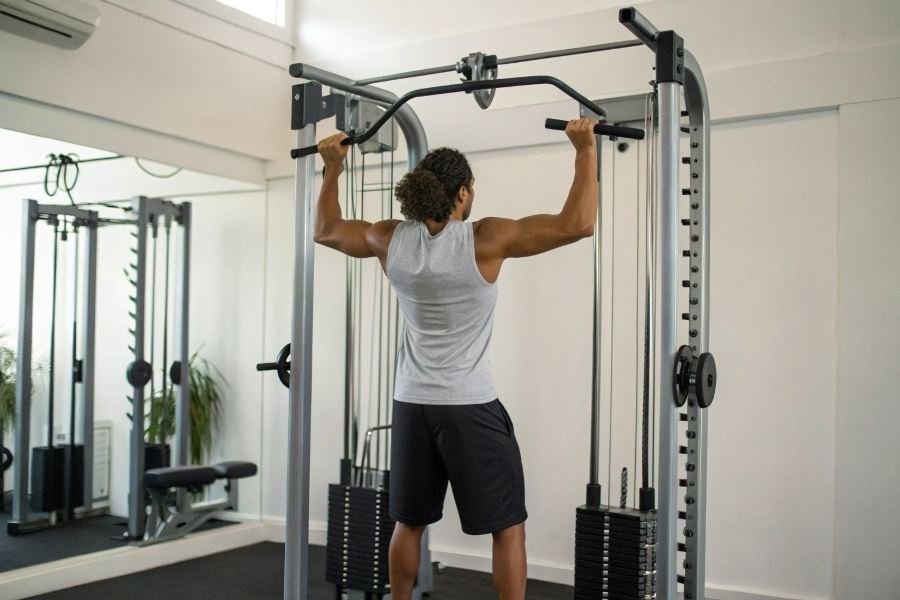
Ever stood in front of a multi-station machine feeling like you’re piloting a spaceship without instructions? You’re not alone. These fitness powerhouses pack the punch of an entire gym into one footprint, but harnessing their full potential requires strategy, not just sweat.
Creating an effective workout program on a multi-station machine transforms random exercises into purposeful training. Think of it as designing your personal roadmap to fitness—one that adapts to your body, your goals, and your schedule. The beauty lies in versatility: whether you’re aiming to build strength, increase endurance, or improve overall fitness, these mechanical marvels deliver.
Why multi-stations dominate the fitness landscape
Multi-station machines offer unparalleled efficiency. With quick transitions between exercises, you maintain elevated heart rates while targeting different muscle groups—perfect for time-crunched workouts. Studies show circuit training on these machines can burn up to 30% more calories than traditional strength training while providing comparable muscle-building benefits.
Matching your machine to your mission
Before diving into exercises, honestly assess where you stand. Are you a beginner looking to build foundational strength? An intermediate lifter seeking muscle definition? Or perhaps recovering from injury? Your current fitness level dictates your starting point, while your goals determine your destination.
Programming principles that deliver results
Effective multi-station workouts follow three core principles:
- Progressive overload: Gradually increasing resistance or repetitions
- Balanced targeting: Working opposing muscle groups
- Strategic recovery: Allowing adequate rest between similar exercises
Remember, the most sophisticated program means nothing without consistency. The perfect workout is the one you’ll actually complete—repeatedly.
Building Your Multi-Station Workout Blueprint
When approaching a multi-station machine for the first time, many fitness enthusiasts feel like kids in a candy store—excited but overwhelmed by options. Creating an effective workout program on a multi-station machine requires strategic planning, not random exercises strung together. The beauty of these versatile fitness hubs lies in their ability to transform a single corner of your gym into a complete training center.
Designing a workout program on a multi-station machine starts with understanding the machine’s capabilities and matching them to your fitness goals. Whether you’re aiming for strength, endurance, or a balanced physique, the multi-station approach offers tremendous versatility. Most quality machines from manufacturers like Life Fitness or Technogym feature press stations, cable pulleys, leg developers, and more—all waiting to be incorporated into your personalized routine.
Crafting a balanced full-body routine
The cornerstone of an effective multi-station workout is balance. Your program should target all major muscle groups through a thoughtful sequence of exercises:
- Push movements (chest, shoulders, triceps)
- Pull movements (back, biceps)
- Lower body exercises (quadriceps, hamstrings, glutes)
- Core stabilization (abdominals, lower back)
A well-designed routine might begin with compound movements that engage multiple muscle groups before progressing to isolation exercises. For example, start with chest presses before moving to tricep extensions, or begin with seated rows before targeting bicep curls.
Trainer’s tip: Alternate between pushing and pulling movements to maximize recovery while maintaining workout intensity.
Sets, reps, and rest: Finding your formula
The architecture of your workout depends on three critical variables:
| Goal | Sets | Repetitions | Rest Period |
|---|---|---|---|
| Strength | 3-5 | 4-8 | 2-3 minutes |
| Hypertrophy | 3-4 | 8-12 | 60-90 seconds |
| Endurance | 2-3 | 15-20 | 30-45 seconds |
Your selection should align with your primary fitness objective. For beginners, starting with 3 sets of 10-12 repetitions provides an excellent foundation, allowing you to focus on proper form while building baseline strength and endurance.
Rest periods matter tremendously. Too little rest between sets compromises performance; too much diminishes training density. Time your rest periods with the stopwatch feature on fitness trackers like the Garmin Forerunner for precision.
Progressive overload: Your growth engine
The human body adapts remarkably quickly to exercise stimuli. Without progressive overload—gradually increasing the demands placed on your musculoskeletal system—progress inevitably stalls.
Implement progressive overload through:
- Increasing resistance – Add weight incrementally when you can complete your target repetitions with proper form
- Expanding volume – Add sets or repetitions to increase total work performed
- Decreasing rest periods – Shorten recovery time between sets to increase workout density
- Enhancing technique – Improve range of motion or movement control
Track your progress meticulously. Record weights, repetitions, and subjective difficulty ratings for each exercise. This data becomes invaluable for planning future progression.
Remember that progression should be sustainable—aim for approximately 5-10% increases in weight when strength gains warrant advancement. Your multi-station machine workout should evolve alongside your improving fitness level, constantly challenging your body to adapt and grow stronger.
Maximizing Your Multi-Station Machine Workouts
Beginner to Beast: Workout Routines That Deliver
Ready to transform that multi-station machine from intimidating metal monster to your personal strength headquarters? Let’s dive into workout routines that actually work, regardless of your current fitness level.
For beginners, simplicity is your secret weapon. Start with a full-body approach, training 2-3 times weekly with at least one rest day between sessions:
- Chest press: 2 sets of 12-15 reps
- Lat pulldown: 2 sets of 12-15 reps
- Leg press: 2 sets of 15 reps
- Seated row: 2 sets of 12 reps
- Shoulder press: 2 sets of 12 reps
Focus on learning proper movement patterns before increasing weight. Your muscles need to understand the language before they can speak it fluently.
Intermediate athletes can split their routines for more targeted development:
| Day 1: Push | Day 2: Pull | Day 3: Legs |
|---|---|---|
| Chest press (3×10) | Lat pulldown (3×10) | Leg press (3×12) |
| Shoulder press (3×10) | Cable row (3×10) | Leg extension (3×12) |
| Tricep pushdown (3×12) | Bicep curl (3×12) | Leg curl (3×12) |
| Chest fly (3×12) | Face pull (3×12) | Calf raise (3×15) |
Advanced users can implement periodization, varying intensity and volume across 4-week cycles:
“The difference between good and great isn’t what you do occasionally—it’s what you do consistently when nobody’s watching.”
Try this 4-day split with progressive overload (increasing weight by 5% every two weeks):
- Day 1: Chest/Triceps (4 sets, 8-10 reps)
- Day 2: Back/Biceps (4 sets, 8-10 reps)
- Day 3: Rest/Active Recovery
- Day 4: Shoulders (4 sets, 8-10 reps)
- Day 5: Legs (4 sets, 10-12 reps)
Tracking Progress Like a Pro
Your workout journal is as essential as your water bottle. Document these metrics:
- Weight used for each exercise
- Reps completed per set
- Rest intervals between sets
- Perceived exertion (1-10 scale)
- Recovery quality between sessions
Digital fitness trackers can streamline this process, but the old-school notebook works perfectly. The key is consistency in tracking.
When progress stalls (and it will), implement these adjustments:
- Increase weight by 5-10%
- Add one rep to each set
- Decrease rest periods by 15 seconds
- Change the exercise order
- Introduce tempo variations (slower eccentric phase)
Form First: Avoiding Common Multi-Station Mistakes
The most impressive numbers mean nothing if your form resembles a fish flopping on deck. Here are the form fixes that will keep you injury-free and progressing:
Chest Press Perfection: Keep your feet flat, back supported, and wrists straight. The bar path should form a slight arc rather than moving straight up and down.
Lat Pulldown Mastery: Maintain a slight arch in your lower back, pull the bar to your upper chest, and avoid leaning back excessively to compensate for heavy weight.
Leg Press Safety: Never lock your knees at the top of the movement, and don’t allow your lower back to round as you lower the weight.
The most common mistake isn’t technical—it’s ego-driven weight selection that sacrifices form for bragging rights.
Other critical errors to avoid:
- Skipping warm-up sets
- Neglecting full range of motion
- Inconsistent training frequency
- Program-hopping before giving routines time to work
- Failing to progressively overload
Remember that multi-station machines are designed to make movements safer—but only if you respect proper biomechanics and the machine’s intended use. Start with mastery, then pursue intensity.