
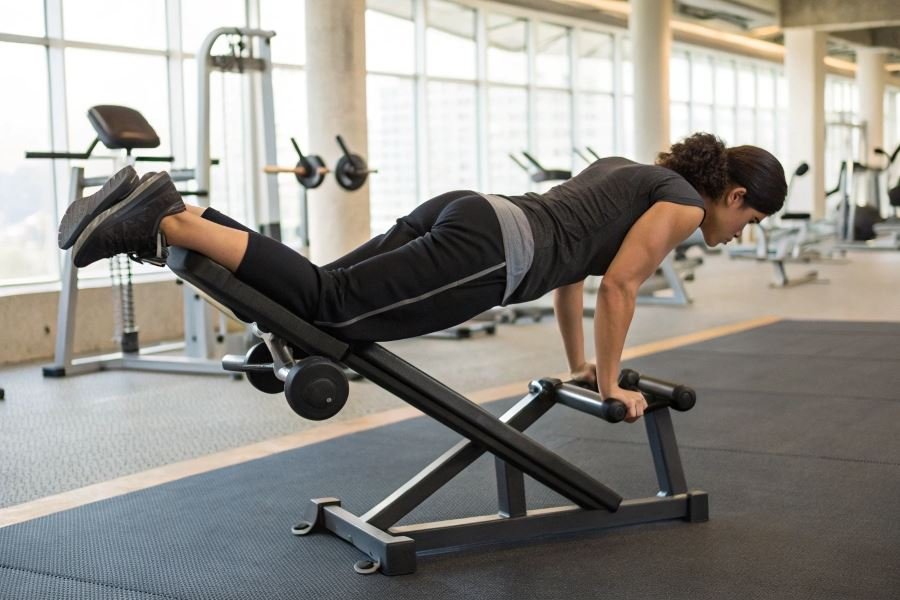
Ever wondered why professional athletes have such incredible core strength? The secret weapon might be sitting quietly in the corner of your gym: the hyperextension bench. But today’s versions are nothing like their single-purpose ancestors.
A hyperextension bench (or Roman chair) is specialized equipment designed to isolate and strengthen the posterior chain—those crucial muscles running along your back from calves to shoulders. Traditional models focused solely on back extensions, but modern multifunctional hyperextension stations have evolved into versatile training hubs.
The transformation began in the early 2000s when fitness equipment manufacturers recognized athletes needed more efficient training solutions. What was once a one-trick pony has morphed into a multi-exercise platform supporting everything from traditional back extensions to oblique twists, reverse hyperextensions, and even dip variations.
Why should you care about incorporating hyperextensions into your routine? The benefits extend far beyond aesthetics:
- Injury prevention: Strengthening lower back muscles creates a natural support system for your spine
- Improved athletic performance: A stronger posterior chain translates to better lifts, faster sprints, and higher jumps
- Functional strength: The movements mimic real-world activities, making everyday tasks easier
- Posture correction: Regular use counteracts the forward slouch many develop from desk work
Modern multifunctional hyperextension stations represent the perfect balance between specialized training and space efficiency—delivering maximum results without dominating your workout space.
Unleash Your Full Potential with Multifunctional Hyperextensions
When most gym-goers spot a hyperextension bench, they typically think of one exercise: the classic back extension. But that’s like buying a Swiss Army knife and only using the bottle opener! Today’s multifunctional hyperextension benches are versatile powerhouses that can transform your training routine across multiple muscle groups.
These innovative pieces of equipment have revolutionized home and commercial gyms alike. Multifunctional hyperextensions: an overview of capabilities reveals how a single station can effectively target your posterior chain, core, and lower body with minimal space requirements and maximum results. The adjustable pads, multiple foot placements, and variable angles create a playground for fitness enthusiasts looking to diversify their training.
Back Extensions That Build Bulletproof Spines
The traditional hyperextension remains the gold standard for posterior chain development. Position yourself face-down with your hips on the pad, ankles secured, and your upper body hanging toward the floor. From this position, extend your spine until your body forms a straight line—not hyperextended as the name misleadingly suggests.
For an advanced variation, try reverse hyperextensions. Flip your position so you’re facing upward with your torso supported and legs hanging free. Lift your legs until they align with your torso, powerfully engaging your lower back, glutes, and hamstrings simultaneously.
Pro tip: Adding a slight pause at the top of either movement increases time under tension, amplifying muscle development without adding weight.
Core Exercises That Carve Definition
The same bench that strengthens your back doubles as an elite core-training station. Oblique twists performed on a hyperextension bench create rotational resistance that floor-based variations simply can’t match.
The stability challenge intensifies when you incorporate a medicine ball or weight plate during these rotational movements.
For targeted abdominal work, position yourself for decline crunches. The adjustable angle lets you progressively increase difficulty as your strength improves—something a standard floor crunch can never offer.
Lower Body Movements That Transform Legs
| Exercise | Primary Muscles | Unique Benefit |
|---|---|---|
| Glute Bridges | Gluteus Maximus | Isolated hip extension without lower back strain |
| Hamstring Curls | Hamstrings | Knee flexion against gravity for posterior leg development |
| Single-Leg Variations | Stabilizers | Addresses strength imbalances between sides |
The hyperextension bench excels at isolating posterior leg muscles often neglected in standard training programs. For glute bridges, position your shoulders against the pad with feet on the floor. Drive through your heels, lifting your hips toward the ceiling for a powerful glute contraction.
Hamstring curls represent perhaps the most underutilized hyperextension bench exercise. Lie face-up with your ankles secured and knees just off the pad edge. Flex your knees, pulling your heels toward your glutes in a smooth, controlled motion that creates hamstring tension impossible to replicate with many other bodyweight exercises.
Game-changing insight: Alternating between these exercise categories in circuit fashion creates a time-efficient, full-posterior chain workout that elevates heart rate while building functional strength—perfect for those days when time is limited but results are non-negotiable.
By mastering these exercise variations, you’ll transform a simple hyperextension bench into perhaps the most versatile piece of equipment in your training arsenal.
Maximizing Your Hyperextension Workouts: The Ultimate Guide
Perfect Form Prevents Painful Setbacks
Mastering proper form on hyperextension machines isn’t just about gains—it’s your insurance policy against back injuries. The foundation starts with hip positioning: your hip crease should align perfectly with the pad’s edge, allowing your upper body to hinge forward naturally.
When executing the movement, maintain a neutral spine throughout the entire range of motion. Many athletes make the critical mistake of hyperextending their lower back beyond the neutral position, which places dangerous stress on the lumbar vertebrae. Instead, focus on a controlled descent until your torso is perpendicular to the floor, then engage your glutes and hamstrings to power back to the starting position.
The difference between proper and improper form often comes down to just a few degrees of movement, but those few degrees separate progress from potential injury.
For those using added resistance, keep weights close to your chest rather than behind your head, which creates excessive leverage and strain. Start with bodyweight until your form is flawless—even advanced athletes benefit from periodic form checks with lighter loads.
Programming For Your Fitness Journey
Your approach to hyperextension training should align perfectly with your fitness objectives:
For strength development: Incorporate 3-4 sets of 8-12 repetitions with progressive resistance, training twice weekly with at least 48 hours between sessions. This frequency allows optimal recovery while stimulating growth in posterior chain muscles.
For rehabilitation purposes: Focus on higher repetitions (15-20) with bodyweight only, emphasizing perfect control and mind-muscle connection. Daily training with lighter loads can accelerate recovery without overtaxing healing tissues.
For athletic performance: Integrate hyperextensions into your training split with varied protocols:
| Goal | Sets | Reps | Tempo | Rest |
|---|---|---|---|---|
| Power | 4-5 | 6-8 | Explosive up, slow down | 2-3 min |
| Endurance | 2-3 | 15-20 | Controlled | 60-90 sec |
| Hypertrophy | 3-4 | 8-12 | 2-0-2 count | 90-120 sec |
For optimal results, program hyperextensions early in your workout when targeting posterior chain development specifically, or use them as a finisher after heavy deadlifts or squats to reinforce proper spinal positioning under fatigue.
Top Machines That Deliver Results
After testing dozens of models, these three multifunctional hyperextension stations stand out for their versatility, durability, and biomechanical excellence:
-
Rogue AB-3 Adjustable Bench: This powerhouse combines hyperextension functionality with adjustable angles for GHD (glute-ham developer) work. The precision-engineered foot platform allows for seamless transitions between movements, while the commercial-grade padding maintains its integrity even under heavy use. The Rogue AB-3 offers unmatched versatility for serious athletes.
-
Titan Fitness H-PND: The dual-functionality of this model makes it exceptional—it transitions from hyperextension to reverse hyper in seconds. With a weight capacity exceeding 600 pounds, the Titan H-PND accommodates even elite strength athletes while maintaining a surprisingly compact footprint for home gyms.
-
Force USA 45° Hyperextension: For those seeking maximum muscle activation with minimal joint stress, this angled design from Force USA delivers. The adjustable thigh pads accommodate users of all heights, while the multi-grip handles allow for varied hand positions to target different aspects of the posterior chain.
When selecting your machine, prioritize adjustability, stability under load, and comfort during extended sessions. The investment in quality equipment pays dividends through injury prevention and consistent progress.