
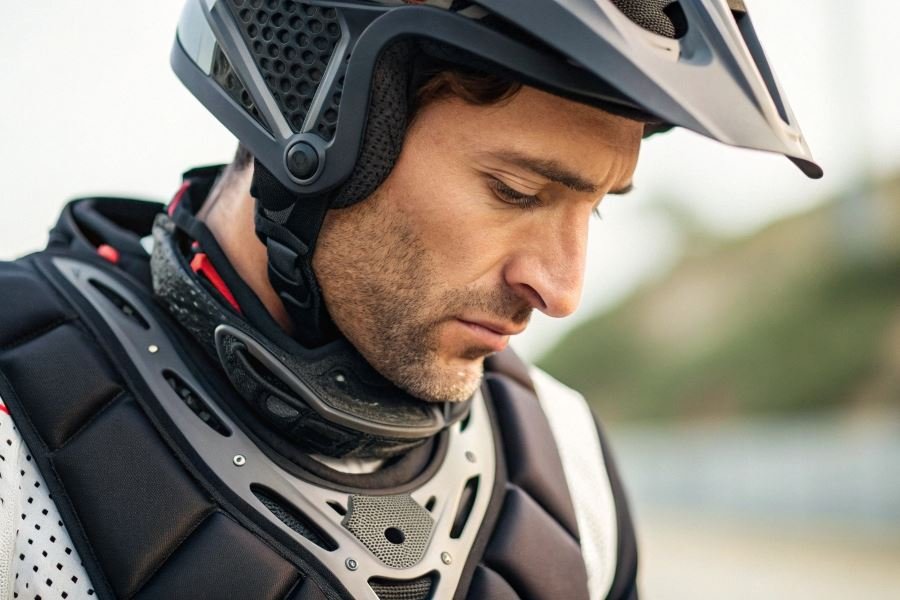
Ever taken a hit to the neck during a game? That split-second impact can change everything. Proper neck protection isn’t just equipment—it’s the invisible guardian between you and potential catastrophe on the field, track, or ice.
When selecting neck protection, size isn’t just about comfort—it’s about survival. Too loose, and it shifts during critical moments; too tight, and it restricts movement and breathing. The difference between properly and improperly sized neck protection can literally be the difference between walking away from an impact or facing serious injury.
Today’s market offers an impressive array of options: from minimalist neck rolls favored by football players to comprehensive neck braces used by motocross athletes and the collar-style protectors hockey players rely on. Each serves a specific purpose, but all require precise sizing to function as designed.
Common sizing pitfalls
Most athletes face three primary challenges when selecting neck protection:
- Assuming one-size-fits-all – Your neck’s circumference, length, and musculature are unique
- Prioritizing comfort over protection – That “too snug” feeling might actually be proper security
- Failing to account for position-specific needs – Different sports positions require different coverage areas
The relationship between your helmet, shoulder pads, and neck protection creates a protection system that works together. When sized correctly, these elements form a seamless defense against impact forces. When mismatched, dangerous gaps appear.
Remember: proper neck protection should feel secure without restricting your range of motion or breathing. It’s that sweet spot between protection and performance that keeps you both safe and competitive.
Getting Your Neck Protection Size Right
Finding the perfect fit for neck protection isn’t just about comfort—it’s about maximizing safety during high-intensity activities. Whether you’re hitting the motocross track or gearing up for hockey season, proper measurements make all the difference between adequate protection and a potential liability.
The process of selecting appropriate neck protection requires precise measurements and consideration of your specific activity needs. How to choose the right size of neck protection comes down to three critical factors: accurate neck circumference measurement, proper length determination, and compatibility with your other gear. Let’s break down these essential elements to ensure you’re properly protected.
Measuring Neck Circumference Like a Pro
Your neck circumference forms the foundation of proper sizing. Here’s how to nail it:
- Use a soft measuring tape – Rigid measuring tools can give inaccurate readings
- Position at mid-neck level – Typically at your Adam’s apple or the widest part
- Keep it snug but not tight – You should be able to slip one finger underneath
Remember that measurements taken while seated tend to be more accurate than standing, as your posture affects neck positioning.
For most adults, neck circumferences range between 13-19 inches (33-48 cm), but your individual measurement is what matters most.
Determining Optimal Protection Length
The length of your neck protection should align with your activity and physical build:
| Activity Type | Recommended Coverage | Special Considerations |
|---|---|---|
| Motocross/ATV | Full neck to collarbone | Must accommodate helmet movement |
| Hockey/Lacrosse | Mid-neck to upper chest | Should allow for quick head turns |
| Football | Lower jaw to shoulder pads | Integration with shoulder pads crucial |
When measuring length, start from the base of your ear and measure down to where you want the protection to end. Most quality neck protectors range from 4-7 inches (10-18 cm) in length, depending on their intended use.
Beyond Basic Measurements
Your perfect fit involves more than just numbers:
Helmet Compatibility
Your neck protection must work seamlessly with your helmet. Allow approximately 0.5 inches (1.3 cm) of clearance between the top of your protector and the bottom of your helmet to prevent uncomfortable pressure points while maintaining coverage.
Range of Motion Requirements
Different sports demand different mobility levels:
- Hockey players need 180° rotational movement
- Motocross riders require forward flexion for tucking
- Football players need lateral movement for field awareness
Body Type Adjustments
- Shorter necks may require specialized junior sizes even for adults
- Broader shoulders often need wider base designs
- Athletic builds might benefit from tapered designs
The best neck protection strikes that perfect balance between security and mobility—too tight and you’ll restrict crucial movement; too loose and you compromise protection. When properly fitted, you should barely notice it’s there until the moment it matters most.
Sealing the Deal on Neck Protection Sizing
Finding the perfect neck protector isn’t just about protection—it’s about creating that sweet spot where safety meets comfort. After measuring your neck and understanding the basics, let’s nail down the final steps to ensure your neck guard fits like it was made for you.
Decoding Manufacturer Size Charts
Size charts can feel like reading ancient hieroglyphics, with each brand speaking its own language. CCM might label their medium differently than Bauer, while Shock Doctor uses entirely different measurements.
The secret? Don’t trust the letter size alone. A medium in one brand might fit like a small in another. Instead, cross-reference your actual neck measurements with each manufacturer’s specific measurements in inches or centimeters.
Pro tip: European brands often run smaller than North American ones, sometimes by a full size.
Here’s how major brands typically break down their measurements:
| Brand | Small | Medium | Large | XL |
|---|---|---|---|---|
| CCM | 12-14″ | 14-16″ | 16-18″ | 18-20″ |
| Bauer | 13-14″ | 14-16″ | 16-18″ | 18-20″ |
| Warrior | 12-13.5″ | 13.5-15″ | 15-16.5″ | 16.5-18″ |
The Essential Try-Before-You-Buy Test
Numbers don’t tell the whole story. Your neck protector should pass these critical fit tests:
-
The Two-Finger Test – You should be able to slide two fingers between the protector and your neck. Any tighter risks discomfort; any looser compromises protection.
-
The Head Turn Challenge – Turn your head left, right, up, and down. The protector should move with you without shifting position or creating pressure points.
-
The Jersey Compatibility Check – Wear it with your jersey or equipment to ensure nothing bunches or restricts movement during play.
Remember: A neck guard that stays in your bag because it’s uncomfortable offers zero protection.
When Standard Sizes Don’t Cut It
Sometimes off-the-rack options just don’t work, particularly if you:
- Have an unusually short or long neck
- Deal with thyroid conditions affecting neck circumference
- Are between standard sizes in every brand you try
- Need specialized protection due to previous injuries
Custom options from companies like Pure Hockey or Verbero might cost 15-30% more than standard sizes, but they’re worth every penny when standard options fail you.
The custom route typically involves:
- Detailed measurements taken by professionals
- Material selection based on your specific sport and position
- Reinforcement in high-impact areas relevant to your playing style
For youth players experiencing growth spurts, consider adjustable models with hook-and-loop closures that offer 1-2 inches of sizing flexibility.
The perfect neck protector should feel like it’s not even there—until the moment it saves you from injury. Take the time to get sizing right, because when it comes to neck protection, the fit isn’t just about comfort—it’s about effectiveness when it matters most.