
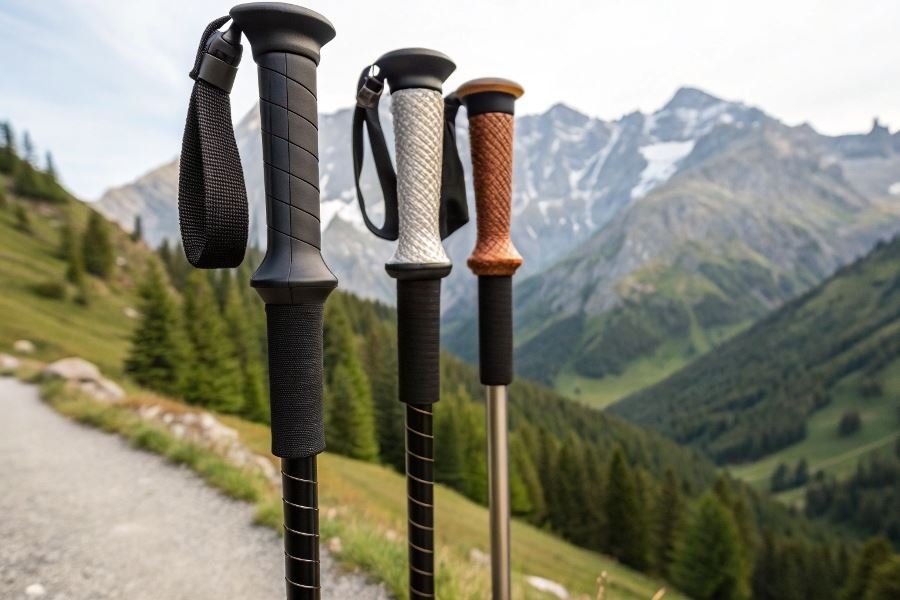
Ever watched someone glide past you on a trail, poles in hand, looking like they’ve discovered the secret to effortless exercise? That’s the magic of Nordic walking—but only when you’ve got the right equipment in your hands.
Nordic walking has exploded in popularity, transforming from a summer training method for cross-country skiers into a full-fledged fitness phenomenon. At its core lies an essential piece of equipment: the poles. Selecting the right Nordic walking poles isn’t just about grabbing whatever’s available—it’s about finding extensions of your arms that will transform your walking experience.
Why proper poles matter more than you think
The difference between appropriate poles and ill-fitting ones is like comparing custom-fitted running shoes to borrowing your neighbor’s boots. Properly sized poles optimize your posture, reduce joint stress, and maximize calorie burn by engaging up to 90% of your muscles. Studies show that Nordic walking with correct poles can increase calorie expenditure by up to 46% compared to regular walking—without feeling like you’re working harder!
The transformative benefits of getting it right
When your poles match your body mechanics, magic happens:
- Enhanced stability on varied terrain, reducing fall risk by up to 30%
- Improved posture as poles naturally pull your shoulders back
- Decreased impact on knees and joints (crucial for those with arthritis)
- Supercharged workout efficiency as your upper body joins the party
Key factors in your pole selection journey
Before diving into specific models, focus on these fundamentals:
- Height-appropriate sizing – Your elbow should form a 90-degree angle when holding the pole
- Material considerations – Aluminum for durability, carbon fiber for lightweight performance
- Grip ergonomics – Your hand’s comfort during extended sessions is non-negotiable
- Strap design – The unsung hero that transfers power from arm to pole
Remember, the right poles don’t just support your walk—they elevate your entire Nordic walking experience from ordinary exercise to extraordinary adventure.
The Perfect Poles: Your Nordic Walking Foundation
When you’re just starting your Nordic walking journey, selecting the right poles can make the difference between an invigorating workout and a frustrating experience. The poles serve as your additional limbs, transforming a simple walk into a full-body exercise that engages up to 90% of your muscles. Let’s dive into the essential factors that will guide beginners through the process of how to choose poles for Nordic walking for beginners without getting overwhelmed by technical jargon or marketing hype.
Finding Your Perfect Pole Length
Your height is the primary determinant of your ideal pole length, but technique also plays a crucial role. The classic formula for calculating pole length is:
Your height (cm) × 0.68 = Recommended pole length
For example, if you’re 5’8″ (173 cm), your ideal pole would be approximately 118 cm long. However, this isn’t set in stone.
Technique considerations:
- Fitness walking: Shorter poles (height × 0.66)
- Health walking: Medium poles (height × 0.68)
- Sport performance: Longer poles (height × 0.70)
Many poles feature adjustable lengths, which are perfect for beginners still finding their optimal technique. Fixed-length poles, while lighter and more responsive, require you to know your exact size requirements beforehand.
Material Matters: Aluminum vs. Carbon Fiber
The composition of your poles significantly impacts your walking experience, with two primary materials dominating the market:
| Material | Pros | Cons | Best For |
|---|---|---|---|
| Aluminum | • Affordable • Durable • Withstands impacts |
• Heavier • Transmits more vibration • Less responsive |
• Beginners • Budget-conscious walkers • Rough terrain |
| Carbon Fiber | • Ultralight • Absorbs vibration • Responsive feel |
• More expensive • Can crack under lateral stress • Less durable against impacts |
• Experienced walkers • Those with joint sensitivity • Performance-focused users |
For most beginners, a mid-range aluminum pole offers the best balance of durability and performance. If you’re dealing with joint issues or plan to walk primarily on pavement, the vibration-dampening properties of carbon fiber might justify the higher investment.
Grip Systems: Your Connection Point
The grip is where your body meets the pole, making it arguably the most critical component for comfort during extended walks.
Cork grips offer superior moisture management and conform to your hand shape over time, creating a personalized fit. Rubber grips provide excellent insulation in cold weather but can become slippery when wet. Foam grips deliver the lightest weight and greatest shock absorption but tend to deteriorate faster.
Strap systems have evolved significantly from simple loops to sophisticated designs:
- Basic loop straps: Affordable but offer minimal support
- Glove-style systems: Provide excellent power transfer and reduce grip fatigue
- Quick-release mechanisms: Allow for easy removal during breaks without readjustment
The most advanced straps feature a “click-in” design that enables you to release and reconnect to the pole without adjusting the strap each time – a feature worth considering if you frequently stop to take photos or need to handle other items during your walks.
When testing poles in-store, pay attention to how the grip feels after holding it for several minutes, not just the initial impression. The perfect pole should feel like a natural extension of your arm, supporting your movement without causing discomfort or requiring conscious thought.
Sealing the Deal: Your Nordic Walking Pole Decision
Top beginner-friendly pole models that deliver
Let’s cut to the chase – finding the perfect Nordic walking poles shouldn’t feel like navigating a maze. After testing dozens of models, three clear winners have emerged for beginners:
-
Leki Spin Nordic Walking Poles – These poles hit the sweet spot with adjustable lengths (100-130cm), comfortable cork grips, and the innovative “Trigger Shark” quick-release strap system. At $89-119, they’re an investment that grows with your skill level.
-
Exel Nordic Walker Evo – Finnish-engineered excellence with shock-absorbing features and ergonomic grips that prevent hand fatigue. The fixed-length design (available in 5cm increments) ensures optimal technique from day one. Typically priced around $75-95.
-
Black Diamond Distance Z – Ultralight aluminum construction (under 12oz per pair) with three-section foldability for travelers and hikers crossing over to Nordic walking. Their foam grips work well in all weather conditions. Expect to pay $99-129.
Each of these models offers exceptional value for beginners while providing room to grow as your technique develops.
Smart spending for your first poles
Nordic walking doesn’t require emptying your wallet, but there are budget considerations worth understanding:
| Price Range | What to Expect | Best For |
|---|---|---|
| $30-50 | Basic aluminum construction, simple straps, limited adjustability | Occasional walkers, trying the sport |
| $50-100 | Quality aluminum/carbon mix, ergonomic grips, proper straps | Regular walkers, fitness enthusiasts |
| $100+ | Premium carbon fiber, advanced strap systems, specialized features | Dedicated walkers, performance-focused |
The sweet spot for most beginners sits between $60-90, where you’ll find poles that balance quality construction with reasonable pricing.
Budget wisdom: Investing an extra $20-30 upfront often saves you from replacing cheap poles within months – and prevents the frustration of equipment failure during your walks.
Avoid the temptation of ultra-budget poles (under $30) as they typically feature poor-quality straps that compromise technique and can lead to wrist strain.
Extending pole life with proper maintenance
Your Nordic walking poles will serve you faithfully for years with these simple maintenance practices:
-
Post-walk rinse – After muddy or beach walks, rinse poles with fresh water and dry thoroughly before storing. Salt and grit are the enemies of locking mechanisms.
-
Tightening check – Monthly inspection of all screws and locking mechanisms prevents mid-walk surprises. A small multi-tool is perfect for this quick maintenance.
-
Tip replacement – The rubber tips (paws) wear down with use, especially on concrete. Replace them when tread pattern disappears or after approximately 300-500 miles of walking.
-
Storage smarts – Store poles horizontally or hanging vertically in a dry place. Avoid leaning them in corners where they can warp over time.
-
Strap care – Hand wash detachable straps occasionally with mild soap. This prevents skin irritation and extends strap life.
With these models, budget insights, and maintenance habits, you’re fully equipped to make a confident decision on your first Nordic walking poles. The right poles will become trusted companions on your fitness journey – choose wisely and they’ll support you for thousands of miles.