
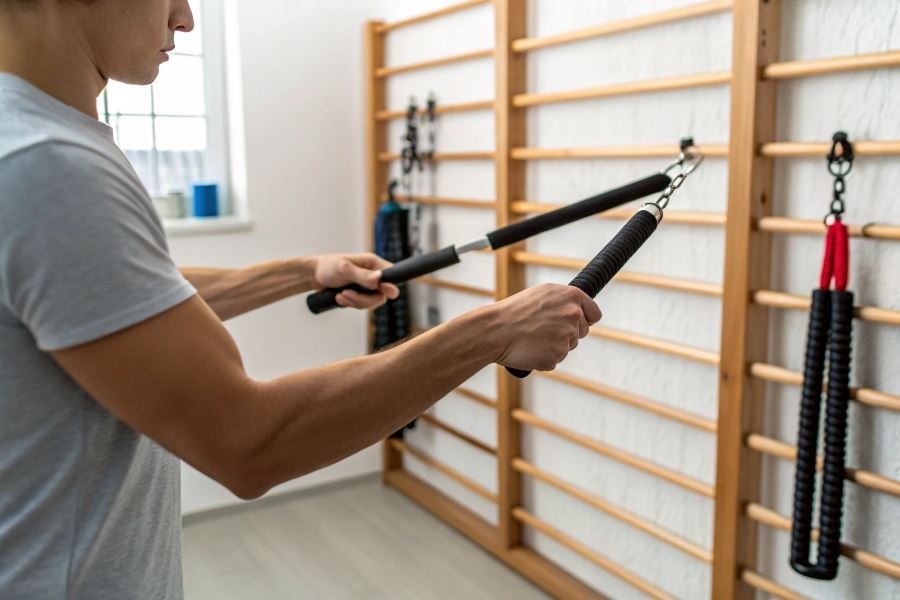
Ever watched a martial arts legend effortlessly swing nunchaku and thought, “I wish I could do that”? Well, you absolutely can—and gain impressive fitness benefits along the way.
Training nunchaku have evolved dramatically since their humble beginnings as Okinawan farming tools in the 16th century. Originally used for threshing rice, these connected sticks transformed into formidable weapons during Japanese occupation when traditional arms were banned. Today’s foam and plastic training versions make this ancient art accessible to everyone seeking a unique workout challenge.
Why nunchaku training deserves a spot in your fitness routine:
The beauty of nunchaku practice lies in its full-body engagement. A typical session activates your shoulders, arms, core, and even legs as you master fluid movements. Studies show that just 30 minutes of practice can burn approximately 300 calories while dramatically improving coordination, reflexes, and spatial awareness.
“Nunchaku training creates neural pathways that enhance overall movement quality in everything from sports to everyday activities.” — Journal of Movement Sciences
Safety first: Approaching nunchaku as a beginner
Before attempting your first figure-eight swing:
- Start with foam: Begin with soft-core training nunchaku specifically designed for beginners
- Create space: Ensure at least 6 feet of clearance in all directions
- Master basics: Focus on grip and simple transitions before attempting complex movements
- Protective gear: Consider wearing protective eyewear until proficient
Remember that patience is crucial—even Bruce Lee spent countless hours perfecting his nunchaku skills before performing those legendary demonstrations that captivated the world.
Top 3 Training Nunchaku for Every Skill Level
Finding the right training nunchaku for home workouts can transform your martial arts practice from frustrating to fulfilling in a matter of days. The perfect nunchaku matches your current skill level while giving you room to grow—without sending you to the emergency room in the process.
When selecting the best training nunchaku for home workouts, consider three critical factors: material safety, weight balance, and connection type. Beginners need forgiving foam models that won’t result in self-inflicted injuries, while advanced practitioners require training tools that closely mimic the feel and response of competition-grade equipment.
Let’s break down the top options across skill levels to help you make an informed choice that will elevate your practice.
Foam Nunchaku for Beginners
For those just starting their nunchaku journey, safety comes first. The Dragon Foam Training Nunchaku offers the perfect entry point with:
- Full foam construction that absorbs impact
- Lightweight design at just 8 ounces
- Cord connection providing authentic movement
- 28-inch length suitable for practitioners of various heights
The foam exterior prevents the painful knocks and bruises that discourage many beginners. Despite the safety features, these nunchaku maintain enough weight to develop proper technique and wrist strength.
“The beginner’s greatest asset is a training tool that forgives mistakes while teaching proper form.”
Another excellent beginner option is the Martial Arts Foam Practice Nunchaku, which features color-coded handles to help newcomers track rotation during basic techniques.
Intermediate-Level Adjustable Nunchaku
As your skills advance, you’ll need equipment that grows with you. Intermediate practitioners benefit from:
| Feature | Benefit |
|---|---|
| Adjustable weight | Customizable resistance for skill progression |
| Partial padding | Reduced protection as technique improves |
| Chain connection | More challenging control requirements |
| Octagonal handles | Better grip feedback during complex moves |
The ProForce Adjustable Training Nunchaku stands out with removable weights that let you add 2-8 ounces per handle. This adjustability allows you to gradually increase difficulty as your technique improves.
Intermediate models typically feature harder materials with strategic padding only in high-impact areas. This design encourages more precise movements while still offering some protection during practice sessions.
Advanced Training Nunchaku
Experienced practitioners require training tools that closely mimic competition equipment while still being safe for home use.
The Blitz Competition Training Nunchaku offers:
- Aircraft-grade aluminum construction with minimal padding
- Precision-balanced handles weighing 12 ounces each
- Interchangeable connection options (chain, rope, or bearing)
- Textured grip surface for advanced handling techniques
Advanced models often incorporate ball-bearing connections that allow for lightning-fast transitions between techniques. The Ronin Professional Training Nunchaku features this technology along with impact-resistant end caps that protect your training space from damage.
For those preparing for demonstrations or competitions, these advanced options provide the authentic feel of performance equipment while still being appropriate for intensive home practice sessions.
Choose the nunchaku that matches your current abilities while challenging you to reach the next level of martial arts mastery.
Unleash Your Inner Warrior: Mastering Nunchaku at Home
Essential techniques every nunchaku practitioner must know
The journey into nunchaku mastery begins with fundamentals. Bruce Lee popularized this weapon in the 1970s, but today’s training nunchaku offer safe alternatives for home practice. Start with the basic figure-eight rotation – the cornerstone technique that builds wrist strength and coordination. Keep your elbow slightly bent and focus on fluid transitions between hands.
The vertical and horizontal passes form your next challenge. These techniques require precise timing as you transfer the nunchaku from one hand to the other. Practice these movements slowly before attempting speed, as proper form prevents the foam or plastic striking your knuckles (even with training nunchaku, this can sting!).
For those ready to advance, incorporate strikes and blocks into your routine. The forward strike, side strike, and overhead block develop practical applications while enhancing your control. Remember that traditional martial artists spent years perfecting these movements – patience yields precision.
“The nunchaku reveals your weaknesses before it showcases your strengths. Embrace this humbling process.”
Fitness-focused routines with your nunchaku
Training nunchaku offer remarkable versatility for different fitness goals. For cardiovascular conditioning, try this high-intensity interval routine:
| Interval | Technique | Duration | Rest |
|---|---|---|---|
| 1 | Figure-eights | 30 seconds | 15 seconds |
| 2 | Vertical passes | 30 seconds | 15 seconds |
| 3 | Horizontal passes | 30 seconds | 15 seconds |
| 4 | Freestyle combinations | 30 seconds | 30 seconds |
Repeat this circuit 3-5 times for a heart-pumping 15-25 minute workout that simultaneously builds coordination and endurance.
For strength development, incorporate isometric holds into your practice. Hold extended positions during figure-eights for 5-10 seconds, creating tension throughout your arms, shoulders, and core. These static contractions build functional strength specific to nunchaku manipulation.
Those seeking flexibility improvements should focus on wide-arc techniques that stretch the shoulders, chest, and upper back. The behind-the-back pass particularly challenges shoulder mobility while developing control through extended ranges of motion.
Extending the life of your training nunchaku
Quality training nunchaku can last for years with proper care. After intense sessions, wipe down foam or plastic components with a slightly damp cloth to remove sweat and oils that can degrade materials over time. For connected models, regularly inspect the chain, rope, or cord for signs of wear.
Store your nunchaku properly to prevent warping or damage. Keep foam models away from direct sunlight and extreme temperatures, which can cause deterioration. Hanging storage options prevent unnecessary pressure on foam components that might create permanent indentations.
For nunchaku with moving parts, occasional maintenance ensures smooth operation. Apply a small amount of food-grade mineral oil to metal chains or bearings in swivel models from brands like Century Martial Arts or Dragon. Avoid petroleum-based lubricants on plastic components as they may cause degradation.
If your training nunchaku features removable weights, periodically check that all components remain securely fastened. Loose parts not only affect performance but can potentially create safety hazards during high-speed techniques.
With proper technique development, targeted fitness routines, and diligent maintenance, your training nunchaku will serve as both a martial arts tool and fitness equipment for years to come. The ancient weapon has evolved into a modern workout essential that builds coordination, strength, and focus – all from the comfort of your home.