
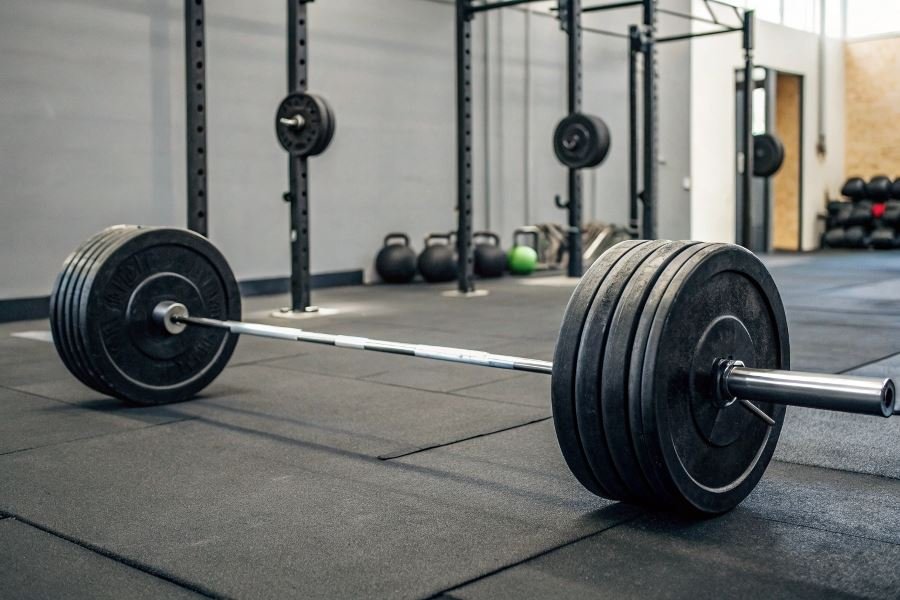
Ever picked up a barbell and wondered why some feel like precision instruments while others seem like, well, just heavy metal sticks? The difference isn’t just in your head—it’s engineering, history, and purpose all rolled into one.
When you step into the weight room, you’re actually engaging with equipment that has evolved dramatically since the first modern Olympic Games in 1896, when weightlifting made its debut. The Olympic barbell as we know it today wasn’t standardized until the mid-20th century, while standard barbells emerged as more accessible alternatives for home gyms and casual lifters.
The anatomy of strength: Physical specifications
Olympic barbells command respect with their 28-29mm diameter (thinner for women’s bars), precisely engineered rotating sleeves, and standardized 7.2ft (220cm) length. These 45lb (20kg) precision instruments can handle a whopping 1,500+ pounds of load without permanent deformation.
Standard barbells, by contrast, typically measure 25-30mm in diameter with fixed sleeves, shorter 5-6ft lengths, and weigh around 15-25lbs. Their weight capacity tops out at approximately 200-300 pounds—sufficient for beginners but potentially limiting as strength increases.
Making your choice: Initial considerations
Your training goals should drive your decision. Olympic barbells excel for compound movements, explosive lifts, and progressive overloading. Their standardized dimensions make them competition-ready and ideal for serious strength athletes.
Standard barbells offer affordability and space efficiency for home gyms. They’re perfectly suitable for general fitness, muscle toning, and beginners building foundational strength.
The barbell you choose isn’t just equipment—it’s the foundation upon which you’ll build your strength journey.
Performance Showdown: Olympic vs Standard Barbells
When you step into the weight room, the barbell becomes your most intimate training partner. The debate between Olympic and standard barbells isn’t just equipment minutiae—it’s about optimizing your training potential. Let’s dive into what separates these two staples of strength training and how each might serve your fitness journey.
Load Capacity and Mechanical Differences
Olympic barbells are engineered for serious weight. With a typical weight capacity of 1,000-1,500 pounds, these 7-foot bars are built to handle whatever you throw at them. The defining feature? Those spinning sleeves. When comparing Olympic vs standard barbell options for training, the rotating sleeves on Olympic bars create a mechanical advantage that reduces torque on your wrists during explosive movements.
Standard barbells, by contrast, typically max out around 200-300 pounds—sufficient for beginners but potentially limiting as you progress. Their fixed sleeves mean the entire bar rotates as one unit, which can place additional strain on your joints during certain lifts.
Technical Specifications Comparison:
| Feature | Olympic Barbell | Standard Barbell |
|---|---|---|
| Length | 7.2 feet (men’s)/6.6 feet (women’s) | 5-6 feet typically |
| Diameter | 28-29mm (men’s)/25mm (women’s) | 25-30mm (varies widely) |
| Sleeve Diameter | 2 inches (50mm) | 1 inch (25mm) |
| Weight | 20kg/45lbs (men’s), 15kg/35lbs (women’s) | 15-25lbs (varies) |
| Weight Capacity | 1,000-1,500lbs | 200-300lbs |
| Whip/Flex | Moderate to significant | Minimal to none |
Stability, Balance and Safety Considerations
The Olympic barbell’s standardized dimensions create predictable performance—critical when you’re moving substantial weight. The bar’s whip (its ability to flex and rebound) actually assists in dynamic movements like clean and jerks or snatches.
Safety becomes increasingly important as weights increase, and Olympic bars provide consistent knurling patterns that enhance grip security during heavy lifts.
Standard barbells often feature inconsistent knurling and balance points, which can create unpredictable handling characteristics. Their shorter length also means a narrower grip for exercises like bench press, potentially limiting proper form for broader-shouldered individuals.
Exercise Range and Versatility
Olympic barbells truly shine in versatility. Their design accommodates:
- Olympic lifts (clean and jerk, snatch)
- Powerlifting movements (squat, bench, deadlift)
- Accessory exercises (rows, overhead press, lunges)
The standardized sleeve diameter means compatibility with all Olympic plates, allowing for micro-loading with fractional plates for precise progression.
Standard barbells offer adequate functionality for basic strength training but fall short for technical Olympic lifts. Their primary advantage lies in:
- Space efficiency (shorter length)
- Lower cost of entry
- Sufficient for most isolation exercises
Training insight: The difference between these bars becomes most apparent when lifting above 225 pounds or performing dynamic movements where bar rotation matters.
For home gym enthusiasts with space constraints, standard bars might suffice initially. However, serious trainees will quickly outgrow their limitations. The investment in an Olympic barbell pays dividends through greater exercise variety, higher weight capacity, and reduced injury risk during heavy lifts.
The decision ultimately hinges on your training goals, available space, and budget—but for those seeking long-term progress without equipment limitations, the Olympic barbell represents the gold standard in barbell training.
Making the Final Decision: Your Perfect Barbell Match
Aligning with your training goals
The barbell you choose should be your faithful training companion—not just any metal rod will do. Olympic barbells excel for explosive movements like clean and jerks, snatches, and heavy compound lifts. Their whip (bar flexibility) provides that crucial momentum during Olympic lifts, while their rotation system prevents wrist injuries during dynamic movements.
Standard barbells shine in different scenarios. If your training revolves around general strength building, moderate weight bench presses, or controlled movements, a standard bar delivers what you need without the premium price tag. Many bodybuilders who focus on hypertrophy rather than maximum strength find standard bars perfectly adequate for their regimens.
Match point: Olympic bars support heavier loads (typically 600-1,500 lbs) versus standard bars (around 200-350 lbs). If your goals include powerlifting competitions or Olympic lifting, the decision makes itself.
Home gym economics and spatial realities
Your training space dictates possibilities. Olympic setups demand respect—and room. A typical Olympic platform needs approximately 8×8 feet of dedicated space, plus clearance for plate storage.
Standard setups can fit comfortably in spare bedrooms, garages, or even apartment corners. Their smaller footprint makes them ideal for space-constrained environments.
The financial equation matters too:
| Barbell Type | Typical Price Range | Weight Capacity | Plate Compatibility |
|---|---|---|---|
| Olympic | 250−1,000+ | 600-1,500 lbs | Olympic plates only |
| Standard | 50−150 | 200-350 lbs | Standard plates only |
Remember that plates aren’t interchangeable—Olympic plates won’t fit standard bars and vice versa. This creates an ecosystem you’re investing in, not just a single purchase.
Wisdom nugget: The most expensive barbell isn’t always the right one—the best barbell is the one that matches your specific training needs and circumstances.
Investment trajectory and progression potential
Think of your barbell as infrastructure, not equipment. Olympic barbells from reputable manufacturers like Rogue Fitness or Eleiko often come with lifetime warranties. Their construction quality means they’ll likely outlast your training career.
Standard barbells typically have shorter lifespans, especially under heavy use. The fixed sleeves can loosen over time, and the thinner diameter may develop bends with repeated heavy loading.
Your progression path matters tremendously here. If you’re just beginning strength training with modest weight goals (under 200 lbs), a standard bar provides everything needed. But if you envision yourself progressively loading heavier weights over years of training, an Olympic bar represents the more sustainable path.
Future-proofing factor: Olympic equipment maintains excellent resale value should your needs change, while standard equipment typically depreciates more quickly.
The ultimate decision comes down to honest self-assessment: Where are you now in your fitness journey, and where do you realistically see yourself in 3-5 years? The answer to that question points directly to your ideal barbell match.