
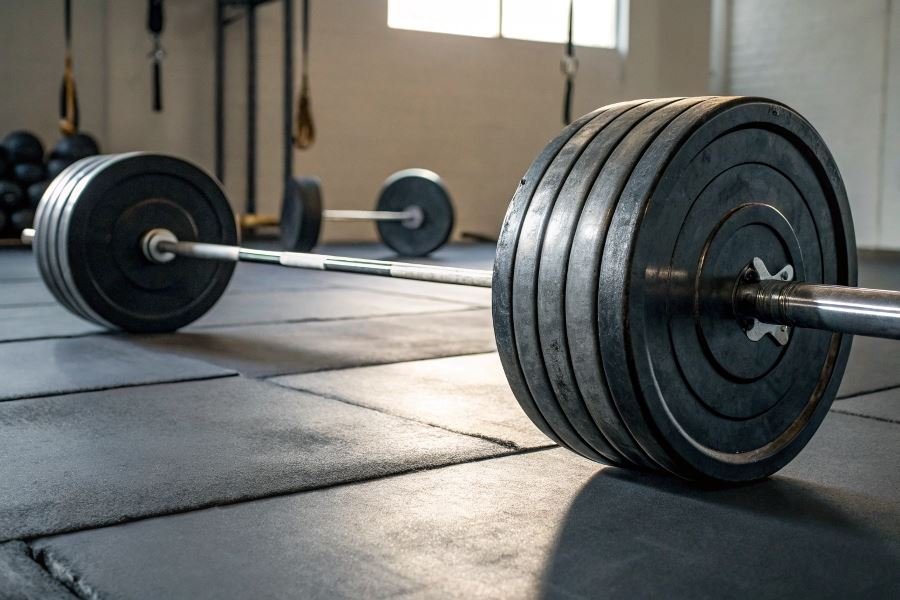
Ever stood in front of two seemingly similar barbells wondering which one deserves a spot in your home sanctuary of gains? The difference between Olympic and regular bars isn’t just about prestige—it’s about performance, potential, and the future of your fitness journey.
The fundamental divide
Olympic barbells are the thoroughbreds of the weight lifting world—7 feet long, weighing 44-45 pounds (20kg), with rotating sleeves and a standardized 2-inch diameter for plate loading. Regular bars (sometimes called standard bars) are typically shorter (5-6 feet), lighter (15-25 pounds), and feature a 1-inch diameter sleeve for loading plates.
The distinction goes beyond specifications. Olympic bars are engineered for dynamic movements with their superior whip (flex) and spin, while standard bars serve as reliable companions for basic strength training.
Home considerations that matter
Your available space speaks volumes—Olympic setups demand at least 8×8 feet of real estate, while standard bars can function in tighter quarters. Budget considerations also tip the scales: a quality Olympic bar starts around $250, whereas standard bars can be found for under $100.
Matching metal to muscle goals
Your fitness aspirations should drive your decision. Training for explosive power or pursuing serious strength gains? The Olympic bar’s superior construction and weight capacity (often exceeding 1000 pounds) makes it the clear choice. For general fitness, muscle toning, or beginners still exploring their strength potential, the standard bar offers accessibility without overwhelming commitment.
Remember: the best bar isn’t necessarily the most expensive—it’s the one that aligns with your fitness journey and transforms your home space into a temple of progress.
Olympic vs Regular Bars: The Ultimate Home Gym Showdown
When building your home gym, the barbell becomes the centerpiece of your strength training arsenal. The decision between Olympic and regular bars isn’t just about aesthetics—it’s about creating a foundation that supports your fitness journey for years to come. Let’s dive into what separates these two options and determine which deserves a spot in your home setup.
Weight Capacity and Durability: The Strength Test
Olympic bars are the heavyweight champions of the barbell world, typically rated to handle between 600-1,500 pounds of weight. Manufactured from high-grade steel with precise knurling patterns, these 7-foot bars are built to withstand the punishment of heavy deadlifts and squats. The Rogue Ohio Bar exemplifies this durability with its 190,000 PSI tensile strength rating.
Regular bars (sometimes called standard bars) present a more modest option when considering Olympic vs regular bars for home use, especially for beginners or those with space constraints. These bars typically support 200-300 pounds—sufficient for many recreational lifters but potentially limiting as you progress.
Durability difference: Olympic bars feature rotating sleeves with bushings or bearings that reduce torque on your wrists during dynamic lifts. Standard bars lack this feature, making them less suitable for Olympic-style movements and potentially shortening their lifespan.
Space Requirements: Finding Your Fit
| Bar Type | Typical Length | Weight | Sleeve Diameter |
|---|---|---|---|
| Olympic | 7.2 feet (86.6″) | 44-45 lbs | 2″ |
| Standard | 5-6 feet | 15-25 lbs | 1″ |
Olympic bars demand respect—and space. At over 7 feet long, they require a dedicated area and often a power rack or squat stand. The footprint extends beyond just the bar itself; you’ll need clearance for plate loading and movement patterns.
Standard bars offer a more compact solution, typically measuring 5-6 feet in length. This makes them suitable for apartments or shared spaces where every square foot counts. Installation is generally simpler, though proper mounting is still essential for safety.
Compatibility: The Ecosystem Effect
The compatibility factor might be the most compelling reason to choose Olympic equipment. Olympic bars use a universal 2-inch sleeve diameter, opening access to virtually all commercial weight plates and accessories. This standardization means you’ll never outgrow your equipment ecosystem.
Standard bars use a 1-inch sleeve diameter, severely limiting your options. Finding compatible plates becomes increasingly difficult as your strength increases, and specialty attachments are rare. The CAP Barbell standard plates may be affordable initially, but the limited progression path can prove frustrating.
Compatibility consideration: Olympic bars work with Olympic plates only, while standard bars work with standard plates only. There’s no crossover, making your initial choice a commitment to an entire system.
Price and Long-Term Value: The Investment Perspective
Entry-level Olympic bars start around $150-300, with premium options from Eleiko reaching $1,000+. The initial investment is higher than standard bars, which typically range from $50-150.
However, the value equation extends beyond purchase price:
- Resale value: Olympic equipment holds value remarkably well, often selling for 70-80% of retail price years later
- Upgrade path: Start with a basic Olympic bar and add quality plates over time
- Durability dividend: Quality Olympic bars can last decades with proper maintenance
Standard bars offer a lower entry point but often become a sunk cost when serious lifters inevitably upgrade to Olympic equipment.
For home use, the Olympic bar represents not just a purchase but an investment in your fitness future—one that pays dividends in performance, versatility, and longevity that standard bars simply cannot match.
Making the Final Decision: Olympic vs Regular Bars for Home Use
When building your home gym, the barbell becomes the centerpiece of your strength training arsenal. But choosing between Olympic and regular bars isn’t just about aesthetics or price—it’s about matching the right equipment to your specific needs, space constraints, and fitness journey.
Olympic bars shine in these home scenarios
Olympic bars truly excel for serious lifters with dedicated home gym spaces. If you’ve got at least 8×8 feet of workout space and ceiling height over 7.5 feet, an Olympic bar makes perfect sense. These 7-foot bars (typically weighing 44-45 pounds for men’s bars and 33-35 pounds for women’s) provide unmatched versatility for compound movements.
The stability factor cannot be overstated. Olympic bars with their rotating sleeves reduce torque on your wrists during dynamic lifts like cleans and snatches. This becomes crucial when you’re pushing personal records without a spotter.
Home gyms focused on progressive overload benefit tremendously from Olympic bars’ higher weight capacity (typically 600-1500 pounds). As Rogue Fitness notes with their popular Ohio Bar, these bars are engineered to handle heavy deadlifts and squats without permanent bending.
The rotating sleeves on Olympic bars aren’t just a fancy feature—they’re joint savers that allow the weights to spin independently of the bar during explosive movements.
When regular bars make more practical sense
For apartments, smaller homes, or multi-purpose spaces, regular bars (typically 5-6 feet long) offer practical advantages. Their shorter length makes them ideal for spaces where a full Olympic setup would feel cramped or intrusive.
Regular bars typically weigh between 15-25 pounds, making them more approachable for beginners or those focusing on higher-rep, moderate-weight training. They’re particularly well-suited for:
- Apartments with limited floor space
- Workout areas that double as living spaces
- Beginners still developing form and strength
- Upper body isolation exercises
The cost difference is substantial—quality regular bars from companies like CAP Barbell typically run $50-150, while entry-level Olympic bars start around $200 and quickly climb past $350 for higher quality options.
Matching bars to your fitness journey
| Experience Level | Primary Goals | Recommended Bar Type |
|---|---|---|
| Beginner | General fitness, learning form | Regular bar |
| Intermediate | Strength building, some Olympic lifts | Entry-level Olympic bar |
| Advanced | Maximum strength, competitive lifting | High-quality Olympic bar |
| Mixed household | Varied fitness levels | Olympic bar with lighter plates |
Your training style should heavily influence your decision. If your workouts center around bodybuilding-style isolation movements and moderate weights, a regular bar provides everything you need. However, if you’re following programs like Starting Strength or StrongLifts that emphasize progressive overload on compound movements, investing in an Olympic bar makes long-term sense.
Consider your progression path carefully. Many home gym enthusiasts who start with regular bars eventually upgrade to Olympic equipment as their strength increases. If your fitness journey is just beginning but you have serious long-term goals, starting with an Olympic bar might save money over time.
For those balancing multiple fitness goals, Olympic bars offer greater adaptability. As Eleiko, makers of competition-grade equipment, emphasize: Olympic bars can handle everything from heavy powerlifting to technical Olympic lifts to high-rep CrossFit-style training—versatility that standard bars simply can’t match.